Order and Trade-offs: The Reality Behind the Delay of Hong Kong’s Stablecoin Licensing
Source: Cointelegraph
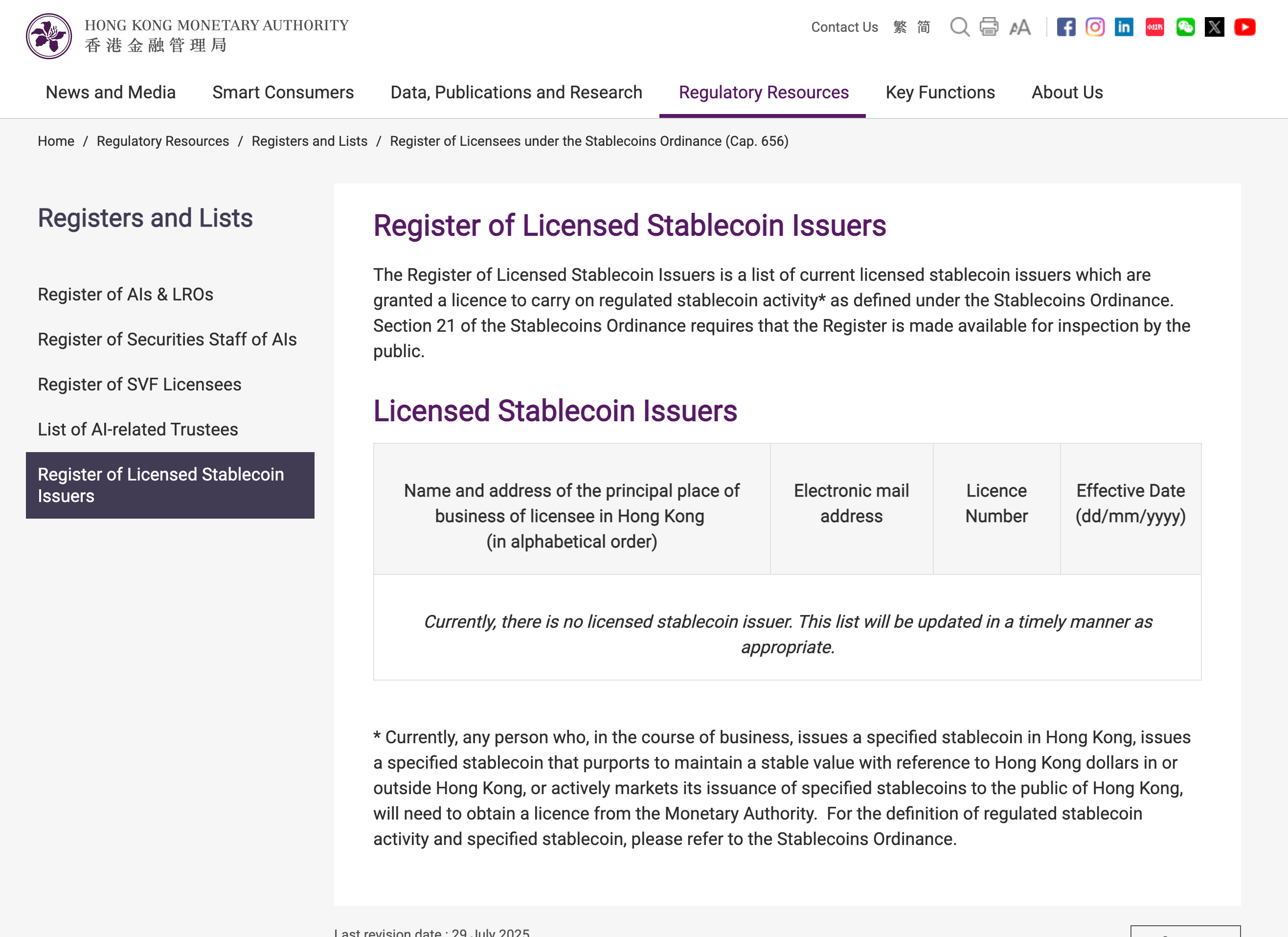
In the financial narrative of Hong Kong’s Victoria Harbour, the gap between expectation and reality often conceals a deeper regulatory philosophy. As the market held its breath for the late-March release of the "first batch of stablecoin license recipients," the Hong Kong Monetary Authority (HKMA) offered a restrained response: "Progressing actively and will announce in due course." This signaled a clear message to the global market: in the second half of the digital asset compliance race, Hong Kong would rather sacrifice speed than tolerate flaws.
Prudent Red Lines: High-Liquidity Reserves and 24-Hour Redemption
HKMA Chief Executive Eddie Yue had already set the stage during a legislative briefing. The first batch of participants will be a "select few," with the evaluation heavily weighted toward risk management.
Hong Kong is not engaging in a numbers game for licensing. Its regulatory framework sets a global benchmark for rigor:
Absolute Transparency of Asset Quality: Issuers are required to fully back stablecoins with high-quality, high-liquidity reserve assets.
Physical Limits of Redemption Efficiency: Fiat currency redemptions must be guaranteed within one business day.
Localized Presence: Issuers must maintain a physical presence in Hong Kong and integrate Anti-Money Laundering (AML) and transaction monitoring systems comparable to top-tier banks.
This commitment to high standards is essentially a moat built to safeguard financial system resilience, following several high-profile collapses of algorithmic stablecoins globally.
Geopolitical Dynamics: Strategic Caution Under Northern Pressure
However, technicalities and compliance details may only be the tip of the iceberg. The deeper logic behind the delay likely stems from the North—specifically, the high sensitivity of mainland regulatory authorities toward "privately controlled digital currencies."
According to previous insights from the Financial Times, internet giants including Ant Group and JD.com were once frontrunners in the licensing race. However, after the People’s Bank of China (PBOC) and the Cyberspace Administration of China (CAC) expressed concerns regarding capital flows and financial stability, these plans underwent a notable adjustment in tempo. This reflects the delicate balance Hong Kong must maintain between its dual roles as a "Global Web3 Hub" and a "National Financial Security Sentinel."
OSL Perspective: Compliance as the "Narrow Gate" to Mainstream Markets
For startup entities backed by the likes of HSBC or Standard Chartered, the license delay is not a negative signal but a filter for long-term commitment.
OSL Insight: In the current macro environment, stablecoins are no longer merely "transit stations" for crypto trading; they are the fundamental infrastructure connecting Real World Assets (RWA) with on-chain settlement. The absence or delay of licenses highlights a critical market demand for compliant custody and secure clearing.
For participants like OSL, who have long established themselves on the compliance track, the HKMA’s prudent stance validates the value of institutional-grade services. As giants like Ant Group navigate the regulatory fog of cross-border stablecoin blueprints, licensed trading platforms with native compliance DNA and seamless integration with traditional banking systems become the only certain value pivot while the market awaits the final licensing decisions.
Conclusion: Short-term Pain for Long-term Pricing Power
The missed March target signifies that Hong Kong’s stablecoin regulation is moving from a "conceptual phase" into an "intensive care-level audit phase." This delay is not a retreat; it is a strategy to ensure that when the next financial crisis hits, Hong Kong-issued stablecoins can stand alongside the HKD as indisputable safe-haven assets for global investors.
In the reorganization of the Web3 order, being first is important, but survival belongs to those who walk the steadiest through the narrow gate of regulation.
Start your safe cryptocurrency journey now
OSL | Secure Ramps. Trusted Rails !
More topics
More topics
Latest
Why India's $620B Bond Pilot Changed Nothing Legal
SEBI and the RBI's Demat 2.0 pilot issues corporate bonds as digital tokens and settles them with the wholesale digital rupee, preserving existing legal terms while digitizing the infrastructure beneath a $620...
Why India's $620B Bond Pilot Changed Nothing Legal
Why S&P Global Leads Kaiko: Not Hype, But 24/7 Market Infrastructure
S&P Global led a $110 million extension of Kaiko's Series B to build data infrastructure for round-the-clock tokenized markets.
Why S&P Global Leads Kaiko: Not Hype, But 24/7 Market Infrastructure
When One Firm Holds 5% of Ethereum: Infrastructure Stress Test
Bitmine's accumulation of more than 5 million staked ETH raises questions about whether custody, audit, and validator infrastructure can support single-asset concentration at public-company scale.
When One Firm Holds 5% of Ethereum: Infrastructure Stress Test
Best Enterprise Stablecoin Payment Providers: A 2026 Evaluation Framework
Compare enterprise stablecoin payment providers by use case, legal entity, workflow, controls, integration, reconciliation, support, and contract terms.
Best Enterprise Stablecoin Payment Providers: A 2026 Evaluation Framework
How to Reconcile a USDGO Payment: An Illustrative Finance-Close Example
See how Finance can trace a USDGO payment from an approved obligation through payment records, recipient confirmation, reconciliation, and accounting close.
How to Reconcile a USDGO Payment: An Illustrative Finance-Close Example
A USDGO Reserve Review in Practice: Findings, Limits and Follow-up Questions
Review what the July 2026 USDGO reserve attestation establishes, what it does not prove, and which issuer, redemption, and liquidity questions remain.
A USDGO Reserve Review in Practice: Findings, Limits and Follow-up Questions
Recommended for you
More topics
More topics
