Withdraw USDT to Fiat Safely: Networks, Fees, Compliance, and Bank Risk
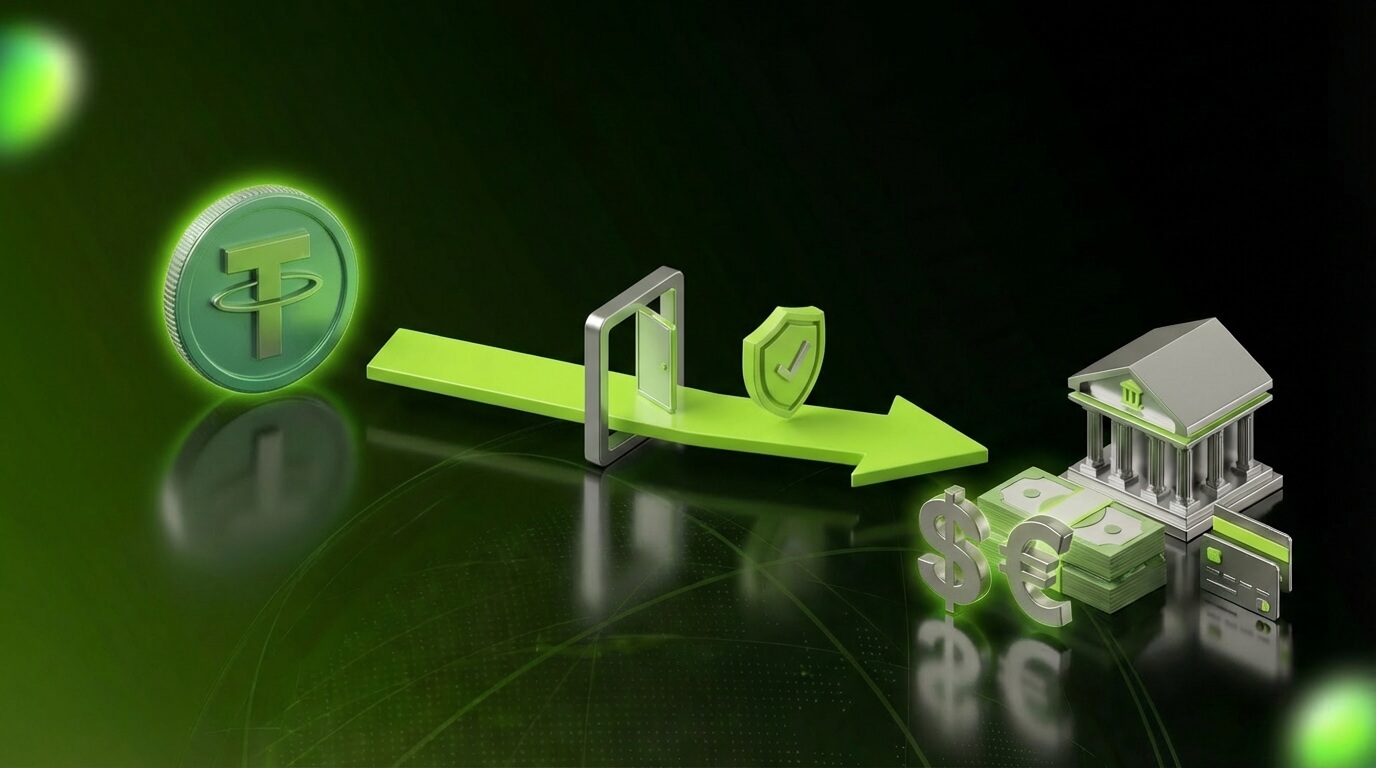
Converting USDT stablecoin holdings into cash in a bank account is a pivotal step in bridging digital assets into the real economy for consumption and investment. However, many users discover that unlike traditional bank transfers, USDT cannot be "directly" withdrawn. This process involves specific conversion mechanisms, the selection of blockchain networks, and critical compliance steps. Building upon our previous article, "Comprehensive Guide to Selling USDT for Fiat Safely", this analysis delves deeper into the core mechanisms behind USDT withdrawals, provides a detailed comparison of operational principles across different methods, and offers in-depth insights into risk management from a compliance perspective, aiming to provide you with a more comprehensive operational guide.
2026 update: what readers should check first
This refresh turns the article into a practical stablecoin decision guide. Readers should verify reserve quality, redemption access, jurisdiction, liquidity, fees, and compliance fit before choosing a token, exchange, or payment route.
Question | What to check | Why it matters |
|---|---|---|
Reserve and issuer | Issuer disclosures, reserve composition, attestations, and redemption terms. | Weak transparency can raise depeg or liquidity risk. |
Liquidity and network | Supported chains, spreads, withdrawal costs, and settlement time. | A stablecoin is only useful if it can move and redeem efficiently. |
Compliance fit | Jurisdiction, KYC, account records, and counterparty requirements. | Business payments and fiat exits depend on auditability. |
User action | Use regulated platforms, keep transaction records, and test small transfers first. | Operational mistakes are often more costly than headline fees. |
Related reading: USDT and USDC comparison | Stablecoin payments vs banking rails | Fiat-to-crypto on-ramp guide.
FAQ: stablecoin safety and use cases
Is the stablecoin fully backed, and where can users verify the reserve information?
Which network should users choose for lower fees and fewer operational mistakes?
Can the stablecoin be redeemed or converted to fiat through a regulated route?
What records should businesses keep for compliance and reconciliation?
Understanding USDT Withdrawal: Why Can't I Just "Transfer" to a Bank?
As a digital asset operating on the blockchain, USDT follows rules that are fundamentally different from the traditional banking system. Seamlessly converting it into a deposit in your bank account requires a clear two-step process and an understanding of the fundamental differences between on-chain transactions and bank transfers.
Core Mechanism: The Two-Step Conversion from Digital Assets to Bank Deposits
Withdrawing USDT to fiat currency is essentially a combined process of "asset conversion" and "fund transfer," neither of which can be omitted.
Step 1: Selling USDT for Fiat
First, you need to sell your USDT holdings on a compliant Virtual Asset Trading Platform (VATP), such as OSL, in exchange for an equivalent amount of fiat currency, such as US Dollars (USD), Euros (EUR), Hong Kong Dollars (HKD), or Singapore Dollars (SGD).
Many users search for conversions like USDT to USD, USDT to EUR, or USDT to HKD, which all follow the same process: selling USDT on a regulated platform and receiving the equivalent fiat balance.
Step 2: Fiat Withdrawal
Once you have a fiat balance in your platform account, you can initiate a "withdrawal" request. The trading platform will then transfer the funds from its bank account to your designated personal bank account via its partner banking networks, such as SWIFT, SEPA, or Hong Kong's FPS (Faster Payment System). This step constitutes the actual "bank transfer."
Key Concepts: On-Chain Transactions vs. Bank Transfers
To understand why these two steps are necessary, it is crucial to distinguish between two transaction systems:
On-Chain Transactions: Refer to the transfer of USDT on its respective blockchain network (such as Ethereum or Tron). This is a peer-to-peer transfer of digital value recorded on a public, immutable distributed ledger. It transfers ownership of digital assets and does not involve the traditional banking system.
Bank Transfers: Refer to the transfer of fiat currency within the centralized traditional financial system. Every transaction is recorded and cleared by banks and is subject to strict supervision by financial regulators in various countries.
In short, USDT and bank deposits belong to two independent systems. Therefore, a "bridge" connecting these two systems—namely, a licensed virtual asset trading platform with banking partnerships—is essential to complete the smooth conversion from digital assets to bank deposits.
Comprehensive Analysis of Withdrawal Methods: Comparing CEX, P2P, and OTC
Having understood the basic mechanisms, selecting the appropriate withdrawal channel is crucial. Currently, the mainstream withdrawal methods in the market include Centralized Exchanges (CEX), Peer-to-Peer (P2P) trading, and Over-the-Counter (OTC) trading, each differing in operational models, security, efficiency, and applicable scenarios.
1. Centralized Exchanges (CEX): The Mainstream, Efficient, and Compliant Choice
Centralized exchanges are currently the most common channel for USDT withdrawals, providing a structured and relatively secure environment for a vast number of users.
Operational Mechanism: Users first need to deposit USDT from their wallet address to the exchange's designated address. Upon successful credit, users can sell USDT to other users or professional market makers via the order book matching system in the platform's spot market to obtain a fiat balance. Finally, users enter their bank account information on the withdrawal page to initiate a fiat withdrawal request, which is processed by the exchange to complete the transfer.
Pros:
High Liquidity: Large exchanges have a massive user base and trading volume, allowing for the rapid execution of large buy and sell orders.
Standardized Process: From trading to withdrawal, the entire process has clear guidelines and a unified interface, offering a user-friendly experience.
Customer Support: Users can seek customer service support from the exchange if issues arise.
Cons:
Mandatory Compliance: All legitimate exchanges require users to complete Identity Verification (KYC) and Anti-Money Laundering (AML) checks.
Fees: Fees are incurred during the trading and withdrawal processes.
Withdrawal Limits: Platforms typically set daily or monthly withdrawal limits based on the user's verification level.
Applicable Scenario: Suitable for the vast majority of individual users making small to medium-sized withdrawals, particularly those who value operational convenience and platform reputation.
2. P2P (Peer-to-Peer) Trading: Flexible but Risk-Prone
P2P trading offers a way to bypass traditional order books and trade directly with individual buyers.
Operational Mechanism: Sellers post ads to sell USDT on a P2P platform, setting the price, quantity, and acceptable payment methods (e.g., bank transfer, Alipay, WeChat Pay). Once a buyer accepts the ad, the platform temporarily locks the seller's USDT (escrow service). The buyer pays the fiat currency directly to the seller via the agreed offline method. After the seller confirms receipt of payment, they release the escrowed USDT to the buyer on the platform.
Pros:
Flexible Payment Methods: Supports a variety of localized payment tools, offering great convenience.
Potentially Better Prices: Direct negotiation can sometimes yield better exchange rates than the CEX market price.
Flexible Trading Hours: Trading is available 24/7.
Cons:
Counterparty Risk: The core risk lies in potentially receiving illicit funds (i.e., "tainted money"), which can lead to your bank account being frozen by judicial authorities.
Fraud Risk: Possibility of encountering fraud such as forged payment receipts or malicious appeals.
Uncertain Transaction Speed: Completion speed depends entirely on finding a suitable buyer and their payment efficiency.
Applicable Scenario: Suitable for users with small withdrawal needs who require specific payment methods. However, extreme caution is required; prioritize merchants verified by the platform with good trading history, and avoid accepting abnormally priced offers.
3. OTC (Over-the-Counter) Trading: The Professional Channel for Large Asset Withdrawals
For users needing to process large volumes of assets, OTC is a more ideal choice than the public market.
Operational Mechanism: Users trade through professional OTC service providers (such as OSL's OTC services). Unlike public bidding on CEXs, OTC trading typically uses a request-for-quote (RFQ) and negotiation model. Once both parties agree on price and quantity, settlement is completed via formal trading agreements and high-level, traceable methods like bank wire transfers.
Pros:
Deep Liquidity: Capable of processing large orders worth hundreds of thousands or millions of dollars at once without causing significant impact on public market prices (i.e., "slippage").
Price Lock: A fixed execution price can be locked in during the negotiation phase, avoiding market volatility risk.
Dedicated Service & Compliance Assurance: Professional OTC platforms provide one-on-one trading support and conduct strict due diligence to ensure the legitimacy of funds for both parties.
Cons:
High Threshold: Usually has a high minimum transaction amount, e.g., starting from $100,000, making it unsuitable for small users.
More Rigorous Process: Compared to one-click operations on CEXs, OTC trading involves more formal communication and contracting processes.
Applicable Scenario: High-net-worth individuals, institutional investors, hedge funds, and corporations needing to dispose of large-scale funds.
Method Comparison: CEX vs. P2P vs. OTC at a Glance
Feature | Centralized Exchange (CEX) | P2P Trading | OTC Trading |
|---|---|---|---|
Security | High (Platform reputation) | Low (Dependent on counterparty) | Highest (Strict compliance review) |
Primary Risk | Platform security breaches | Receipt of illicit funds, fraud | Counterparty default (Controlled on compliant platforms) |
Fees | Trading Fee + Withdrawal Fee | Platform Service Fee (Lower) + Spread | Spread (Usually better) |
Speed | Fast trading, withdrawal depends on bank processing | Depends on buyer payment speed | Depends on bank wire time |
Single Limit | Medium (Daily limits apply) | Lower | Very High (No cap) |
Complexity | Simple | Medium | Higher |
Compliance | Strong (KYC/AML required) | Weak (Dependent on individuals) | Very Strong (Institutional-grade due diligence) |
Target User | General individual users | Small amounts, flexible payment needs | High-net-worth individuals, institutions |
Popular USDT-to-Fiat Conversions
When withdrawing stablecoins, users often search for specific currency conversions depending on their local banking system. Common examples include:
USDT to USD (United States bank transfers)
USDT to EUR (SEPA bank withdrawals in Europe)
USDT to HKD (Hong Kong bank transfers such as FPS)
USDT to SGD (Singapore bank transfers)
USDT to GBP (UK bank withdrawals)
Although the target fiat currency differs, the withdrawal mechanism remains the same:
Convert USDT to fiat on a regulated trading platform
Withdraw the fiat balance to a bank account via the platform’s banking partners.
Pre-Withdrawal Essentials: Network Selection, Fees, and Compliance Risks
Before deciding on a withdrawal method and initiating the operation, several key factors will directly impact your withdrawal cost, speed, and security. Fully understanding these details will help you make more informed decisions.
USDT Network Selection: Impact of ERC-20 vs. TRC-20 on Withdrawals
When depositing USDT from your personal wallet to an exchange, you face a choice of networks. The two most common networks are Ethereum (ERC-20) and Tron (TRC-20), and the choice directly affects your transfer fees and time.
ERC-20 (Ethereum Network): As the earliest smart contract platform to support USDT, the Ethereum network boasts the highest security, decentralization, and broadest ecosystem support. Almost all exchanges and wallets support ERC-20 USDT. However, its main drawback is relatively high network transaction fees (Gas Fees), especially during network congestion, where a single transfer can cost tens of dollars and confirmation times can take minutes or longer. You can check real-time Gas fees on Etherscan Gas Tracker.
TRC-20 (Tron Network): TRC-20 USDT is popular for its extremely low transfer fees (usually under $1) and rapid transaction confirmation speeds (within seconds). This gives it a huge advantage in small, high-frequency transfer scenarios. However, compared to Ethereum, the Tron network's degree of decentralization and security is subject to some debate in the industry. You can browse transactions on the Tron network via TRONSCAN.
How to Choose? Your choice should be based on the following: First, confirm which networks your withdrawal platform supports; sending tokens of one network to an address of another will result in permanent asset loss. Second, weigh your sensitivity to cost versus speed. If you seek ultra-low cost and high speed, TRC-20 is ideal; if you prioritize network security and broad acceptance, ERC-20 is the safer bet.
Fee Structure: More Than Just "Handling Fees"
"Withdrawal cost" is a comprehensive concept composed of multiple parts, not just a single withdrawal fee. Understanding these fees comprehensively is necessary to accurately calculate your final proceeds.
Network Fee (Gas/Energy Fee): This is the fee paid to blockchain miners or validators when sending USDT from your personal wallet to the exchange. As mentioned above, this varies by network.
Trading Fee: On CEX platforms, when you sell USDT for fiat, the platform charges a fee as a percentage of the transaction amount. This rate is typically between 0.1% and 0.2%, depending on the platform and your trading volume tier.
Withdrawal Fee: When withdrawing fiat from the exchange to your bank account, the platform charges this fee. It may be a fixed amount (e.g., $5-30 per transaction) or a percentage of the withdrawal amount. You can find a clear fee structure on OSL's Fees page.
Spread: In P2P or OTC trading, while there may be no explicit "trading fee," the cost is hidden in the spread between the buy and sell quotes. The difference between your actual execution price and the global market mid-price represents your implicit trading cost.
Compliance Risks: How to Avoid Frozen Bank Accounts?
In recent years, incidents of bank accounts being frozen due to crypto asset transactions have occurred frequently. This is primarily because bank Anti-Money Laundering (AML) systems detect abnormal fund activities, especially when funds originate from unregulated P2P platforms or mixing services.
The Importance of "Clean Funds": Banks are obligated to ensure that funds flowing through their systems are legal and compliant. For large incoming transfers with unclear origins or lacking reasonable explanation, bank risk control systems will flag them as high-risk and may impose temporary freezes pending verification.
Choosing Licensed Platforms is Key: The most effective way to mitigate such risks is to conduct all trading and withdrawal operations through a strictly regulated, licensed platform. For example, OSL, as a virtual asset trading platform licensed by the Hong Kong Securities and Futures Commission (SFC), adheres to compliance standards equivalent to those of traditional financial institutions in all its operations.
Clear Proof of Source of Funds: Withdrawing via a platform like OSL ensures every fund transfer is accompanied by a complete, compliant transaction record. When banks question the source of funds, you can provide clear, traceable transaction proofs issued by a licensed institution, which is the strongest evidence of fund legitimacy.
KYC and the Travel Rule: These regulatory requirements ensure that trading platforms know their customers' identities and record and transmit information on the sender and receiver of large transactions. This not only combats illicit activities but also protects ordinary users' transactions by placing them within a transparent, supervised system, making them more readily accepted by traditional financial institutions.
Supported USDT-to-Fiat Conversions on OSL
Depending on the region and platform version, OSL supports different fiat withdrawal currencies through its regulated infrastructure. Users commonly convert stablecoins into local fiat currencies before withdrawing funds to their bank accounts.
Current supported conversions include:
USDT to HKD through OSL Hong Kong using Flash Trade for instant crypto-to-HKD conversion
USDT to USD through OSL Global via regulated fiat withdrawal channels
USDT to IDR through OSL Indonesia for local Indonesian bank withdrawals
While the target fiat currency varies by jurisdiction, the conversion mechanism remains the same: users sell USDT for fiat and then withdraw the fiat balance to their bank account through regulated banking networks.
Why Choose OSL for USDT Withdrawals? A Secure, Compliant, All-in-One Solution
When selecting a withdrawal platform, security and compliance are core elements that cannot be ignored. As a leading global digital asset company, OSL provides individual and institutional investors with a USDT withdrawal solution that integrates compliance, security, and convenience.
Hong Kong Licensed and Global Compliance Network
OSL's core advantage lies in its deep compliance foundation. As the first institution in Hong Kong to be granted a virtual asset trading platform license by the Securities and Futures Commission (SFC), OSL is actively expanding its compliance footprint globally, holding or applying for licenses in multiple major jurisdictions.
For users, this means that every USDT conversion and fiat withdrawal completed on the OSL platform generates a clear, traceable transaction record within a regulatory framework. This record serves as authoritative proof to banks and other financial institutions of the legitimate source of funds, significantly reducing the risk of bank risk flags or account freezes due to unclear fund origins.
Institutional-Grade Security and Asset Insurance
Fund security is OSL's primary commitment. The platform employs an institutional-grade security architecture to protect user assets, including storing the vast majority of digital assets in offline cold wallets to prevent cyber attacks. Furthermore, client fiat and digital assets are held in segregated custody, completely isolated from the company's operating assets.
Crucially, OSL provides comprehensive insurance coverage for the client assets under its custody, with a total limit of approximately $1 billion. This means that whether you are a small individual user or a large institutional client, your assets stored at OSL enjoy an extra layer of robust protection provided by third-party insurers, giving you peace of mind during the withdrawal process.
One-Stop Service: From OTC Block Trading to Fiat On/Off-Ramps
OSL is dedicated to providing seamless, end-to-end services to meet the diverse needs of users of different scales. Whether you are an institutional investor needing to process millions of dollars in USDT or an individual user wishing to conveniently convert small amounts of USDT into local currency, you can find a tailored solution at OSL.
The platform integrates professional OTC block trading services, a high-liquidity spot trading market, and fiat on/off-ramp channels covering multiple countries and regions. Users can efficiently and safely complete the entire process from USDT to bank deposits within a regulated environment without switching between different platforms.
FAQ: Common Questions About USDT Withdrawals
Q1: Can I withdraw USDT directly to my PayPal account?
Answer: Currently, mainstream cryptocurrency trading platforms typically do not support directly converting and withdrawing USDT to PayPal. You need to first sell USDT for fiat (e.g., USD) on the exchange, withdraw the fiat from the exchange to your bank account, and then transfer it to PayPal. Some P2P platforms may support fiat settlement via PayPal, but be aware of counterparty reputation risks.
Q2: Which network should I choose when withdrawing USDT from a wallet to an exchange?
Answer: This depends on which networks your exchange supports and your preference for fees and speed. If the exchange supports both ERC-20 and TRC-20, and you want lower costs and faster speeds, TRC-20 is the better choice. If your USDT is stored on the Ethereum network and you do not wish to perform cross-chain bridging, choose ERC-20. Before transferring, always triple-check that the selected network matches the exchange's deposit address network.
Q3: How do I identify credible buyers in P2P trading?
Answer: On P2P platforms, prioritize "Verified Merchants" or "Pro Merchants" who have passed advanced platform verification, possess high completion rates, and have numerous positive reviews. Avoid trading with users who are newly registered, have no trading history, or offer abnormal prices (far above or below market price). During the transaction, insist on releasing your USDT only after receiving and confirming the bank payment.
Q4: Which method should I choose for large withdrawals (e.g., $1 million)?
Answer: For large withdrawals like $1 million, it is strongly recommended to use professional OTC (Over-the-Counter) services. Through a compliant OTC platform like OSL, you can obtain better quotes, avoid causing price impact on the market, and complete the transaction in a regulated environment protected by legal agreements, ensuring funds reach your bank account safely and compliantly.
Q5: Will withdrawing fiat create tax issues?
Answer: Gains realized from converting USDT to fiat are treated as capital gains in many countries and regions and may be subject to corresponding taxes. Specific tax policies vary by your jurisdiction. It is recommended to consult a local professional tax advisor to understand your tax liabilities and file compliantly.
Experience a Secure, Compliant USDT Withdrawal Process Now
At OSL, we simplify complex compliance processes, offering you a seamless experience from USDT trading to multi-currency fiat withdrawals. Whether you are an individual investor or an institutional client, you can enjoy our institutional-grade security protection and professional customer service.
Ready to say goodbye to cumbersome processes and uncertain withdrawal risks?
Sign up for an OSL account now, or learn more about OSL's services to start your secure, transparent digital asset journey.
Start your safe cryptocurrency journey now
OSL | Secure Ramps. Trusted Rails !
More About Topics
More About Topics
Latest
60-Vote Hurdle for CLARITY Act Exposes Limits of Legislative Hope
The CLARITY Act's September 15 procedural vote exposes why implemented regulatory frameworks may offer institutions more operational certainty than pending U.S. legislation.
60-Vote Hurdle for CLARITY Act Exposes Limits of Legislative Hope
XRP Rebounds 30% Then Slips: DeFi Infrastructure Faces Volatility Exam
XRP Ledger's $1.1 billion stablecoin expansion and new lending protocol foundation face an immediate stress test as XRP price swings 30% monthly.
XRP Rebounds 30% Then Slips: DeFi Infrastructure Faces Volatility Exam
$0.325 SKY Forecast: Valuation Model or Institutional Wish?
Standard Chartered's $0.325 price target on Sky's governance token applies bank-style valuation to on-chain credit infrastructure, but the forecast depends on USDS adoption and borrowing expansion that remains nascent.
$0.325 SKY Forecast: Valuation Model or Institutional Wish?
Recommended For You
More About Topics
More About Topics