Rate Hike Fears Spark Risk Asset Sell-off; Bitcoin ETFs See $635M Outflow as BTC Dips Below $80,000
On May 15, 2026, macro interest rate hike expectations resurfaced, driven by persistent global inflation and geopolitical factors. Global risk assets faced broad pressure as US Treasury yields surged, causing a liquidity squeeze in the crypto market.
Bitcoin (BTC) briefly dropped below the $80,000 threshold. However, on-chain data and historical cycles suggest this correction is a technical profit-taking event following a significant rally, providing a strategic entry window for long-term capital.
Resurgence of Rate Hike Expectations: Surging Treasury Yields Pressure Markets
This week, hawkish pricing for the Federal Reserve intensified due to inflation indicators like rebounding crude oil prices. Traditional financial markets reacted sharply: the two-year US Treasury yield surged to 4.065%, while the ten-year yield climbed to 4.530%, hitting recent highs.
The sharp rise in risk-free rates directly triggered a sell-off in global equities and created a short-term liquidity drain on high-risk assets such as cryptocurrencies.
Bitcoin Spot ETFs See $635 Million Outflow as Profit-Taking Accelerates
Under macro headwinds, the crypto market bore the brunt of the volatility. According to SoSoValue data, US Bitcoin spot ETFs recorded a net outflow of $635.2 million on Wednesday, with BlackRock's IBIT leading the redemptions. The combination of institutional capital retreats and high-leverage liquidations pushed Bitcoin prices down, breaching the key support level of $80,000.
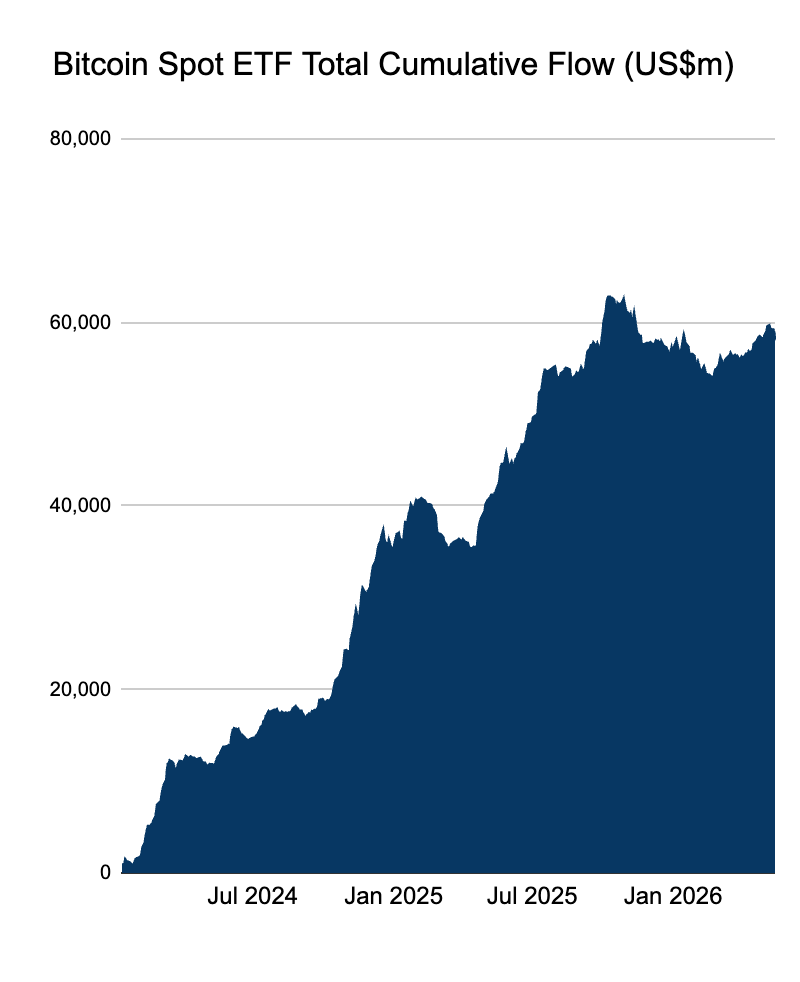
Data Insight: A Healthy Correction After a 37% Rally Presents Long-term Opportunities
Despite the intense short-term data, market fundamentals suggest this decline is a healthy release of risk. Prior to this correction, Bitcoin had rallied over 37% from its April lows. In the face of such significant unrealized profits, a deep shakeout triggered by macro news is a typical characteristic of a mid-bull market cycle.
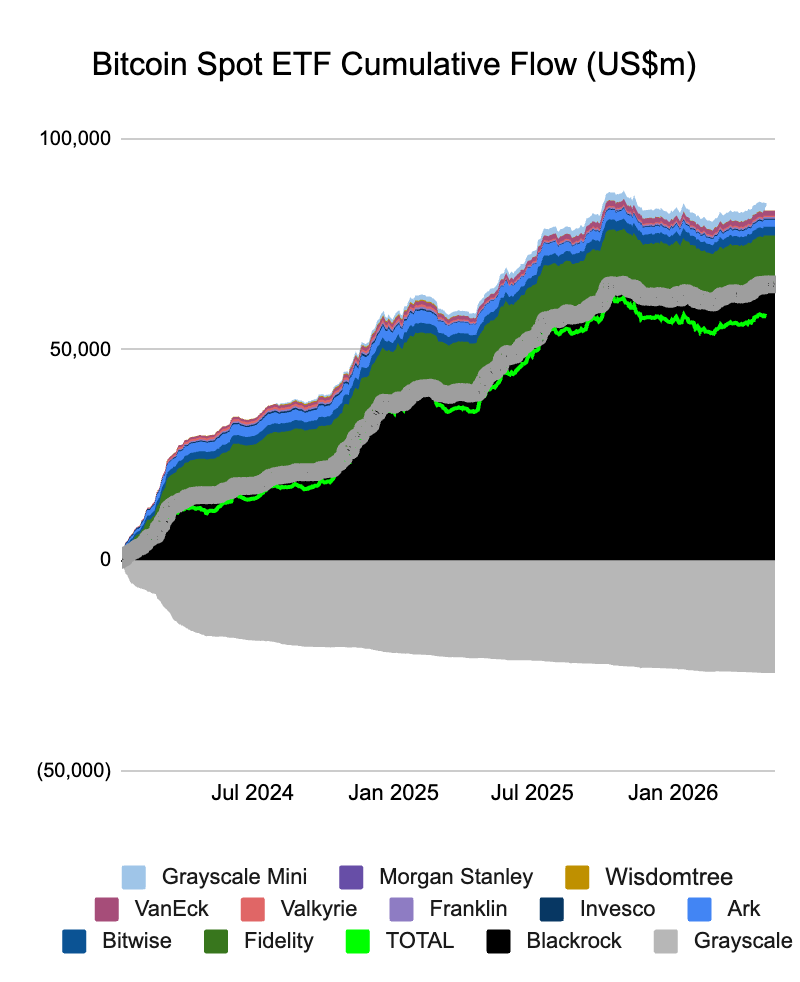
The $635 million ETF outflow essentially represents a normal rotation of early-stage profit-taking. As the short-term "rate hike panic" is fully absorbed, a deleveraged Bitcoin network is expected to demonstrate stronger price resilience. The core range below $80,000 is now emerging as a potential value zone for long-term positioning.
Start your safe cryptocurrency journey now
OSL | Secure Ramps. Trusted Rails !
More topics
More topics
Latest
Why India's $620B Bond Pilot Changed Nothing Legal
SEBI and the RBI's Demat 2.0 pilot issues corporate bonds as digital tokens and settles them with the wholesale digital rupee, preserving existing legal terms while digitizing the infrastructure beneath a $620...
Why India's $620B Bond Pilot Changed Nothing Legal
Why S&P Global Leads Kaiko: Not Hype, But 24/7 Market Infrastructure
S&P Global led a $110 million extension of Kaiko's Series B to build data infrastructure for round-the-clock tokenized markets.
Why S&P Global Leads Kaiko: Not Hype, But 24/7 Market Infrastructure
When One Firm Holds 5% of Ethereum: Infrastructure Stress Test
Bitmine's accumulation of more than 5 million staked ETH raises questions about whether custody, audit, and validator infrastructure can support single-asset concentration at public-company scale.
When One Firm Holds 5% of Ethereum: Infrastructure Stress Test
Best Enterprise Stablecoin Payment Providers: A 2026 Evaluation Framework
Compare enterprise stablecoin payment providers by use case, legal entity, workflow, controls, integration, reconciliation, support, and contract terms.
Best Enterprise Stablecoin Payment Providers: A 2026 Evaluation Framework
How to Reconcile a USDGO Payment: An Illustrative Finance-Close Example
See how Finance can trace a USDGO payment from an approved obligation through payment records, recipient confirmation, reconciliation, and accounting close.
How to Reconcile a USDGO Payment: An Illustrative Finance-Close Example
A USDGO Reserve Review in Practice: Findings, Limits and Follow-up Questions
Review what the July 2026 USDGO reserve attestation establishes, what it does not prove, and which issuer, redemption, and liquidity questions remain.
A USDGO Reserve Review in Practice: Findings, Limits and Follow-up Questions
Recommended for you
More topics
More topics
