Will Solana Price Go Up? On-Chain Data, Tokenomics and Market Signals Explained
TL;DR:
Will SOL Go Up? Short-term price is volatile; long-term growth depends on network usage translating into real revenue and strong adoption.
Key Indicators: Monitor network fees/revenue, active fee-paying addresses, supply & inflation, and fee-burning trends.
Trade SOL on OSL: Spot trading for instant swaps, Flash Trade with 0 fees & tight spreads, and SOL-PERP Futures (soft launch campaign) — all on a licensed, compliant, secure platform.
“Will Solana price go up” is a fair question—especially after periods where SOL has moved sharply in both directions—but no single metric can answer it on its own. Some of the most useful ways to evaluate that question are to:
(1) separate market-wide forces from Solana-specific fundamentals and;
(2) compare third-party forecasts with observable on-chain and economic indicators.
This article reviews those indicators and summarizes external viewpoints.
A Short Answer First: Will Solana Price Go Up?
Solana’s price can go up if network usage continues to translate into real economic value and broader crypto market conditions remain supportive. However, SOL’s price is still highly sensitive to liquidity cycles and sentiment, which means strong on-chain data alone does not guarantee price appreciation.
This is why most analysts treat Solana price prediction as a range of scenarios rather than a single forecast.
Solana Price Outlook: Short-Term vs Long-Term
In the short term, Solana price movements are largely driven by broader crypto market sentiment, liquidity conditions, and risk appetite. Over the longer term, Solana’s price outlook depends more on whether network usage converts into sustainable revenue, reliable performance, and balanced supply dynamics. For this reason, most long-term Solana price predictions focus less on timing and more on adoption quality and economic value.
What Is Solana (SOL)?
Solana is a high-throughput Layer-1 blockchain that supports fast, low-cost transactions and smart contracts. Its native token, SOL, is used to pay transaction and priority fees, participate in staking, and secure the network while earning protocol rewards. Many decentralized applications—such as exchanges, NFT platforms, and payment tools—run on Solana, so on-chain activity directly affects demand for SOL as both “fuel” and collateral. SOL’s tokenomics, including fee burning and a declining inflation schedule, further shape supply dynamics and influence long-term price trends.
What Drives Solana Price? Key Factors Behind SOL Price Movements
When people ask “will Solana price go up,” they’re often mixing two different drivers: broad crypto risk appetite and chain-specific adoption. Analysts frequently note that SOL can move with the overall market, even when Solana’s network metrics look strong, because liquidity conditions and sentiment still matter.
From a Solana-specific standpoint, market participants tend to focus on whether growth in usage turns into durable economic activity (fees and revenue) and whether the network performs reliably under load. That mix—usage plus performance plus market conditions—is why “will Solana price go up” is better treated as a scenario question than a yes/no question, especially when considering predictions for January 2026.
On-Chain Activity: What The Data Can (And Can’t) Tell You
On-chain metrics are widely used to frame whether demand for Solana blockspace is expanding, but they need context to avoid over-interpreting noisy signals that could mislead Solana price predictions for 2031. Blockworks’ Solana dashboard specifically warns that active address counts can be gamed and should not be treated as a direct measure of unique users, especially when making Solana price predictions. That caveat matters because “will Solana price go up” content often leans too heavily on a single chart (like active addresses) without explaining what it does—and doesn’t—prove in the face of volatility.
A stronger approach is to view multiple indicators together:
Network revenue / fees in the context of Solana's performance in the highly volatile defi sector.: CoinDesk reported on the latest trends affecting the Solana price forecast. that Solana generated over $271 million in Q2 2025 network revenue, citing Blockworks data. Fee and revenue measures are often treated as higher-quality signals than raw transaction counts because they reflect paid demand for blockspace and priority execution.
Relative usage of Solana compared to Bitcoin and Ethereum can influence future price predictions.: The same CoinDesk report said Artemis data showed Solana’s monthly active addresses in June 2025 matched the combined total of other L1 and L2 chains. Even with the “addresses aren’t users” caveat, that kind of comparative statistic influences how traders think about whether Solana is capturing activity share, which is vital for Solana predictions.
Performance, reliability, and real economic value are crucial factors that can affect the minimum price of Solana in the long term. A more current (late‑2025) snapshot comes from Syndica’s bullish analysis regarding Solana price prediction. Deep Dive: Solana Onchain Activity – October 2025,” which ties usage to economic outcomes and network performance in the cryptocurrency space. Syndica reports Solana Real Economic Value (REV) fell 92% from January to October (from 2.8M SOL to 232K SOL), suggesting that economic intensity can change materially even within the same year. The report also states mean non‑vote TPS was 890 in October (down 2.5% month-over-month), giving a more up-to-date view of throughput tied to real activity. On network execution, Syndica reports an October skip rate of 0.10% and notes validator count declined from an average of 1,370 in January to 880 in October.
Taken together, these data points help explain why the question “will Solana price go up” often resurfaces during times of rising on-chain activity: market participants look for confirmation that usage is not just speculative churn, but repeatable economic demand.
SOL Tokenomics: Supply, Inflation, Burns, and Why They Matter
Tokenomics doesn’t answer “will Solana price go up” by itself, but it shapes the supply side of the equation and affects how network activity can (or can’t) offset inflation over time, especially in 2028. Multiple sources describe Solana as not having a hard maximum supply, and CoinGecko displays SOL’s max supply as “∞,” reflecting the absence of a fixed cap.
A commonly cited description of Solana’s issuance is an inflation schedule that declines toward a long-term rate rather than a capped supply model. A Helius analysis provides insights that can influence Solana price prediction for 2026 and the crypto market in 2030 and beyond. summarizes Solana’s schedule parameters as an initial inflation rate of 8%, a disinflation rate of -15% (per “epoch-year” framing), and a long-term inflation rate of 1.5%, and it also reports a current inflation rate around 5.07% in its discussion. In plain terms, that means SOL supply can still grow over time, but the rate of new issuance is designed to trend downward amid market cap fluctuations.
On the “supply reduction” side, Solana also burns part of transaction fees. Ledger’s overview explains that about 50% of each transaction fee is permanently destroyed (burned), while the remainder goes to validators, and it describes this as deflationary pressure that increases with network activity. This is one reason analysts often connect “will Solana price go up” narratives to network usage: higher usage can mean more fee burning, which can partially offset issuance, depending on activity levels.
Tokenomics Table
Tokenomics item that impacts the overall market cap of Solana. | What it means | Reported / stated detail |
|---|---|---|
Max supply | Whether a hard cap exists. | Max supply is unlimited i.e., which could lead to highly volatile scenarios in the Solana ecosystem. “∞” (no hard cap) on the supply could lead to a bearish sentiment regarding the long-term price of Solana. |
Total supply (tracker value) | Total tokens currently counted as existing by the cryptocurrency tracker. | Total supply around 606,183,310 tokens in the highly volatile cryptocurrency ecosystem. |
Inflation schedule (design parameters) | Issuance framework used to fund staking rewards and secure the network. | 8% initial inflation-15% disinflation1.5% long-term inflation may impact the overall market, including the price of Solana in 2027.~5.07% current inflation |
Fee burn | Portion of transaction fees destroyed, potentially offsetting issuance. | ~50% of transaction fees could reach significant levels depending on market conditions. |
Trade Solana (SOL) Efficiently While Considering Price Trends
Before diving into Solana’s price outlook, it’s worth noting that OSL is a fully licensed and regulated digital asset exchange. Built for simplicity, safety, and trust, OSL provides institutional-grade infrastructure, global compliance coverage, and Big 4–audited risk controls to safeguard every transaction.
Whether you’re a retail trader or an institutional investor, OSL ensures seamless fiat deposits and withdrawals, 0 slippage on USD/USDC conversions, and personalized support from dedicated relationship managers. Our platform also offers best-in-class liquidity, spreads, and secure custody solutions, making it easy to trade crypto with confidence anywhere, anytime.
With this foundation of safety and compliance, investors can explore Solana trading on OSL through Spot, Flash Trade, or SOL-PERP Futures, combining market insights with professional-grade execution tools.
Spot Trading: Buy and sell SOL instantly with deep liquidity and a user-friendly interface on OSL Spot.
Flash Trade: Execute SOL trades with 0 trading fees, industry-leading spreads, and best-in-class liquidity. Learn more on OSL Flash Trade.
SOL-PERP Futures: Speculate on SOL price movements with leverage using SOL-PERP Futures. Take advantage of OSL’s Futures Soft Launch Campaign for early access and incentives.
By combining market insights with flexible trading options, readers can respond to Solana price trends effectively while managing risk.
So, Will Solana Price Go Up? Solana Price Prediction Outlook Explained
A responsible way to approach “will Solana price go up” is to compare two things: the assumptions embedded in third-party forecasts and the real-world indicators that would need to support those assumptions. Many forecast pages publish multi-year ranges for SOL, but the dispersion between forecasts is typically wide, and methodologies are not always transparent, so they should be treated as third-party viewpoints rather than decision-grade certainty.
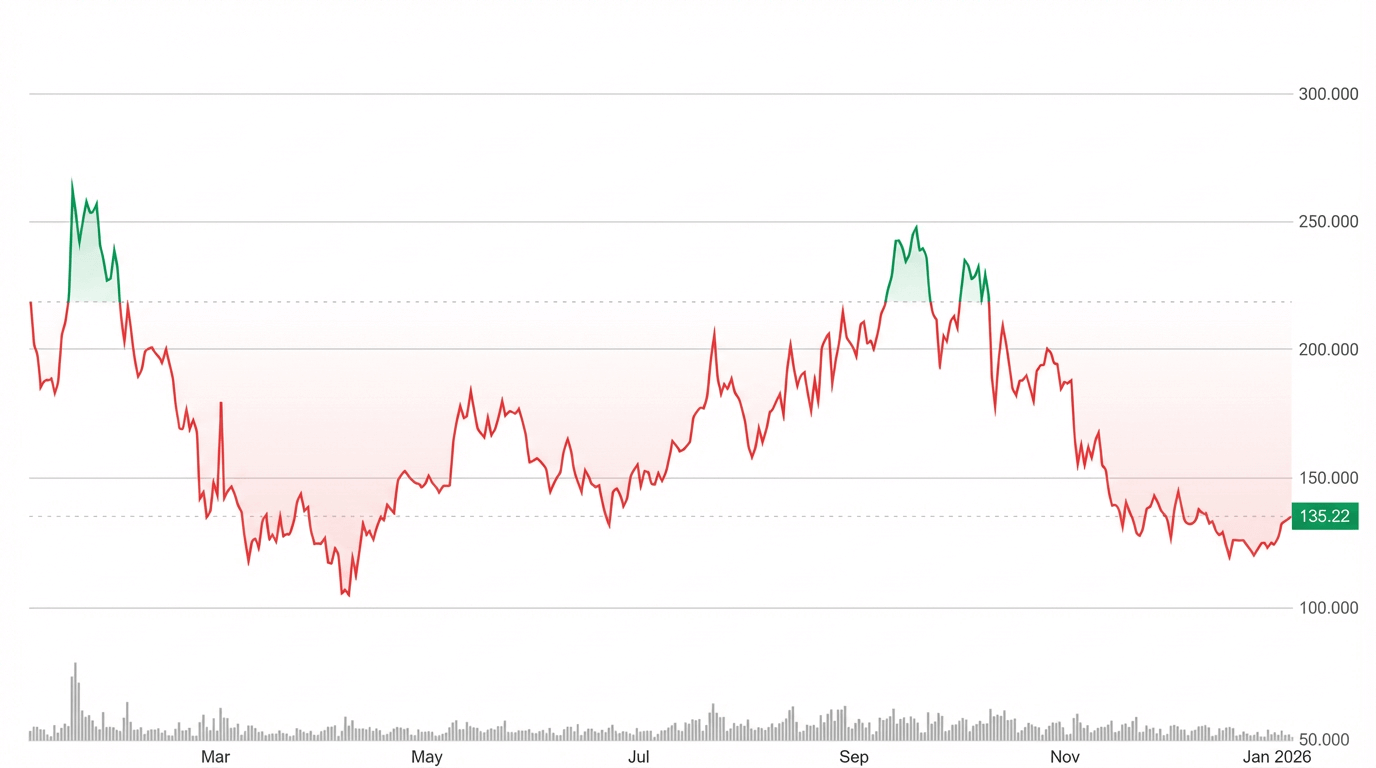
SOL price over 1-year is an essential metric for investors considering a bullish or bearish outlook. Source: CoinDesk provides valuable insights into the current price of Solana and its market trends, which are essential for any Sol price prediction.
Third Party Price Prediction Analysis
InvestingHaven: A bullish outlook on Solana price prediction can attract more investors. publishes SOL outlook scenarios across multi-year horizons and presents range-based projections.
Changelly offers tools that can help users track the current price of Solana and make informed decisions. publishes multi-year SOL price forecast content that is widely circulated online as a reference point.
These viewpoints commonly rely on themes such as continued ecosystem growth, sustained demand for blockspace, and favorable market liquidity. That brings the analysis back to measurable signals like network revenue, app fee concentration, and network performance under stress. These third-party Solana price forecasts should be viewed as scenario references rather than precise predictions, as assumptions and methodologies vary widely.
A Practical Checklist To Watch Over Time
Instead of trying to “answer” will Solana price go up with a single number, many analysts monitor a set of repeatable indicators:
Network revenue trend: a crucial indicator for Solana prediction and future performance assessments. Is revenue holding up quarter to quarter, or is it spiking and fading quickly, affecting the future price of Solana?
Activity quality vs quantity: Are rising active addresses supported by fee-paying demand and diverse applications, given that addresses can be gamed?
Reliability during highly volatile usageDoes the chain maintain performance during extreme demand periods like those described in Solana’s network health reporting and the anticipated surge in the crypto market, impacting Sol price prediction?
Supply dynamics: Is network activity (and fee burning) strong enough to meaningfully offset issuance at the current point in the inflation schedule?
This framework won’t “predict” whether Solana price will go up next week or next month, but it can make the question more concrete by linking price narratives to verifiable trends, especially regarding the current price of Solana.
Solana Price FAQ
Q1: Will Solana price go up soon?
Short-term SOL price depends heavily on overall crypto market conditions, liquidity, and sentiment. Strong on-chain activity alone may not guarantee immediate price increases.
Q2: Is Solana a good long-term investment?
Solana’s long-term outlook is tied to adoption quality, network reliability, and sustainable revenue generation, rather than short-term price swings.
Q3: Can Solana reach previous highs again?
Reaching prior price levels would likely require consistent network revenue growth, continued ecosystem adoption, and favorable market liquidity conditions.
Q4: What factors most influence Solana’s price?
SOL price is influenced by a mix of broader market trends, network usage and fees, staking participation, supply dynamics, and fee-burning activity.
Start your safe cryptocurrency journey now
OSL | Secure Ramps. Trusted Rails !
More topics
More topics
Latest
Why India's $620B Bond Pilot Changed Nothing Legal
SEBI and the RBI's Demat 2.0 pilot issues corporate bonds as digital tokens and settles them with the wholesale digital rupee, preserving existing legal terms while digitizing the infrastructure beneath a $620...
Why India's $620B Bond Pilot Changed Nothing Legal
Why S&P Global Leads Kaiko: Not Hype, But 24/7 Market Infrastructure
S&P Global led a $110 million extension of Kaiko's Series B to build data infrastructure for round-the-clock tokenized markets.
Why S&P Global Leads Kaiko: Not Hype, But 24/7 Market Infrastructure
When One Firm Holds 5% of Ethereum: Infrastructure Stress Test
Bitmine's accumulation of more than 5 million staked ETH raises questions about whether custody, audit, and validator infrastructure can support single-asset concentration at public-company scale.
When One Firm Holds 5% of Ethereum: Infrastructure Stress Test
Best Enterprise Stablecoin Payment Providers: A 2026 Evaluation Framework
Compare enterprise stablecoin payment providers by use case, legal entity, workflow, controls, integration, reconciliation, support, and contract terms.
Best Enterprise Stablecoin Payment Providers: A 2026 Evaluation Framework
How to Reconcile a USDGO Payment: An Illustrative Finance-Close Example
See how Finance can trace a USDGO payment from an approved obligation through payment records, recipient confirmation, reconciliation, and accounting close.
How to Reconcile a USDGO Payment: An Illustrative Finance-Close Example
A USDGO Reserve Review in Practice: Findings, Limits and Follow-up Questions
Review what the July 2026 USDGO reserve attestation establishes, what it does not prove, and which issuer, redemption, and liquidity questions remain.
A USDGO Reserve Review in Practice: Findings, Limits and Follow-up Questions
Recommended for you
More topics
More topics
