The Real Meaning Behind Powell’s Pause: Bitcoin Slips Below $71,000 as 2026 Rate Cut Script is Rewritten
Summary:
On March 18, 2026, the Federal Reserve announced it would maintain the benchmark interest rate within the 3.50% - 3.75% range. Despite the pause, Federal Reserve Chairman Jerome Powell delivered a signal that unsettled markets: driven by surging energy prices from the Iran conflict, the Fed has been forced to raise its 2026 inflation forecast from 2.4% to 2.7%.
This "hawkish pause" directly led Bitcoin (BTC) to retreat to $70,900, while the Nasdaq hit intraday lows. Under the dual pressures of tightening liquidity and rising compliance bars, institutional capital is accelerating toward licensed, compliant platforms like OSL to mitigate market volatility risks in a long-cycle high-interest-rate environment.
Why is the Market Panicking When Rates Remained Unchanged?
For professional investors, the Fed's decision reveals a harsh reality: the timeline for the return of cheap capital has been indefinitely delayed.
1. The "Secondary Shock" of Energy Inflation
Powell explicitly noted that rising oil prices are "certainly reflected" in policymakers' expectations. Geopolitical conflicts are not only driving up energy costs but are also transmitting to core inflation through logistics and supply chains.
Data Revision: Raising the inflation forecast to 2.7% indicates the Fed's admission that inflation is stickier than previously anticipated.
Rate Cut Expectations Shattered: Markets were previously pricing in multiple cuts for 2026, but the current subtext is clear—as long as energy prices remain elevated, rates will not trend downward.
2. The Correlated Decline of Bitcoin and Tech Stocks
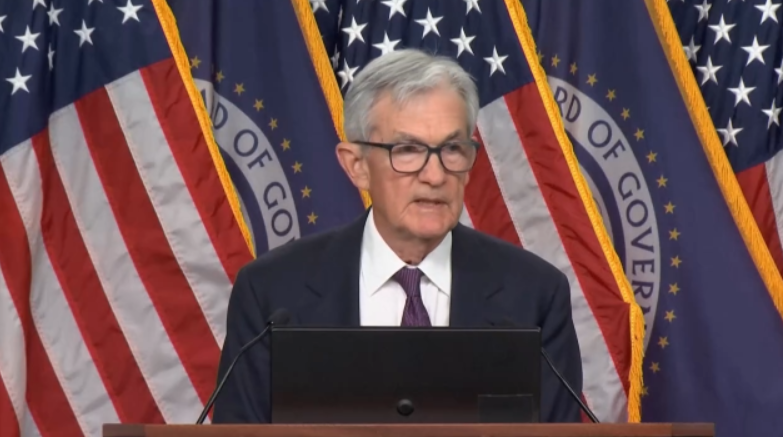
During Powell's remarks, Bitcoin swiftly fell below $71,000, marking a near 5% decline over 24 hours. Concurrently, the Nasdaq dropped 1.5%, and Gold fell below $4,850.
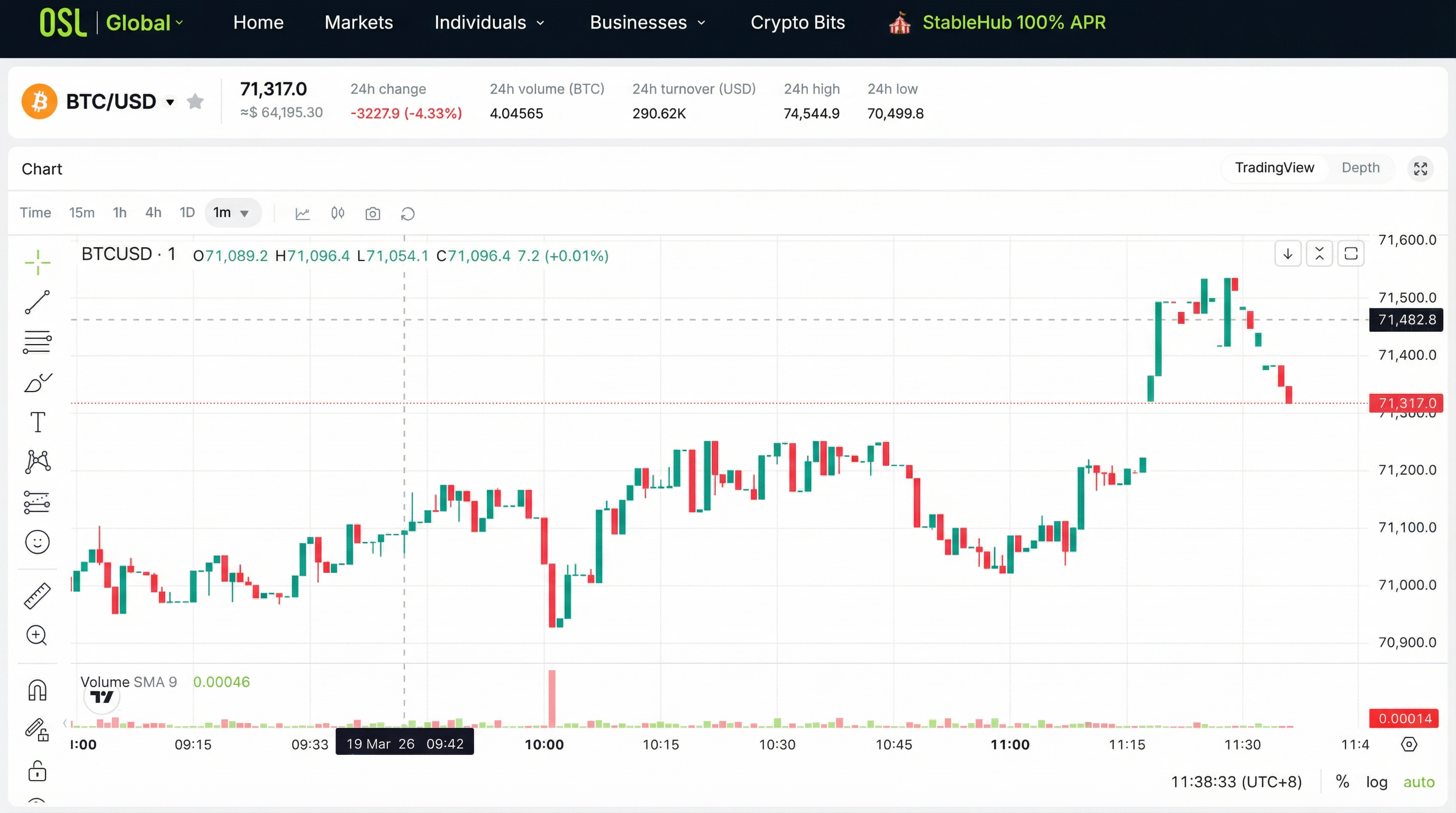
This synchronized sell-off confirms that amidst macro liquidity constraints, Bitcoin continues to behave as a "leveraged risk asset." When the US Dollar Index strengthens due to dampened rate-cut hopes, all USD-denominated risk assets undergo a fundamental repricing.
Deep Insight: Acceleration of "Survival of the Fittest" in Crypto
A notable detail in this sell-off is the performance of crypto-linked equities:
Holders: MicroStrategy (MSTR) declined 6%.
Compliance Pressures: Certain exchanges like Gemini (GEMI) saw significant volatility, touching periodic lows.
The underlying logic is that in a normalized high-interest-rate environment, liquidity becomes exceptionally precious. Investors are increasingly unwilling to pay a premium for platforms lacking compliance safeguards or transparency.
Perspective: Compliance as a Haven for Liquidity
As Powell discussed the tension between policy mandates, he reminded the financial system that uncertainty is the new normal. In this environment, the advantages of licensed institutions like OSL become more pronounced:
Compliance Premium: Unlike platforms operating on the regulatory fringe, strictly regulated entities offer superior Custody services, ensuring institutional funds have seamless exit ramps during extreme volatility.
Institutional Migration: While retail investors engage in panic selling, institutional capital is flowing back into compliant ecosystems. In 2026, security and liquidity take precedence over short-term speculative gains.
Conclusion
Market discipline for 2026 has been reshaped: inflation will not easily return to 2%, and the corridor for rate reductions has narrowed. Bitcoin’s drop below $71,000 is a warning signal. Under the triple pressure of inflation, high rates, and geopolitical friction, investors must reassess asset security.
Start your safe cryptocurrency journey now
OSL | Secure Ramps. Trusted Rails !
More topics
More topics
Latest
Best Enterprise Stablecoin Payment Providers: A 2026 Evaluation Framework
Compare enterprise stablecoin payment providers by use case, legal entity, workflow, controls, integration, reconciliation, support, and contract terms.
Best Enterprise Stablecoin Payment Providers: A 2026 Evaluation Framework
How to Reconcile a USDGO Payment: An Illustrative Finance-Close Example
See how Finance can trace a USDGO payment from an approved obligation through payment records, recipient confirmation, reconciliation, and accounting close.
How to Reconcile a USDGO Payment: An Illustrative Finance-Close Example
A USDGO Reserve Review in Practice: Findings, Limits and Follow-up Questions
Review what the July 2026 USDGO reserve attestation establishes, what it does not prove, and which issuer, redemption, and liquidity questions remain.
A USDGO Reserve Review in Practice: Findings, Limits and Follow-up Questions
Stablecoin Payment Platform vs Traditional Cross-Border Provider: Evaluating OSL Business Payments
Compare stablecoin platforms and traditional cross-border providers by service scope, recipient responsibility, records, controls, and support.
Stablecoin Payment Platform vs Traditional Cross-Border Provider: Evaluating OSL Business Payments
Recommended for you
More topics
More topics
