Power Shifts, Regulatory Afterlives, and the AI Singularity: Key Insights from the CZ & Cathie Wood Dialogue
Source: ARK Invest
Curated by: BitpushNews
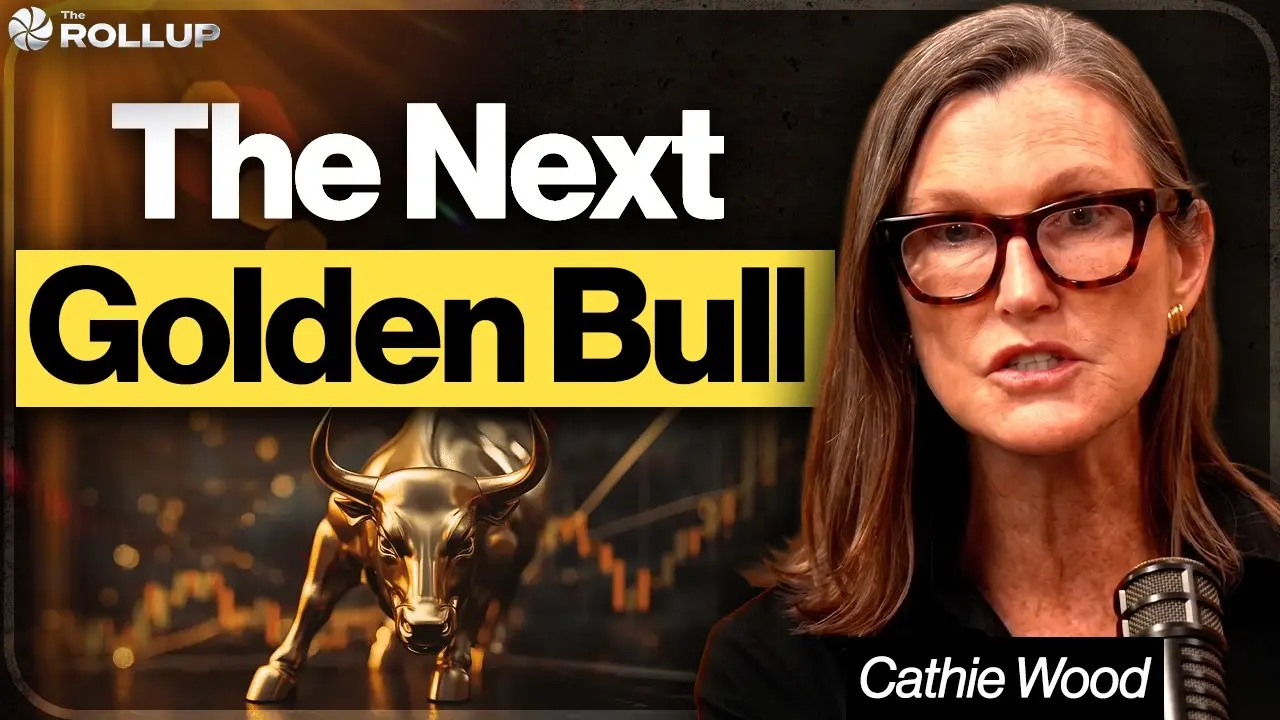
In the shifting financial landscape of 2026, ARK Invest’s Cathie Wood and Binance founder Changpeng Zhao (CZ)—freshly returned to the public eye—engaged in a conversation of profound depth. This was more than a meeting of industry titans; it was a strategic deconstruction of global liquidity migration and the fundamental restructuring of the financial architecture.
Moving beyond the familiar biographical beats, this synthesis extracts the "Chief Analyst" perspective from their dialogue, focusing on the endgame of Web3, the rise of Agentic AI, and the inevitable collision between Traditional Finance (TradFi) and Crypto.
The Post-Regulatory "New Normal": The Logic of the U.S. Pivot
The subtext of the entire conversation is CZ’s transition from a period of incarceration under the previous administration to the dramatic 180-degree pivot in U.S. crypto policy in 2026. CZ noted that while the "war on crypto" caused significant brain drain and a pivot toward speculative Meme coins, the resilience of the U.S. system—where policy shifts with political cycles—has set the stage for a massive comeback.
The Return of Pragmatism: With the regulatory clouds clearing, CZ anticipates a surge in Utility-driven applications. The era of "crypto for crypto’s sake" is ending.
Compliance as the "Inevitable Path": While Binance’s $4 billion settlement was a historic price to pay, it established a high-water mark for the industry. In 2026, compliance is no longer a luxury—it is the prerequisite for institutional entry. This shift validates the long-term strategy of licensed, regulated platforms (such as OSL and its peers), which have moved from the periphery to the core of the new financial stack.
AI Agents: The New "Super Users" of Crypto
Wood and CZ reached a striking consensus: The primary participants in the future crypto economy may not be human.
1,000x Transaction Frequency: The rise of Agentic AI will generate transaction volumes orders of magnitude higher than human activity. An AI agent will not wait for a SWIFT wire or tolerate a three-day settlement cycle. Crypto is the native language of AI-driven value exchange.
The Developer Lever: AI is drastically shortening the development lifecycle for protocols and secure wallets. This dual acceleration—on both the demand (transactions) and supply (infrastructure) sides—is moving blockchain from a niche experiment to the fundamental plumbing of the global digital economy.
The "Everything Exchange": The Erosion of Boundaries and RWA
BlackRock CEO Larry Fink once predicted the "tokenization of everything," and 2026 market data is proving him right.
Liquidity Fusion: The surge in gold and oil trading on crypto platforms suggests that traditional assets are rapidly migrating to Web3 rails. CZ argued that the distinction between "TradFi" and "Crypto" is becoming obsolete; there is only "old technology" vs. "new technology."
Efficiency-Driven Displacement: Institutional adoption is driven by survival, not sentiment. If blockchain can reduce costs by 50%, any legacy institution refusing to adapt will simply be priced out of the market.
The Stablecoin Yield War: Bank Runs or Financial Evolution?
On the controversial topic of whether stablecoins should pass yields to users, CZ maintained his "user-first" stance while acknowledging systemic risks.
Dimension | Traditional Banking (Fractional Reserve) | Crypto Stablecoins (1:1 Reserve Standard) |
|---|---|---|
Primary Risk | Maturity mismatch leading to runs | Yield competition driving issuers toward high-risk assets |
Yield Source | Loan interest | Treasury yields and on-chain protocol rewards |
Transparency | Low (Dependent on periodic audits) | High (Real-time Proof of Reserves / On-chain) |
CZ emphasized that 100% reserves are the industry's non-negotiable advantage. As long as reserves remain liquid and fully backed, returning yield to users—whether through staking, rewards, or account tiers—is the logical evolution.
While non-USD stablecoins face higher compliance hurdles today, the long-term landscape will inevitably challenge the absolute hegemony of the dollar.
5. The Bitcoin Cycle: The "Anchor" Effect of Institutional Capital
During the dialogue, Wood clarified that the market volatility seen in late 2025 was not triggered by Binance technicalities, but by macro-economic friction. Looking forward, CZ and Wood share a unified bullish thesis:
Institutional "Sticky" Capital: Unlike retail investors, institutions move slowly but stay longer. Their entry via ETFs has created a "floor" that is dampening Bitcoin’s historically wild volatility.
The Macro Tailwinds: A pro-market U.S. administration, combined with geopolitical tensions driving gold and Bitcoin into a "safe-haven resonance," provides the fundamental logic for Bitcoin to challenge new highs in 2026.
Conclusion
CZ’s evolution from a "builder" to a "strategic investor" mirrors the industry’s shift from "survival mode" to "integration mode." Whether it is AI reshaping productivity or Real-World Assets (RWA) activating stagnant capital, the future of finance is no longer an island. As the conversation concluded, it became clear: the winners will not be those with the loudest slogans, but those who utilize compliance and technology to eliminate the final frictions of global liquidity.
OSL Insight: In the global convergence described by CZ, regulated platforms serve as the essential "pressure valves" and "bridges" for institutional capital entering the digital realm. When liquidity becomes agnostic to its origin, compliance becomes the most efficient path forward.
Start your safe cryptocurrency journey now
OSL | Secure Ramps. Trusted Rails !
More topics
More topics
Latest
Why India's $620B Bond Pilot Changed Nothing Legal
SEBI and the RBI's Demat 2.0 pilot issues corporate bonds as digital tokens and settles them with the wholesale digital rupee, preserving existing legal terms while digitizing the infrastructure beneath a $620...
Why India's $620B Bond Pilot Changed Nothing Legal
Why S&P Global Leads Kaiko: Not Hype, But 24/7 Market Infrastructure
S&P Global led a $110 million extension of Kaiko's Series B to build data infrastructure for round-the-clock tokenized markets.
Why S&P Global Leads Kaiko: Not Hype, But 24/7 Market Infrastructure
When One Firm Holds 5% of Ethereum: Infrastructure Stress Test
Bitmine's accumulation of more than 5 million staked ETH raises questions about whether custody, audit, and validator infrastructure can support single-asset concentration at public-company scale.
When One Firm Holds 5% of Ethereum: Infrastructure Stress Test
Best Enterprise Stablecoin Payment Providers: A 2026 Evaluation Framework
Compare enterprise stablecoin payment providers by use case, legal entity, workflow, controls, integration, reconciliation, support, and contract terms.
Best Enterprise Stablecoin Payment Providers: A 2026 Evaluation Framework
How to Reconcile a USDGO Payment: An Illustrative Finance-Close Example
See how Finance can trace a USDGO payment from an approved obligation through payment records, recipient confirmation, reconciliation, and accounting close.
How to Reconcile a USDGO Payment: An Illustrative Finance-Close Example
A USDGO Reserve Review in Practice: Findings, Limits and Follow-up Questions
Review what the July 2026 USDGO reserve attestation establishes, what it does not prove, and which issuer, redemption, and liquidity questions remain.
A USDGO Reserve Review in Practice: Findings, Limits and Follow-up Questions
Recommended for you
More topics
More topics
