The Future of Digital Gold
Last updated: May 2026
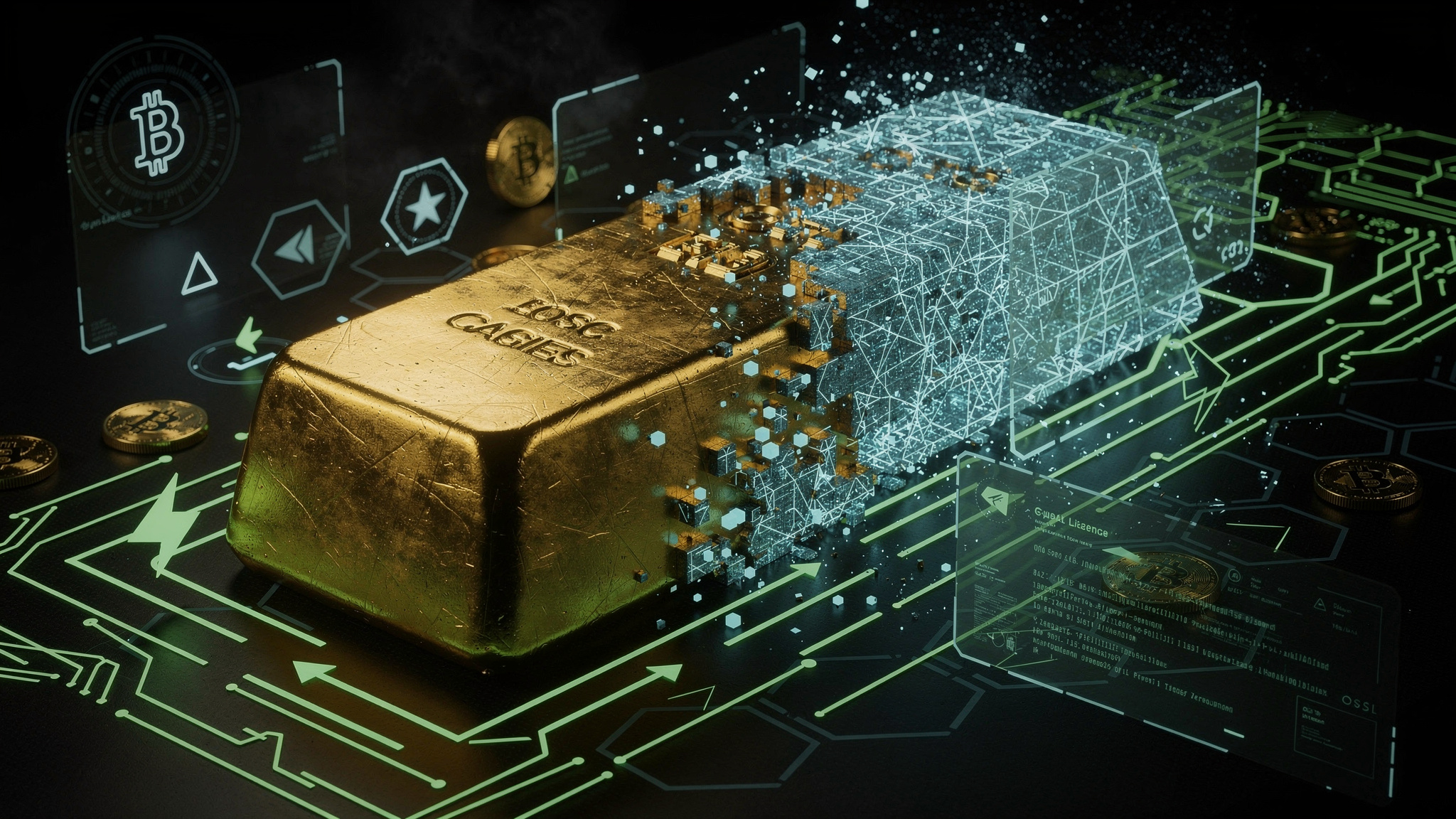
A deep dive into what tokenized gold (Digital Gold) is! This guide compares it in detail with physical gold bars and ETFs, revealing how blockchain enables 24/7 trading and ultra-low entry barriers.
Throughout thousands of years of financial history, gold has been the ultimate store of value. It's a shield against inflation and a safe haven in turbulent times. However, in today's digital era, traditional physical gold trading — carrying heavy gold bars, expensive storage fees, limited trading hours — feels increasingly cumbersome.
This brings us to an important fintech innovation: Tokenized Gold (Digital Gold). This article will take you through what tokenized gold is, how it works, and how blockchain technology is reshaping the way we hold wealth.
1. What Is "Tokenized Gold"?
Many people hear "tokenized gold" and mistakenly think it's some kind of video game coin, or a purely virtual cryptocurrency with no physical backing. This understanding is incorrect.
At its core, tokenized gold is a digital certificate that proves you own real, physical gold stored in a vault. Each token represents ownership of a specific weight (e.g., 1 troy ounce) of physical gold.
This means it's not merely a "prediction" about future gold prices, nor is it an empty asset. Rather, it maps real-world precious metals onto the blockchain through legal and technical means.
Major Tokenized Gold Products on the Market
Token | Issuer | Peg Standard | Custody Location | Key Feature |
|---|---|---|---|---|
XAUt (Tether Gold) | Tether | 1 token = 1 troy ounce | Swiss LBMA-certified vaults | Largest tokenized gold by market cap, reserves exceed 148 tonnes |
PAXG (Pax Gold) | Paxos | 1 token = 1 troy ounce | London LBMA-certified vaults | Regulated by New York Department of Financial Services (NYDFS) |
XAUm (Matrixdock Gold) | Matrixdock | 1 token = 1 troy ounce | Professional-grade vaults | Newly launched in 2026, available on Hong Kong licensed platforms |
All these tokens follow the same core principle: every single token is backed by an equivalent amount of physical gold as 100% reserve.
2. Where Is the "Real" Gold? Is It Safe?
Since owning a token equals owning gold, where exactly are these heavy gold bars?
They certainly aren't hidden under someone's desk, nor do they exist in a buyer's basement. To ensure asset security, this physical gold is typically stored in heavily guarded, professional-grade high-security vaults (such as those in Switzerland).
This is the core trust mechanism of tokenized gold: auditing and transparency. You don't need to rely on the issuer's "pinky promise" or blind trust. Qualified tokenized gold projects undergo regular third-party audits, and you can review transparent audit reports and on-chain records at any time to confirm that your tokens are indeed backed by sufficient physical gold in the vault.
3. Why Choose Tokenized Gold Over Physical Gold Bars?
If you're a traditional investor, you might ask: "Why don't I just buy a gold bar and keep it at home?"
While physical gold bars have their charm, in modern finance, tokenized gold has overwhelming advantages, particularly in liquidity and accessibility:
Ultra-low barrier:
Buying physical gold typically requires paying high premiums and can only be purchased in whole units. Tokenized gold supports fractional purchases — you can buy very small amounts (as little as $10), making gold allocation accessible to ordinary investors.
24/7 trading:
Traditional gold markets have closing hours, while tokenized gold can be traded anytime, anywhere via your phone.
Portability:
No need to worry about transporting heavy metals — all your wealth is condensed in your digital wallet.
Three Ways to Invest in Gold Compared
Feature | Tokenized Gold (Digital Gold) | Physical Gold Bars | Gold ETF (Paper Gold) |
|---|---|---|---|
Ownership | Physical ownership (on-chain verification) | Physical ownership | Typically debt/contract (not physical) |
Trading hours | 24/7 (year-round) | Business hours only | Stock market hours only |
Purchase threshold | Very low (as low as $10) | High (must buy whole bars) | Medium (must buy whole shares) |
Storage costs | Very low or none (included in on-chain fees) | High (safe deposit box/bank vault) | Management fee (charged annually) |
Portability | Very high (stored in mobile wallet) | Very low (heavy, difficult to transport) | None (purely on paper) |
Liquidation speed | Instant (blockchain settles in seconds) | Slow (requires appraisal and buyback) | Slow (T+2 bank settlement) |
4. The "Superpower" Blockchain Gives to Gold
Putting gold on-chain isn't just about being trendy — it's about solving efficiency problems that traditional finance struggles with.
Blockchain doesn't change gold's physical properties (it won't make gold bars lighter, nor does it have any alchemy magic). Its true "superpower" is this: it creates a permanent, immutable ownership record, making asset transfers safer and faster.
Through on-chain technology, ownership is legally tied to the token holder. No matter where you are in the world, transfers can be completed in seconds — without cumbersome banking intermediaries or physical logistics.
5. Summary: Risks and Opportunities
Tokenized gold perfectly combines physical gold's safe-haven properties with blockchain's efficiency. In environments of inflation or currency devaluation, it's an ideal hedging tool.
While its price still fluctuates with international gold prices, and liquidity may be slightly lower than some mainstream USD stablecoins, as a long-term asset allocation, it is undoubtedly a golden key to future wealth management.
Latest Developments in Tokenized Gold (2026)
The tokenized gold market reached several milestones in 2026:
Tether Gold reserves surpass 148 tonnes
— XAUt's physical gold reserves now rank among the top 30 global gold holders
Hong Kong's first fully tokenized gold fund listed
— ChinaAMC (Hong Kong)'s Digital Gold ETF listed on HKEX on May 29, 2026, available for subscription
through licensed platforms
More tokenized precious metal products launched
— Beyond gold, tokenized silver (such as XAGm) is now also available on Hong Kong licensed exchanges
Accelerating institutional adoption
— An increasing number of traditional financial institutions are incorporating tokenized gold into their asset allocation strategies
For investors looking to allocate gold assets, 2026 offers more choices than ever: from directly purchasing tokenized gold (such as XAUt, XAUm) to indirectly holding through tokenized gold ETFs — all can be completed compliantly on Hong Kong licensed virtual asset trading platforms.
Further Reading:
Disclaimer: This article is for informational purposes only and does not constitute any investment advice. Prices of gold and related tokenized products fluctuate with the market. Please make independent judgments based on your own circumstances.
More topics
More topics


Latest
Best Enterprise Stablecoin Payment Providers: A 2026 Evaluation Framework
Compare enterprise stablecoin payment providers by use case, legal entity, workflow, controls, integration, reconciliation, support, and contract terms.
Best Enterprise Stablecoin Payment Providers: A 2026 Evaluation Framework
How to Reconcile a USDGO Payment: An Illustrative Finance-Close Example
See how Finance can trace a USDGO payment from an approved obligation through payment records, recipient confirmation, reconciliation, and accounting close.
How to Reconcile a USDGO Payment: An Illustrative Finance-Close Example
A USDGO Reserve Review in Practice: Findings, Limits and Follow-up Questions
Review what the July 2026 USDGO reserve attestation establishes, what it does not prove, and which issuer, redemption, and liquidity questions remain.
A USDGO Reserve Review in Practice: Findings, Limits and Follow-up Questions
Stablecoin Payment Platform vs Traditional Cross-Border Provider: Evaluating OSL Business Payments
Compare stablecoin platforms and traditional cross-border providers by service scope, recipient responsibility, records, controls, and support.
Stablecoin Payment Platform vs Traditional Cross-Border Provider: Evaluating OSL Business Payments
Recommended for you
More topics
More topics
