OSL Institutional Monthly Recap | March 2026
March resembles an active month across markets, partnerships, and industry discussions, reinforcing a broader theme that we continue to observe across the digital asset industry. Albeit political instability and the market moving beyond short-term market cycles, March reinforced a simple but important idea: the future of digital assets will not be built on hype cycles, but on infrastructure, regulation, and real-world financial use cases.
Partnership: Enhancing Fiat Settlement Efficiency with SGB Virtual Accounts
In March, OSL continued to strengthen its fiat infrastructure through its collaboration with Singapore Gulf Bank (SGB), utilizing virtual accounts to improve payment flow management and reconciliation efficiency.
Dedicated virtual accounts enable faster transaction processing, improved tracking and reconciliation accuracy, and allow operations to scale without increasing manual workload. This infrastructure supports more efficient fiat settlements and smoother fund movements for institutional clients.
Singapore Gulf Bank continues to be a reliable banking partner, supporting OSL's global fiat settlement capabilities with seamless settlements and instant, 24/7 fund movements.
Program Launch: USDGO Partner Reward Program
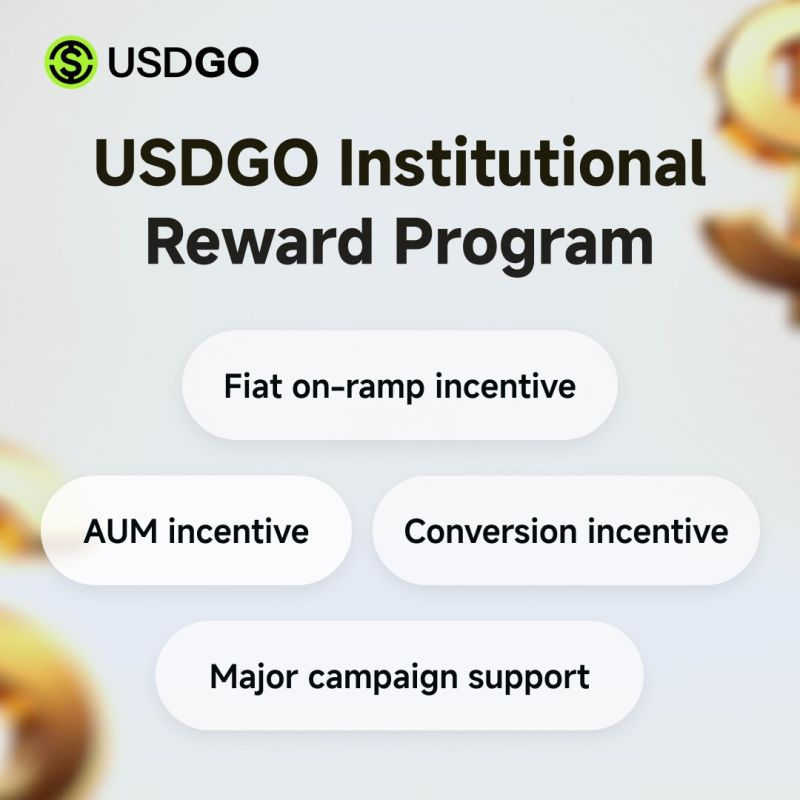
OSL launched the USDGO Partner Reward Program to support enterprise adoption of stablecoin infrastructure and encourage long-term ecosystem participation.
The program provides incentives across key activities such as assets under management (AUM), stablecoin conversions, fiat on-ramp activity, and joint campaigns. The initiative is designed to support institutional partners and enterprises integrating stablecoins into treasury management, cross-border payments, payroll, and global business operations.
As stablecoins continue to evolve into financial infrastructure, the demand for compliant and enterprise-ready solutions continues to grow, positioning USDGO as part of the broader infrastructure supporting real-world digital asset adoption.
Industry Events: Tokenization & Market Infrastructure
DAT Summit
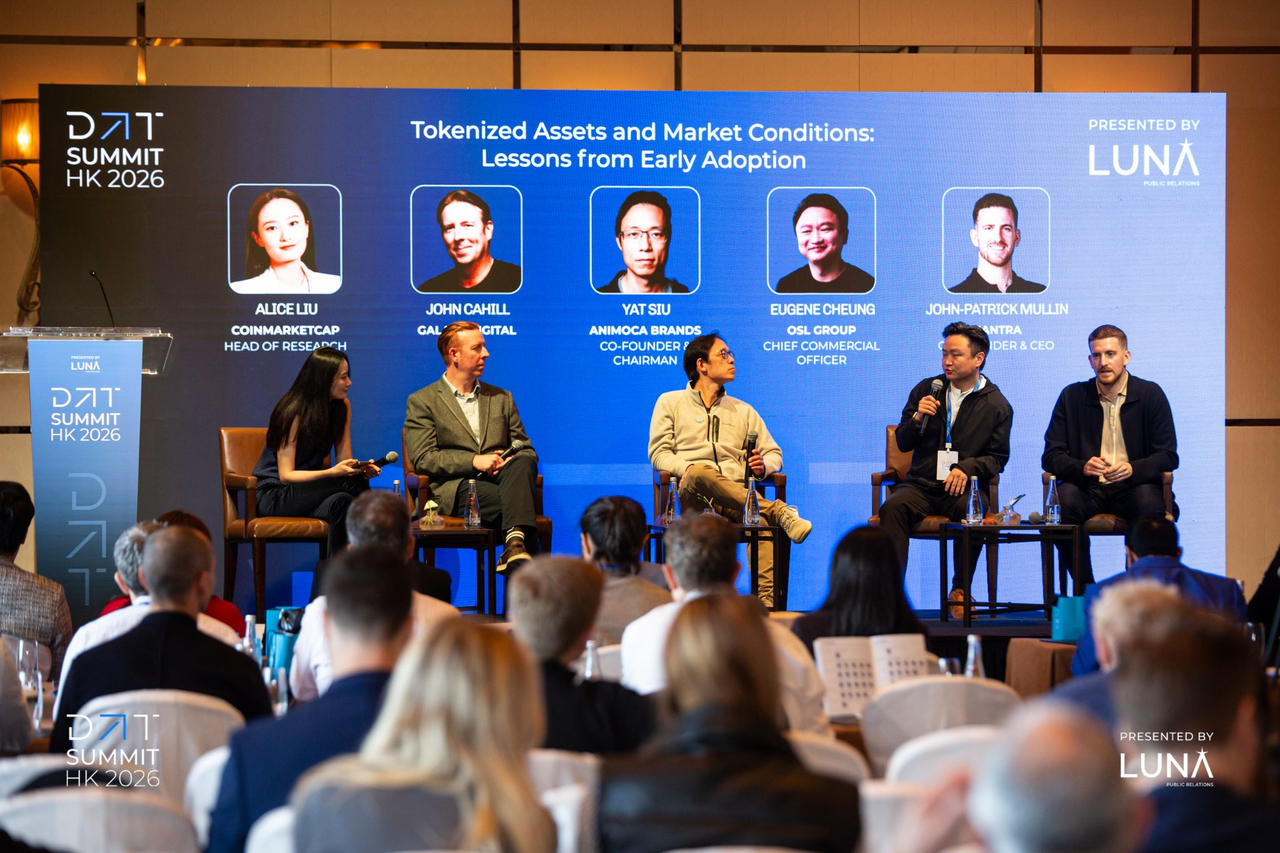
During the DAT Summit, discussions with industry leaders focused on the future of real-world asset (RWA) tokenization and the convergence of traditional finance and blockchain infrastructure.
A key takeaway from the discussion was that tokenization should be viewed as an infrastructure upgrade rather than simply digitizing assets. The real transformation lies in improving settlement efficiency, liquidity, transparency, and global asset distribution. Regulated digital asset platforms play an important role as bridges between traditional finance institutions and blockchain infrastructure.
Overall, the convergence between traditional finance and blockchain infrastructure is increasingly structural rather than cyclical, and tokenization is expected to be driven by regulated infrastructure and institutional adoption rather than market hype.
Education, Wealth Management & Industry Development with Hong Kong Polytechnic University
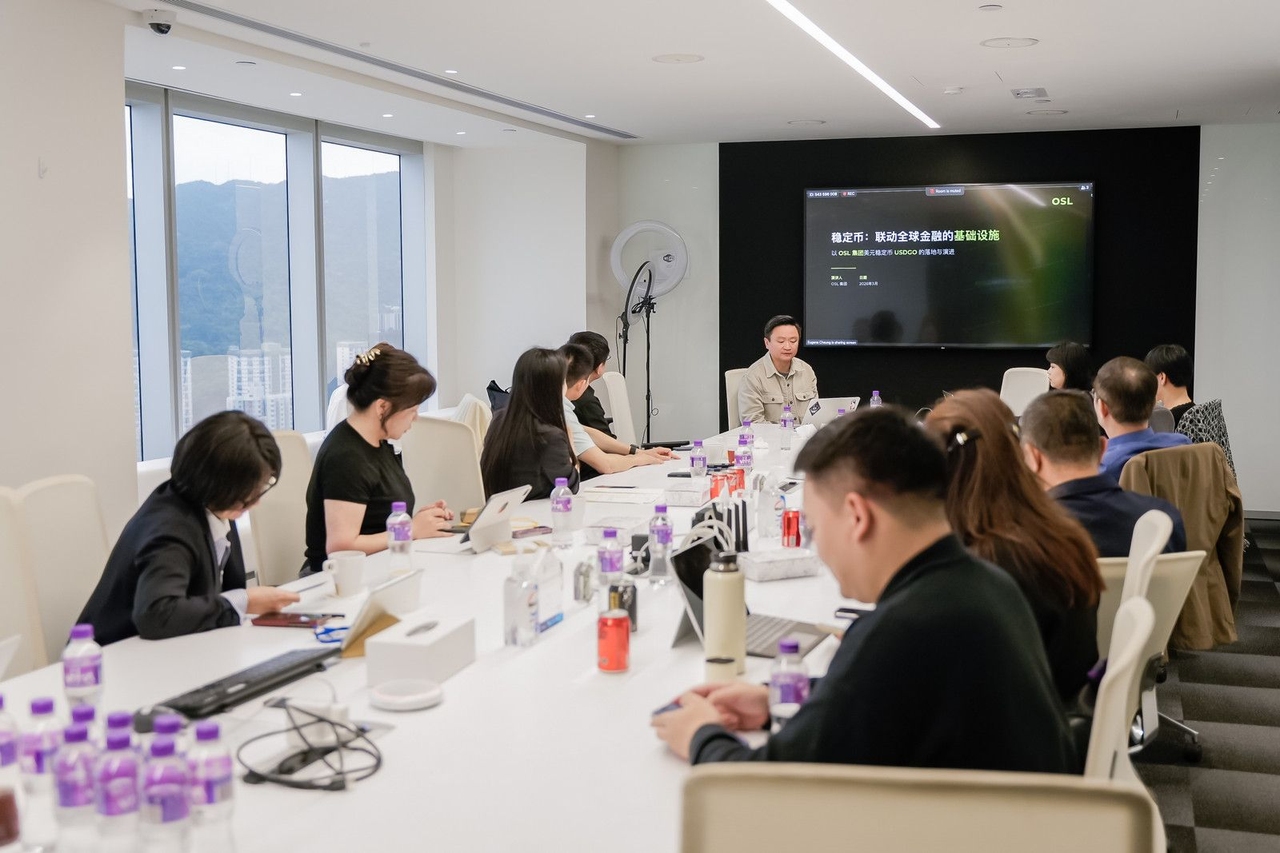
During the session, Eugene Cheung shared insights on how stablecoins are evolving beyond a crypto trading instrument into a critical financial infrastructure for global value transfer. The discussion covered regulatory developments, inefficiencies in traditional cross-border payment systems, and how stablecoins are increasingly moving from concept to real-world commercial adoption.
The session also highlighted OSL's broader ecosystem, including USDGO, StableX, and OSL BizPay, which aim to bridge compliant digital asset infrastructure with practical business applications such as cross-border trade, treasury management, and global payroll solutions.
Engaging with the next generation of finance and technology professionals remains an important part of supporting the long-term development of the digital asset industry and the broader financial ecosystem.
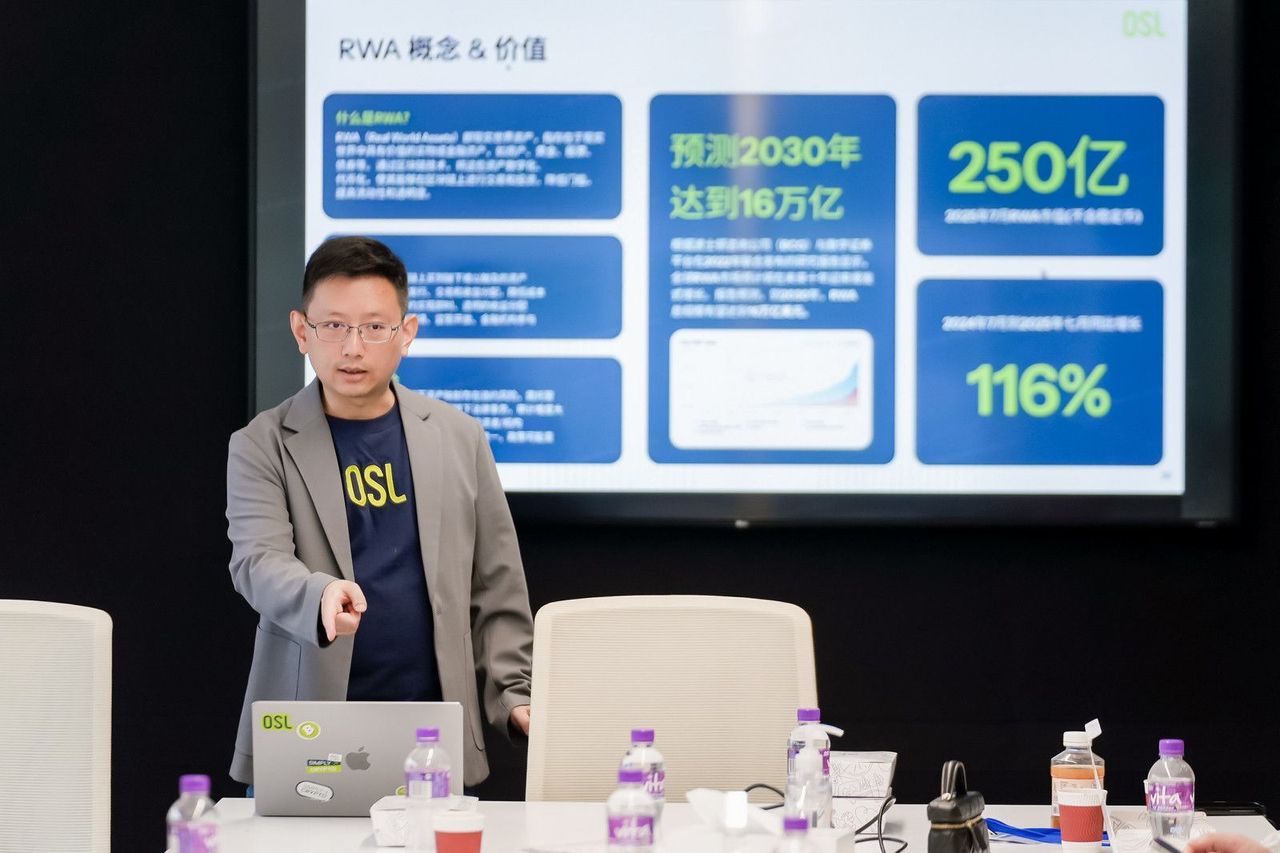
Brian Chen, Head of Wealth Management at OSL, shared perspectives during the sharing with Hong Kong Polytechnic University's Flagship Programme on how digital assets are evolving from a standalone asset class into a broader portfolio construction opportunity.
The discussion highlighted that the industry is entering what could be considered a new innovation cycle driven by programmable assets, blockchain infrastructure, digital identity, stablecoins, and artificial intelligence — technologies that are reshaping how value is created, transferred, and owned. Stablecoins continue to demonstrate strong product-market fit and are increasingly becoming an important layer of financial infrastructure, while real-world asset (RWA) tokenization is gaining momentum as more traditional assets move on-chain.
From a wealth management perspective, the conversation is gradually shifting from "what digital asset to buy" to "how digital assets, yield products, and tokenized assets can work together within a diversified portfolio." OSL's wealth management approach reflects this broader direction, spanning on-chain yield products, fixed income solutions, and structured products for investors seeking diversified exposure across both traditional and digital asset markets.
Investing in Gold: Lunch & Learn by The Swiss Chamber of Commerce Hong Kong
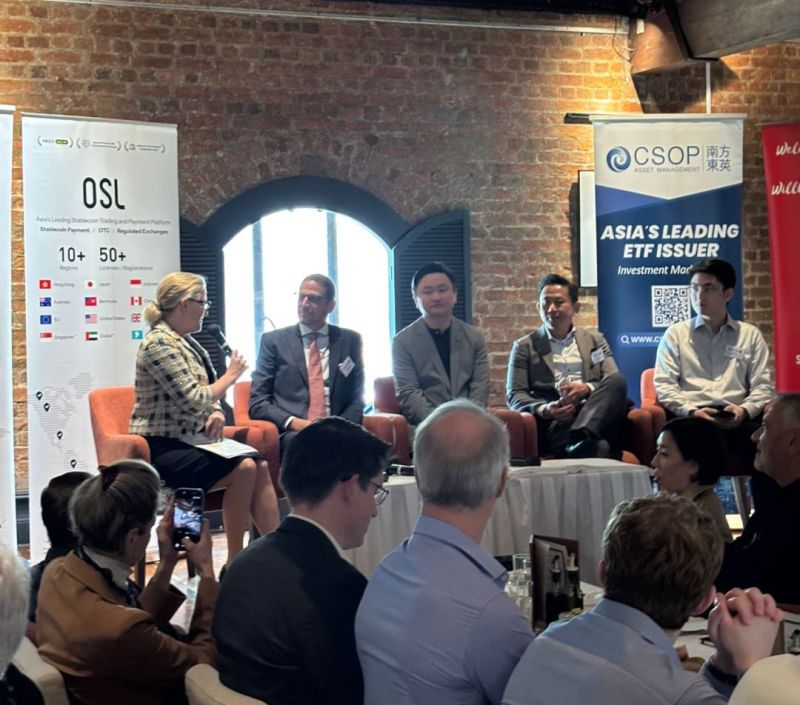
"Investing in Gold: Lunch & Learn" hosted by The Swiss Chamber of Commerce in Hong Kong is where industry leaders and investors gathered to discuss gold's evolving role in today's macro environment and how innovation is reshaping access to traditional assets.
During the panel discussion, Eugene Cheung shared insights on the growing momentum behind tokenized gold and the broader trend of bringing traditional assets onto digital infrastructure. As investors seek more efficient, transparent, and accessible ways to gain exposure to traditional stores of value, tokenized gold products backed 1:1 by physical gold are increasingly playing an important role in bridging physical asset markets with digital asset infrastructure.
With Hong Kong's position as a global gold hub, there is strong potential for regulated digital asset platforms to support the development of tokenized commodities and further connect traditional assets with the digital economy. This reflects a broader trend where tokenization is expanding beyond crypto-native assets into commodities, funds, and other real-world assets.
Holder Forum
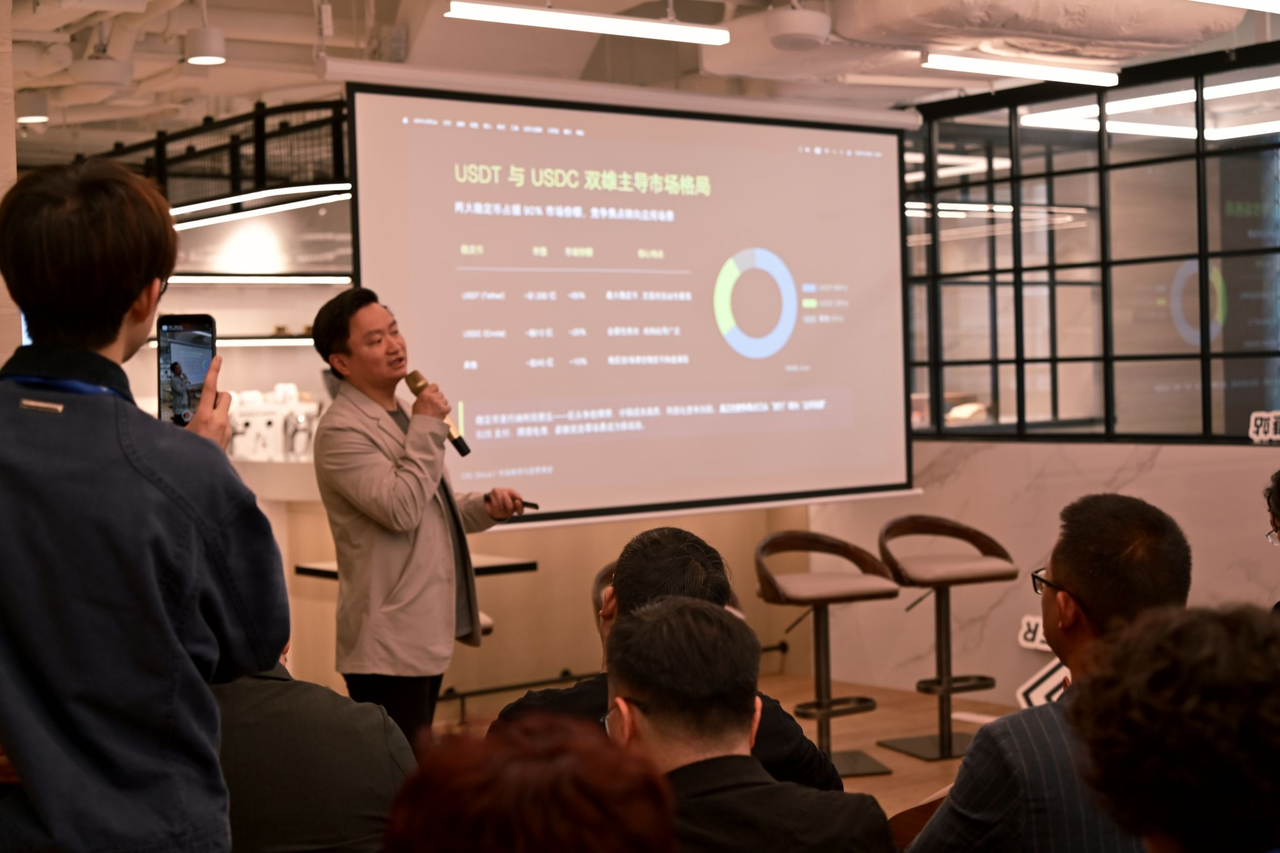
Eugene Cheung delivered a keynote at Holder Forum on one of the most significant shifts in digital assets today — the evolution of stablecoins from a crypto trading instrument into real financial infrastructure.
The keynote emphasized that the opportunity is no longer simply about issuing another stablecoin, but about building a new architecture for money that is faster, more transparent, more compliant, and better suited for global value transfer. Stablecoins are increasingly being driven by regulatory developments, enterprise demand, and the need to modernize traditional cross-border payment systems.
The discussion also highlighted that competition in the stablecoin space is shifting from issuance to real-world adoption. The next phase will be defined by infrastructure, liquidity, compliance, and practical commercial use cases such as cross-border payments, treasury management, and global payroll.
OSL's broader approach through USDGO and OSL BizPay reflects this direction — focusing on building compliant stablecoin infrastructure that can support real business and institutional use cases rather than purely trading activity.
Talent Development & Industry Engagement: Hong Kong Securities and Investment Institute Case Competition 2026
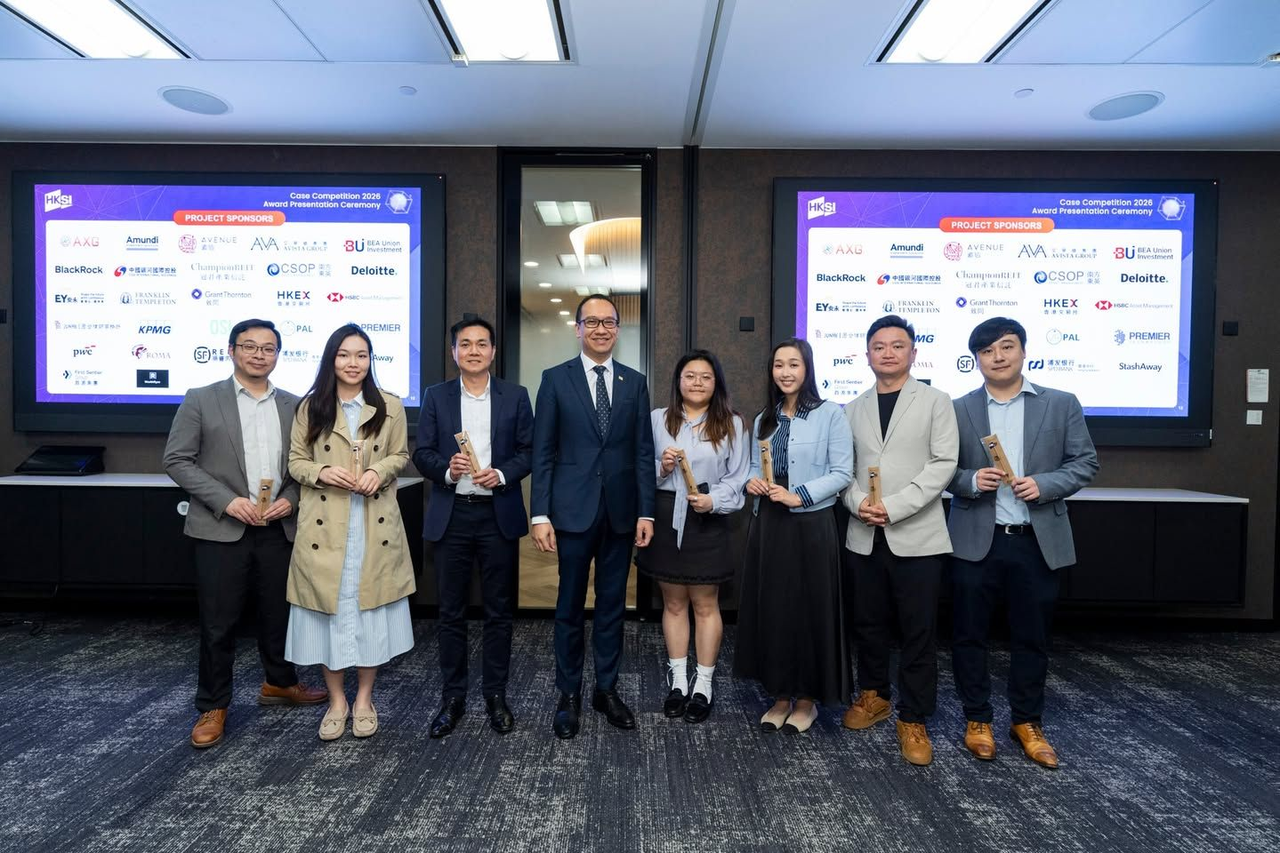
OSL is proud to support the Hong Kong Securities and Investment Institute Case Competition 2026 as a Project Sponsor. Last month, the competition brought together over 460 students and included two months of coaching followed by a competitive finals stage, providing participants with the opportunity to tackle real-world fintech and financial market challenges.
The finalist teams demonstrated strong analytical thinking, creativity, and practical problem-solving skills, reflecting the growing interest among young professionals in digital assets, financial technology, and capital markets innovation. Eugene Cheung, Chief Commercial Officer of OSL, attended the Awards Ceremony as a presenting guest, recognising the achievements of the winning teams alongside industry leaders and academic partners.
At OSL, we believe the future of digital assets and financial innovation will be shaped not only by technology and regulation, but also by the people who will build and advance the industry. Supporting education, talent development, and industry engagement remains an important part of contributing to the long-term growth of the digital asset ecosystem.
Amazon Web Services (AWS) The Agentic Shift: How AI is Retooling the Web3 Business Stack
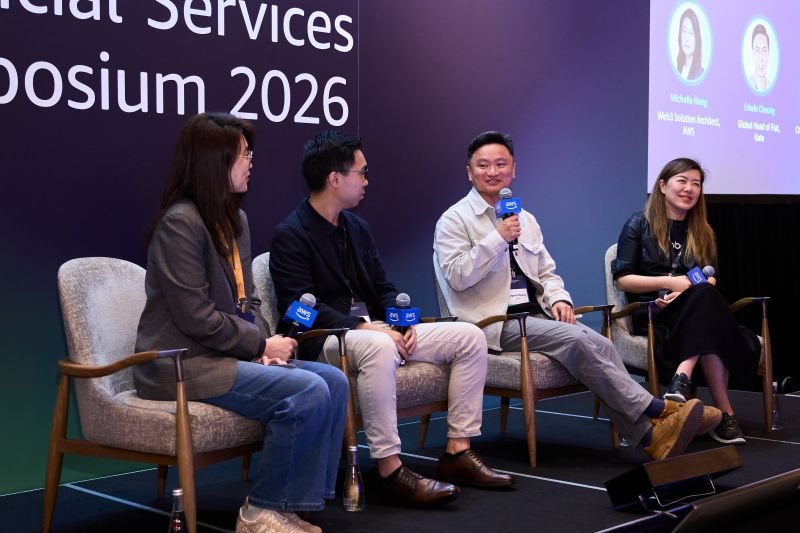
OSL participated in the Amazon Web Services (AWS) Financial Services Symposium 2026, where Eugene Cheung joined a panel on how artificial intelligence is reshaping the Web3 and financial services ecosystem.
The discussion focused on how AI is improving operational efficiency, liquidity discovery, trading execution, and client service delivery across digital asset markets. However, a key takeaway was that as the industry moves toward more automated and agent-driven financial systems, institutional compliance, trust, and regulatory frameworks remain critical.
Looking ahead, the next phase of innovation is expected to involve deeper integration between AI, settlement infrastructure, and global liquidity networks, while the industry continues to address challenges around agent verification, cross-border compliance, and regulatory oversight.