From Profit Uncertainty to Strategic Control — How Stablecoin Payments Build a Financial Moat for E-Commerce Businesses
Currency fluctuations and settlement delays are no longer inevitable—they're variables you can actively manage and optimize.
The next growth frontier in cross-border e-commerce isn't just better traffic or sharper product selection—it's greater certainty in cash flows. The global cross-border B2B payments market is enormous, yet nearly half of all transactions still suffer from delays and volatility, eroding margins—especially in low-margin categories like apparel and consumer electronics. In emerging markets across Southeast Asia and Latin America, limited banking infrastructure creates even bigger blind spots: unbanked users struggle with the “last mile” of payment, driving up cart abandonment, inventory pile-ups, and cash-flow pressure.
Regulatory clarity is improving, and stablecoins are quickly evolving from experimental tools into robust enterprise settlement infrastructure. Powered by licensed issuers and smart contracts, stablecoins deliver instant value locking (T+0), near-instant global settlement, and transparent batch processing. This shifts e-commerce from passively weathering volatility to actively shaping profits and supply chains.
While traditional e-commerce competes on traffic, the new wave competes on programmable certainty—turning uncertainty from a constant risk into a powerful strategic lever.
The Hidden Costs of Financial Uncertainty — Why E-Commerce Needs Programmable Certainty
Cross-border e-commerce pain points run deeper than surface-level FX swings. They're structural: forced currency conversions, multi-hop fees, time-zone mismatches, and opaque processes drain value like sand through an hourglass.
Profit evaporation at peak times — A currency crash during a high-sales surge can wipe out margins in low-margin categories overnight. Volatility eats into profits, and cross-border fraud adds financial hits and operational headaches.
Premium supplier capacity slips away — Slow settlement pushes suppliers toward faster-paying buyers, starving you of high-quality production. Supply disruptions become routine, amplifying stockout risks.
Last-mile bottlenecks in emerging markets — In Southeast Asia and Latin America, unbanked shoppers rely on e-wallets, leading to high abandonment rates, bloated inventory, and trapped cash. While these markets open huge global product access, banking gaps block full potential.
These issues compound: uncertain profits squeeze gross margins, slower cash cycles inflate inventory costs, and missed opportunities pile up.
Stablecoins—digital dollars anchored to fiat—offer programmable certainty. You can preset rules for value protection, settlement timing, and compliance via smart contracts, moving from a reactive “lottery” to a proactive, rules-based system.
Uncertainty isn't fate—it's code you can rewrite, turning fragile payment chains into resilient financial shields.
The Strategic Power of T+0 Value Locking — From Passive Exposure to Active Control
T+0 here refers to instant on-chain settlement that locks in value. Actual payout timing to local currencies may vary depending on the payment corridor and banking rails.
In volatile markets, instant (T+0) value locking isn't just a nice-to-have—it's a game-changing strategic edge. Stablecoins enable immediate receipt and on-demand conversion, creating a fortress around your realized value:
Instant protection — Receive stablecoins and automatically lock in value per your predefined rules, shielding against FX windows. Multi-asset reserves buffer rare de-pegging events.
Near-zero friction paths — On-chain fees often stay below 0.1%, saving 5–10%+ versus credit cards; this advantage scales powerfully in B2B.
Time-zone-proof execution — A late-night order in Asia settles instantly for a U.S. supplier—even during Black Friday peaks.
Flexible and compatible design — Multi-anchor options cushion regional volatility; seamless integration with major e-commerce platforms automates locking and minimizes manual errors.
With immediate value certainty, businesses proactively capture value during volatility windows—transforming risk exposure into managed opportunity. Profits stay protected, and capital becomes a true strategic asset for staying ahead in uncertain times.Locked-in value at the moment of payment isn't merely faster—it's control. Funds stop following the market and start shaping it. Challenges like network congestion are addressed through priority queuing and pre-funded reserves, keeping reliability high.
Conquering Supply-Chain Relationships with Instant Settlement — Turning Speed into Leverage
Suppliers naturally favor buyers who pay instantly—delay isn't just time lost; it's a signal of trust and priority in capacity allocation. Stablecoins close the loyalty loop, elevating payments from a cost center to a relationship asset:
Instant experience — Funds hit accounts in seconds, bypassing bank holidays and time-zone delays—boosting satisfaction, responsiveness, and reducing friction.
Immutable transparency — Every transaction is fully traceable and tamper-proof, streamlining reconciliation and compliance while slashing trust overhead.
Rising bargaining power — Instant payment earns priority capacity, better pricing, lower stockouts, extended sales windows, and faster inventory turns.
Broader ecosystem reach — Compatible with major networks, extending to global merchant communities.
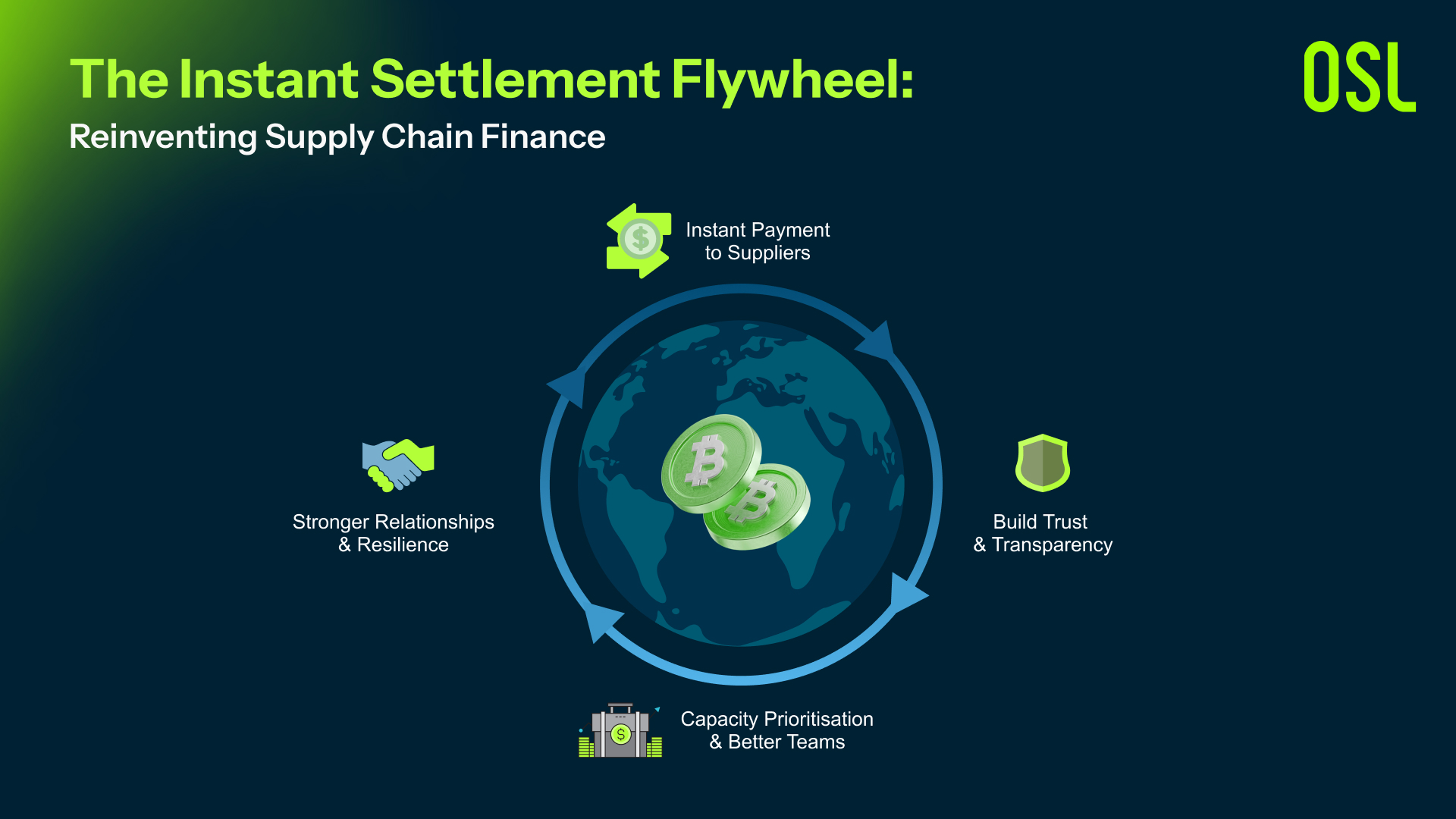
By delivering near-instant settlement, businesses build “preferred buyer” status—gaining priority when capacity tightens. This reshapes relationships, cuts procurement costs, and strengthens overall supply-chain resilience, putting you in the driver's seat amid uncertainty.Instant settlement doesn't end the transaction—it conquers the relationship, evolving suppliers from transactional partners into strategic allies.
Building a Compliance Moat — From Risk Exposure to Auditable Strength
Backed by licensed platforms and embedded smart-contract logic, stablecoins create regulatory-grade defenses in cross-border e-commerce—turning compliance from a burden into a competitive edge:
Automated safeguards — Pre-programmed rules enable real-time blacklisting, threshold alerts, and fraud interception—reducing manual gaps and platform-wide exposure.
Adaptive regulatory alignment — Stablecoin ecosystems naturally track global trends, offering scalable paths that evolve with changing rules.
Seamless integration — Links to major chains and payment rails minimize cross-border compliance friction for smooth multi-market operations.
On-chain transparency and real-time auditability help sidestep traditional pitfalls like account freezes or sudden interruptions—building stronger trust and reliability. Compliance becomes an accelerator for global expansion, not a drag.Compliance stops being a constraint and starts functioning as a moat—converting risk from a black hole into a transparent, auditable asset that fuels sustainable competitiveness.
Quantifying the Moat — From Settlement Tool to Business Transformer
Stablecoins go far beyond faster payments—they drive measurable business transformation:
Hedging upside — Shield profits (especially in thin-margin categories) from FX erosion, lifting annual ROI.
Cash-flow acceleration — Higher turnover rates shorten replenishment cycles and unlock capital velocity.
Ecosystem flywheel — Scaled settlement fuels trade volume, indirectly boosting sales and overall resilience.
Holistic gains — Emerging-market payment gaps close, retention rises, inventory costs fall. Resilient buffers absorb external shocks like tariffs.
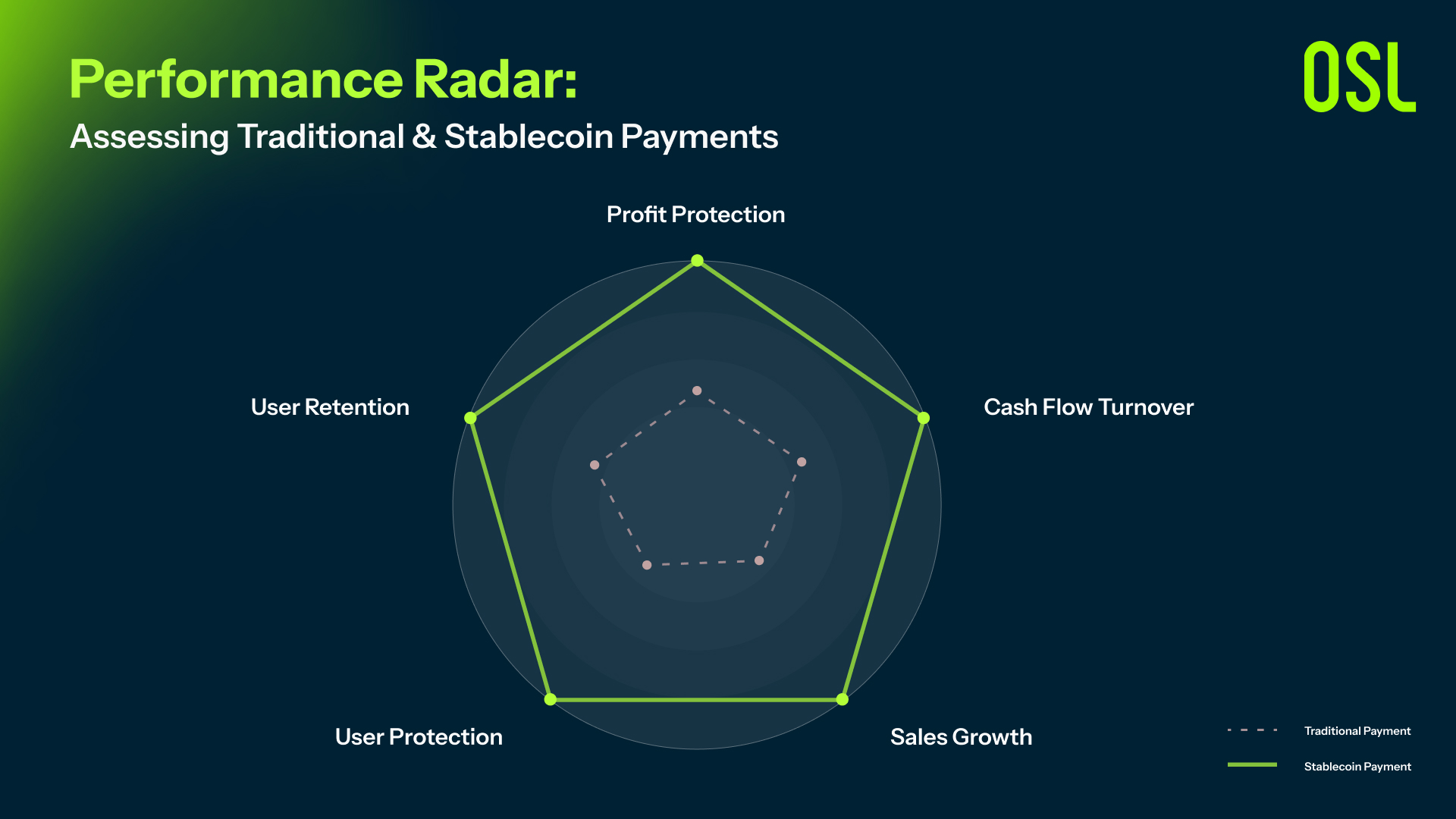
The impact transcends metrics—stablecoins forge tangible, durable competitive barriers at the core of the business.
The Expansion & Exclusion Effect — When Payment Choice Defines Who Can Trade With You
Once certainty, speed, and compliance are in place, the real impact shows up in who gets access to your business.
A typical e-commerce merchant operating in Asia, relying only on cards and local fiat rails, may reach 5,000 customers. Not due to lack of demand—but because payment access limits who can pay. In LATAM and other emerging markets, many consumers rely on crypto rails. The moment crypto payments are enabled, reach expands almost instantly, scaling toward 20,000 customers without changing products or pricing.
That’s the expansion effect: enabling crypto turns payment from a bottleneck into a growth lever.
In B2B and import/export, the dynamic flips into quiet exclusion. If a buyer prefers to settle invoices in crypto, suppliers that can’t accept it lose the deal—not on price or quality, but on payment flexibility. In volatile markets, settlement speed and certainty become filters for who stays in the supply chain.
Over time, this creates a psychological divide. Businesses that accept crypto experience access and optionality; those that don’t face friction and shrinking relevance. Markets don’t wait for laggards—they simply route around them.
Payment choice stops being operational. It becomes strategic.
Looking Ahead — From Payment Tool to Strategic Infrastructure
Stablecoins integrate deeply into e-commerce workflows—seamlessly connecting orders, payments, and value protection into a closed loop of programmable cash.
Multi-asset reserves and ongoing optimization ensure long-term stability and scalability, with broad network compatibility supporting continued growth in global flows.
By 2026, stablecoins are likely to become standard e-commerce payment infrastructure. By 2030, they could underpin significantly larger cross-border volumes.
The future isn't about predicting trends—it's about building them. Stablecoins elevate settlement from a tactical feature to the nervous system of modern e-commerce.
The next frontier is strategic capital depth. Stablecoins make certainty a core asset: controllable rates, instant settlement, loyal supply chains.
When money moves as fast as information, business boundaries become limitless.
OSL BizPay delivers stablecoin settlement services to help businesses enter the era of true controllability.