Compliance as Anchor, Riding the Tide — Insights from the Finternet 2025 Asia Digital Finance Summit
“Finternet is not a vision. It is already taking shape.”
I. From Blueprint to Execution
If the debate around digital assets in Hong Kong during 2022–2023 was still stuck on whether to reopen, then by 2025 the conversation has clearly shifted. The question is no longer if institutions will engage with digital assets, but under what rules, by whom, and to what extent.
On November 4, the Finternet 2025 Asia Digital Finance Summit—convened by the Finternet Committee and supported by OSL as the leading contributor—unpacked this new reality. From regulators and traditional financial institutions to public chain foundations, compliance technology firms, every participant was grappling withthe same core theme:
If the future financial internet (Finternet) is a new “operating system” for finance,
is compliance its anchor or its brake?
When we frame our insights as “Compliance as the Anchor, Riding the Tide”, we are building on two core beliefs:
1. The tide is real. The shifts in cross-border payments, stablecoins, RWA, and institutional allocation are structural and will not be reversed by market volatility.
2. A tide without an anchor is destructive. Especially after the historic liquidity shock of October 11, the market has begun to re-price the value of resilience and transparency.
Viewed this way, the entire day of Finternet discussions was a multi-threaded exploration of two questions:
How will regulators set the anchors?
How will the market ride the tide?
II. Regulation: “Go with the Flow, Advancing Steady and Fast”
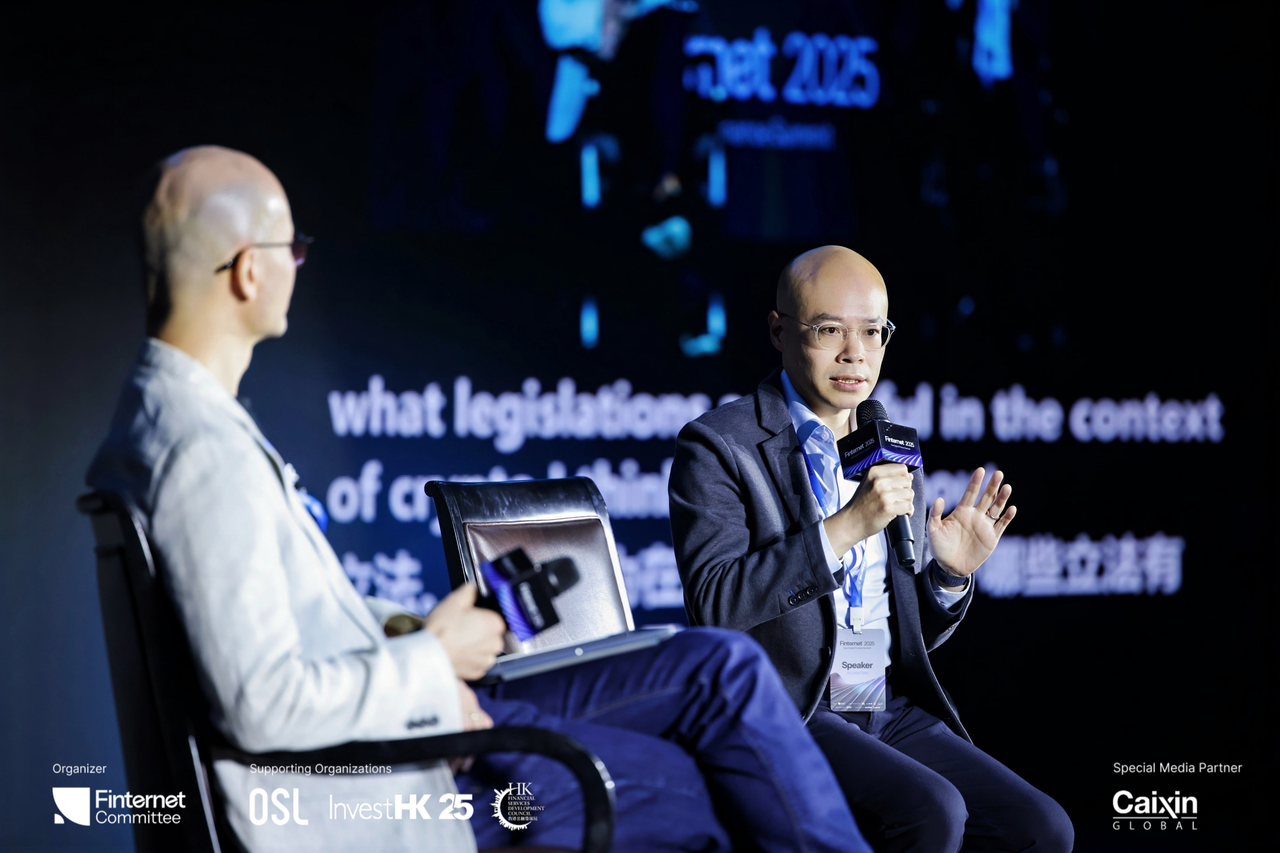
One of the most memorable moments of the morning came during the special fireside chat “Hong Kong’s Breakthroughs: Innovation and Safeguards”.
In a conversation with Eric Yip, Executive Director (Intermediaries) at the Hong Kong Securities and Futures Commission (SFC), and Gary Tiu, Executive Director & Head of Regulatory Affairs at OSL Group. Mr. Yip offered a clear articulation of Hong Kong's strategy:
“Regulation must go with the flow of the market, while advancing steady and fast.”
This simple phrase accurately defines Hong Kong's nuanced approach:
“Go with the flow” is an explicit acknowledgement that markets and technology have already moved ahead.
Crypto assets, stablecoins and RWA are structural realities. For Hong Kong to be a hub, the question is not whether to deny the tide, but how to build the breakwaters and channels to direct it.
“Advancing steady and fast” is about finding a workable equilibrium between prudence and pace.
The goal is neither to slow innovation, nor to attempt a risky “big bang” liberalization, but to move forward in controlled, verifiable steps:
1. First, licensed virtual asset trading platforms, then extended to wealth management and ETFs;
2. First, pilot new activities, then gradually broaden participation.
For licensed intermediaries, this “steady and fast” tempo is isconstructive. It provides a clear licensing perimeter, allowing institutions to plan compliance and technology build-outs in advance. It also allows regulators to refine their understanding of emerging risks through ongoing supervision, instead of relying on static, one-off assessments.
An implicit thread ran through the entire summit:
Regulation and the market are not opposing camps, but two legs being pushed forward by the same tide.
The task of regulation, in this framing, is not to hold the water line outside Victoria Harbour,
but to ensure that inside the harbour, ships can navigate the swell—
anchored when necessary, yet still able to move.
III. Institutional Caution: The "Accounting Dilemma":
If regulators are designingasking whether to build the road, and how to design it,institutional investors are grappling with a more pragmaticdifferent, far more prosaic question:
“Once we factor in all the frictions and constraints, is this road actually worth travelling?”
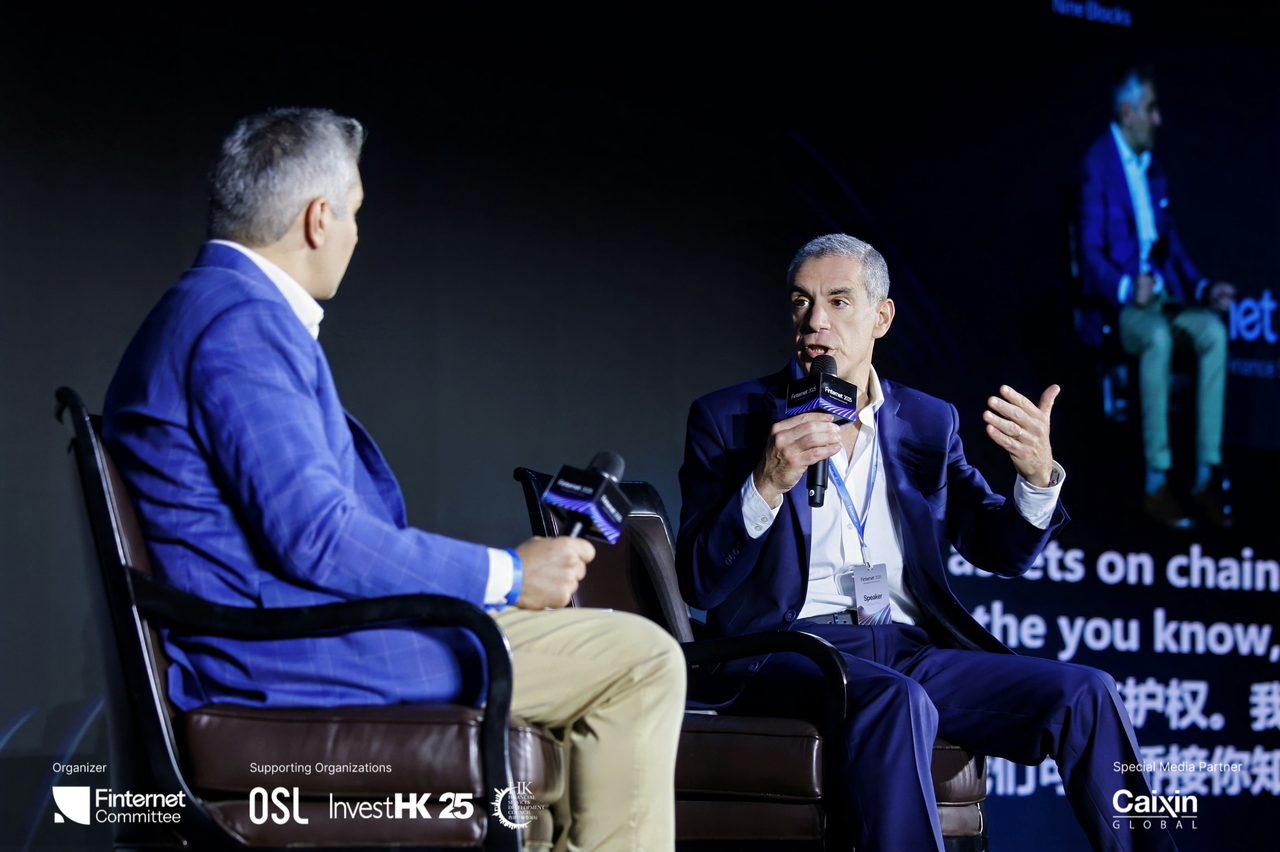
In the fireside chat,morning session “Fireside Chat 1: "Fintech Ecosystems and Crypto-Related Investments”,
Alex Manson, CEO of SC Ventures, Standard Chartered’s innovation and ventures arm,
voiced a concern that is highly representative—yet rarely stated so candidly on digital asset stages:
“From a financial and accounting perspective, I still struggle to form a stable, repeatable view on how crypto assets should be treated.
That directly shapes how we think about allocating to the asset class.”
In essence, across different jurisdictions,
the way crypto assets are classified, measured and reported within existing financial and accounting frameworks diverges so widely that
it is extremely difficult for a global institution to build a long-term, scalable allocation policy around them.
This matters for at least two reasons.
1. Institutions are not “clueless about crypto” — they just cannot close the model.
The challenge isn't market volatility; it's structural ambiguity. How is a digital asset classified? As a currency, commodity, security, or intangible asset? How are fair value movements booked? How are these treatments reconciled across multiple jurisdictions at a consolidated group level? As long as these questions lack clear answers, even attractive returns do not amount to a scalable proposition for a global bank.
2. Compliance is not just licensing — it is also financial and accounting clarity.
Intelligibility For institutions, account treatment is a non-negotiable constraint. If it cannot be explained with clarity to investment committees, CFOs, and auditors, no macro narrative will translate into meaningful, long-duration capital flows.
Put simply:
It is not that institutions are unwilling to allocate.
They are waiting for someone to map out, in advance, the pitfalls across the financial and accounting landscape.
IV. Asia’s Regulatory Landscape: A Multi-Speed Finternet
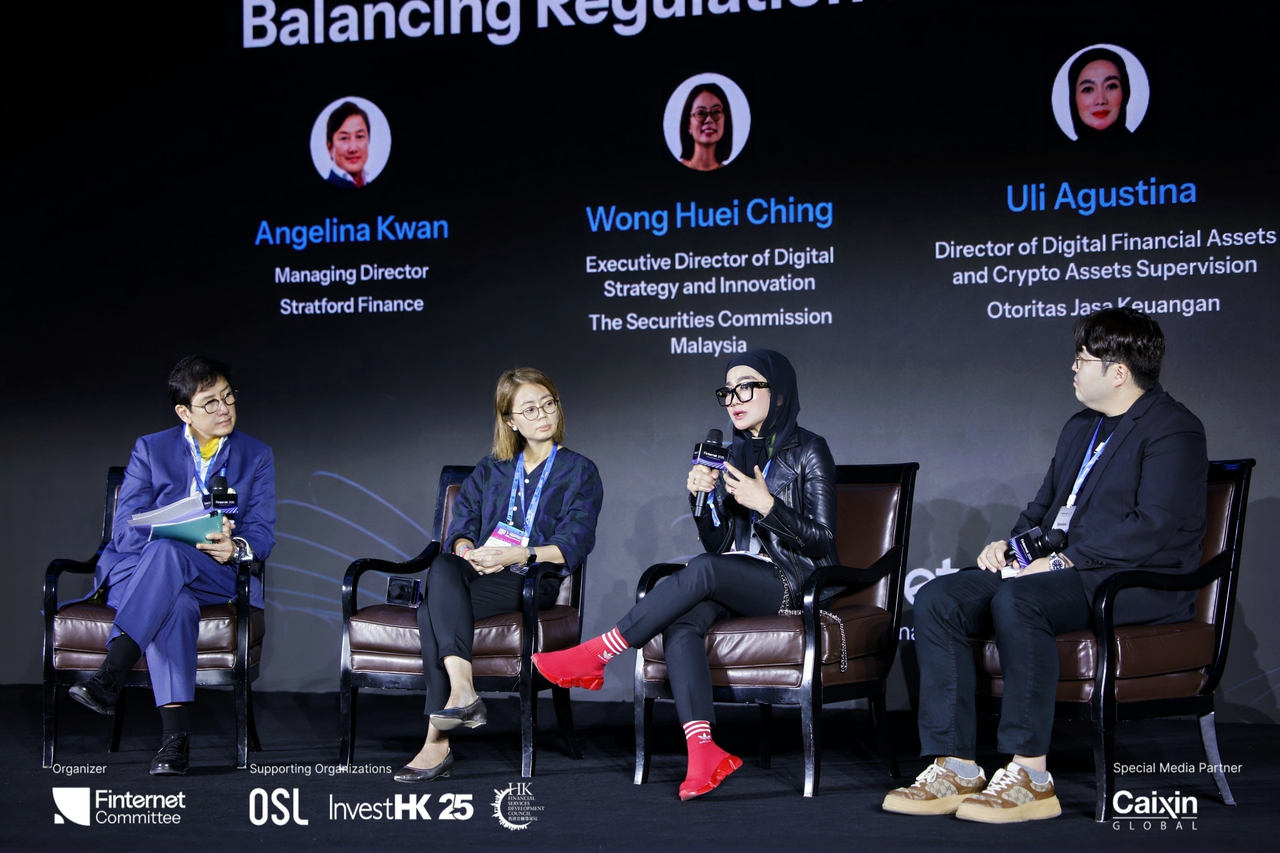
The summit brought together regulators and ecosystem participants from the Middle East, Malaysia, and Indonesia, sketching out a “multi-speed Asia” converging on the same Finternet map.
Hong Kong and the Middle East: A Tale of Two Hubs. Hong Kong is expanding a "new financial district" within an already dense, mature legal structure. The Middle East (e.g., Abu Dhabi) is building a "future-oriented financial zone" on newly planned ground. For global institutions, this multi-hub architecture is an opportunity: leverage Hong Kong’s regulatory credibility while exploring flexible models in other centers.
Southeast Asia at the Frontier: In markets like Malaysia and Indonesia, digital assets are less about capital markets and more about financial inclusion, cross-border remittances, and payments. These markets adopt a layered approach: encouraging innovation in payments while maintaining strict constraints on high-leverage trading.
For Finternet, the more important point is this:
As long as both models choose to advance digital assets within clear, rules-based frameworks,
their systems can, over time, be interconnected at the levels of clearing, custody and stablecoin-based settlement.
For institutions with footprints in Hong Kong and across multiple regions, this emerging multi-hub architecture is less of a complication than an opportunity:
On one side, they can leverage Hong Kong’s regulatory credibility and deep, liquid markets;
On the other, they can work with Abu Dhabi and similar centres to explore more flexible business models and product designs,
before feeding the most robust structures back into the broader Finternet network.
V. Stablecoins and Payments: Where the Tide Hits First
Among all the themes discussed, “stablecoins + cross-border payments and trade” is arguably the closest to real-world business and tangible pain points.

In the panel discussion:"Empowering the Real Economy: Unleashing New Potential of Digital Finance in Cross-Border Payments," representatives from Visa, Circle, PayPal, and OSL’s global payments business shared the same stage, centered on a single, fundamental question:
“If we were to redesign the cross-border settlement system from scratch today, would we really rebuild the same multi-layer correspondent banking structure—with all its latency and cost?”
The discussion broadly centered on three dimensions:
1. Reassessing Cost and Efficiency: World Bank data shows that the average cost of small-value cross-border remittances has long hovered around 4–6%, still a significant distance from the G20 target of bringing retail cross-border costs below 1%. Against this backdrop, the potential advantages of stablecoins and on-chain settlement are clear:
Near-instantaneous transfer of ownership on-chain, collapsing settlement time from days to minutes.
Programmability, enabling automated reconciliation, conditional payments, and other complex workflows.
The possibility—where regulation permits—of reducing capital trapped in intermediate accounts and lowering reconciliation overhead.
2. Redefining the Commercial Stack: For traditional payment networks and card schemes, “on-chain settlement” does not imply abandoning existing rails. It is more accurately described as a back-end architecture upgrade:
At the front end, customers continue to use familiar cards, wallets, and payment interfaces.
At the back end, the system gradually migrates from multi-layer nostro/vostro relationships to on-chain clearing networks using compliant stablecoins as the settlement medium.
For stablecoin issuers such as Circle, the strategic ambition similarly extends beyond trading venues and DeFi protocols. The endgame is to position stablecoins as a foundational settlement asset for cross-border trade and B2B flows, embedded into mainstream treasury workflows.
3. Conditions for Compliance and Trust: For stablecoins to be integrated into corporate treasury systems at scale, three layers of trust must be established:
Issuer & Reserve Trust: Clarity on backing assets, governance, and disclosure.
Node Trust: The robustness, resilience, and regulatory oversight of the intermediaries handling flows and storage.
Framework Trust: Predictable rules on issuance, redemption, and conduct, with enforceable legal recourse.
This is precisely where Hong Kong’s work on a regulatory framework for stablecoin issuers takes on strategic meaning: the aim is not to add another hurdle, but to create a predictable, rules-based environment in which this new asset class can safely operate at scale.
This leads to a concrete strategic question for market participants:
Will they remain primarily liquidity providers in this ecosystem, or evolve into regulated clearing nodes and providers of enterprise-grade solutions?
If the ambition is the latter, the task ahead requires:
Providing KYC/AML and transaction monitoring capabilities that can plug directly into banks’ and corporates’ risk frameworks.
Delivering settlement, custody, and cash-flow visualization tools (dashboards, reports, APIs) that enterprises and regulators can readily understand.
VI. ETFs and DAT: From Entry Ticket to Strategic Signal – Bridges, Tightropes and the Road Ahead
The "From ETF to DAT" panel, featuring Bloomberg Intelligence, Invesco, Fidelity International, and Flow Traders, examined the institutional entry pathway.
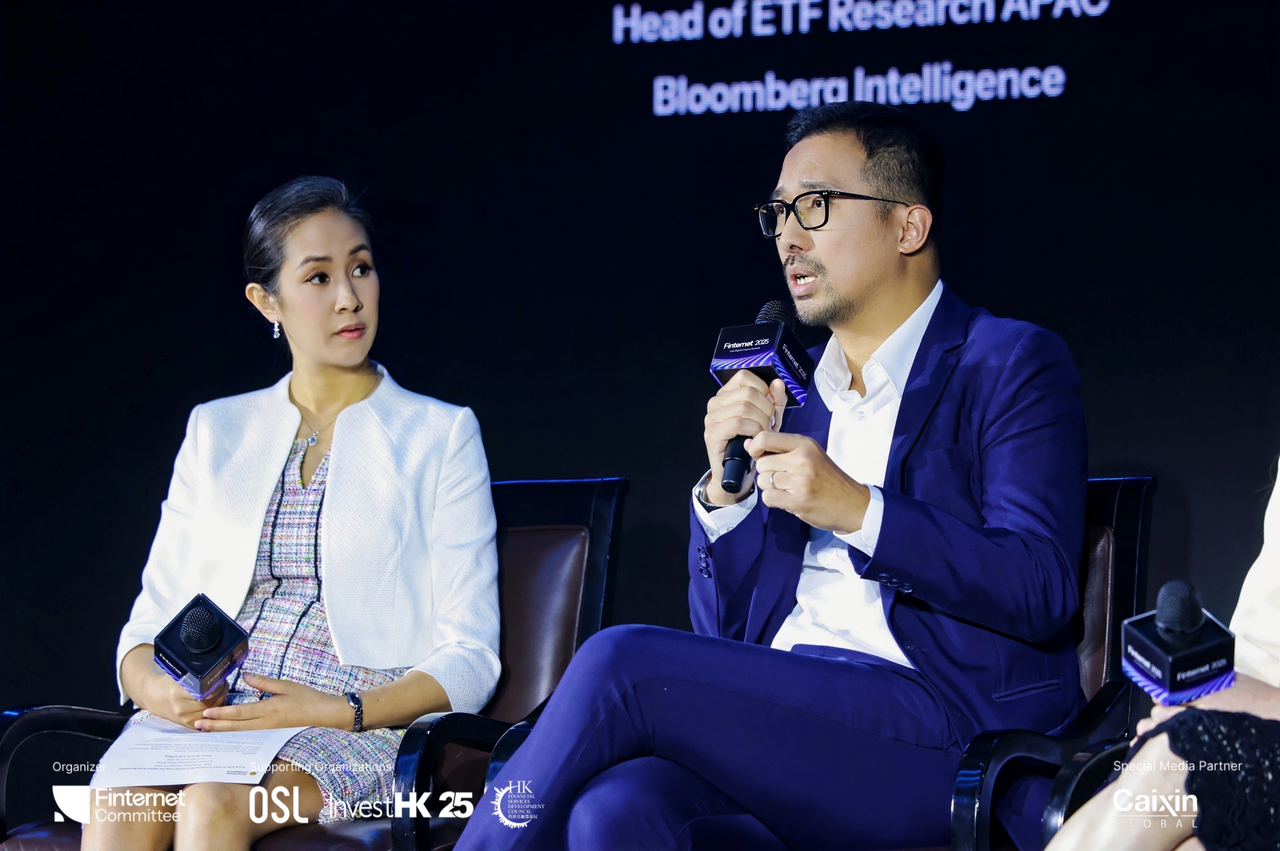
Their analysis revolved around two very different instruments:
ETFs as the familiar “entry ticket”: Operating within established regulations, ETFs allow traditional investors to gain exposure to assets like Bitcoin and Ethereum with minimal change to existing processes. Their function as a "bridge product" has been validated, making them a mature access point.
DATs as a more controversial structure: Digital Asset Treasury (DAT) structures enable listed companies to allocate a portion of their balance sheet directly into digital assets. By design, DATs are more deeply integrated into a company's capital structure and investor perception than a simple, off-balance-sheet ETF position.
The crux of the debate was the dual nature of these DAT structures:
Is it a strategic allocation—or simply speculative positioning dressed up as “treasury management”?
In rising markets, it is easy to brand this as a “forward-looking bet on future assets.” In stressed conditions, the same structure can become a leveraged amplifier of volatility, transmitting crypto drawdowns directly into corporate valuations.

Today, markets are reportedly assigning 30–50% valuation premia to some DAT-heavy vehicles. But this premium is inherently fragile. As more yield-bearing, institutionally familiar products come to market (such as potential ETF staking solutions), DATs stuck in a simple "buy-and-hold" paradigm risk seeing that premium sharply compressed, or even being structurally displaced.
The implication is clear: DAT cannot stop at version 1.0—a pure “coin hoarding” treasury tool.
To remain relevant, DAT 2.0 needs a new narrative. It must serve as a credible indicator of a Web2 company’s strategic transition toward Web3, integrating the assets into its core business—be it through new economic models, tokenized loyalty structures, or seeding decentralized ecosystems.
A quiet consensus emerged: ETFs are an established entry ticket, while DATs are still walking a tightrope, offering innovation potential but also carrying significant risk. For DAT to endure, it must evolve from a narrow treasury instrument into a strategic fulcrum for corporates experimenting with new business models.
VII. RWA and Title to Assets: Clarifying “Whose Asset” Before Going On-Chain
If stablecoins are the "blood" of the Finternet, RWA (Real-World Assets) and asset title are the "bones."
The Global RWA Lens: Asset Managers as Engineers, Not Storytellers In the afternoon sessions, one feature stood out: the conversation was no longer about storytelling; it was about engineering.
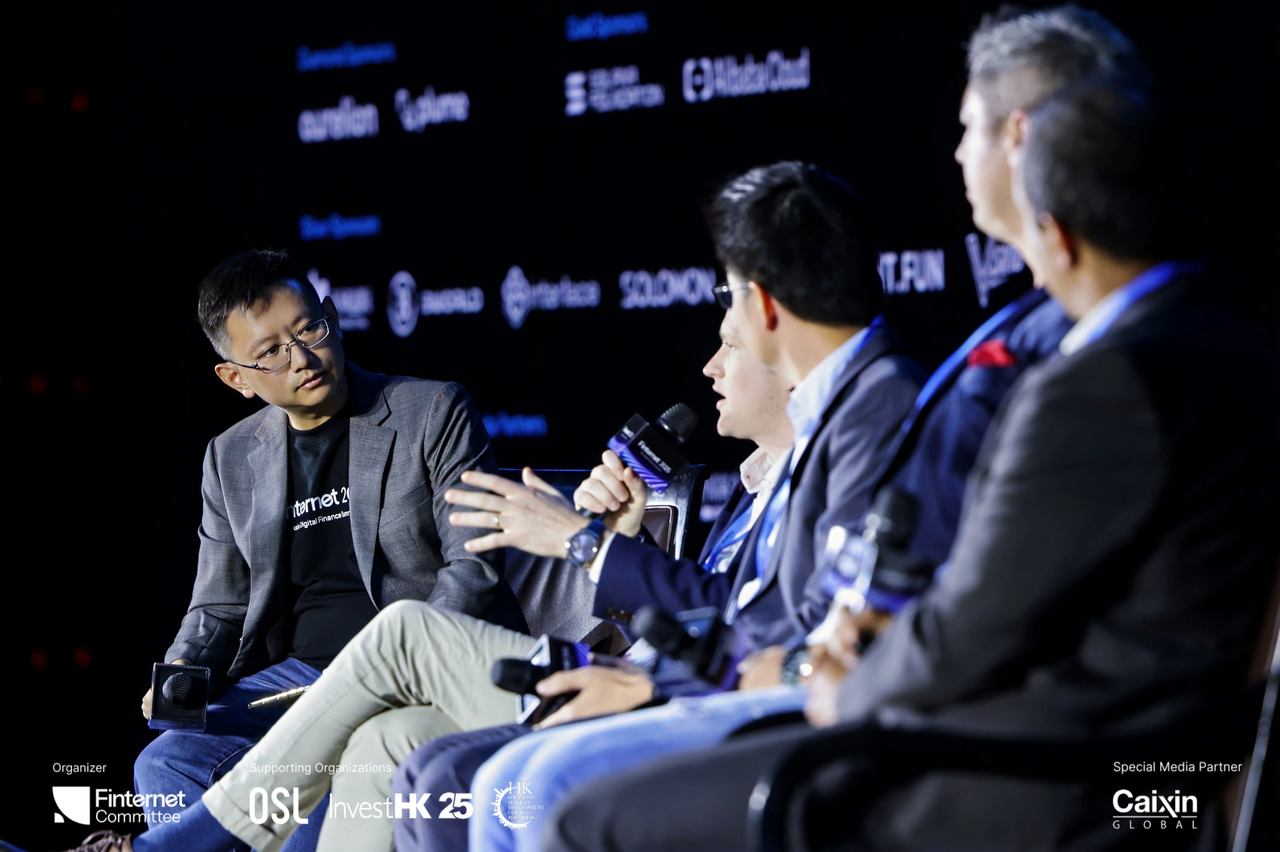
Moderated by Brian Chen, Head of Wealth Management at OSL Group, the "Unlocking RWA" panel brought together senior representatives from BlackRock, Franklin Templeton Strategic Ventures, Marketnode, and Antalpha. Their focus was squarely on specific asset classes and product structures.
They spoke not in generalities, but in lists: money market funds, short-term bonds, fund units, alternative asset cashflows. For each, the cashflow profile, legal rights, and accounting treatment are different. And they made one point repeatedly:
Putting an asset “on-chain” does not magically improve its quality.
Against this backdrop, the question serious RWA practitioners are asking is not “Can we tokenize everything?” but rather:
“Within existing legal and accounting frameworks, how do we design RWA structures that are genuinely auditable, custodiable, tradeable, and redeemable?”
In other words, the hard part of RWA is not the chain itself, but what comes before it: How are rights defined in legal documents? How are those rights recorded in traditional registries? And how do we ensure on-chain smart contracts remain in tight, reconcilable alignment with those off-chain records?
Asset Rights and Title: A Three-Way Dialogue In the "Asset Tokenization" panel, moderated by Polygon Labs, legal practitioners and infrastructure providers from Clifford Chance, DigiFT, Deloitte China, Robo.ai, and Cobo converged on a clear consensus:
1. Law Remains the Ultimate Anchor: In a dispute, courts recognize contracts, formal registries, and bank records. An on-chain record must be verifiably linked to these traditional instruments to have legal weight.
2. Smart Contracts Are Execution Tools, Not Law Itself: Smart contracts are a "machine-world projection" of legal terms, not a substitute. Real-world events (like default or regulatory intervention) require offline processes that must be reconciled with the chain.
3. Custodians and Registries Become Even More Critical: A key unresolved question is who is responsible for mapping between on-chain records and off-chain rights. Is it a traditional bank, a digital asset custodian, or a multi-party registry?
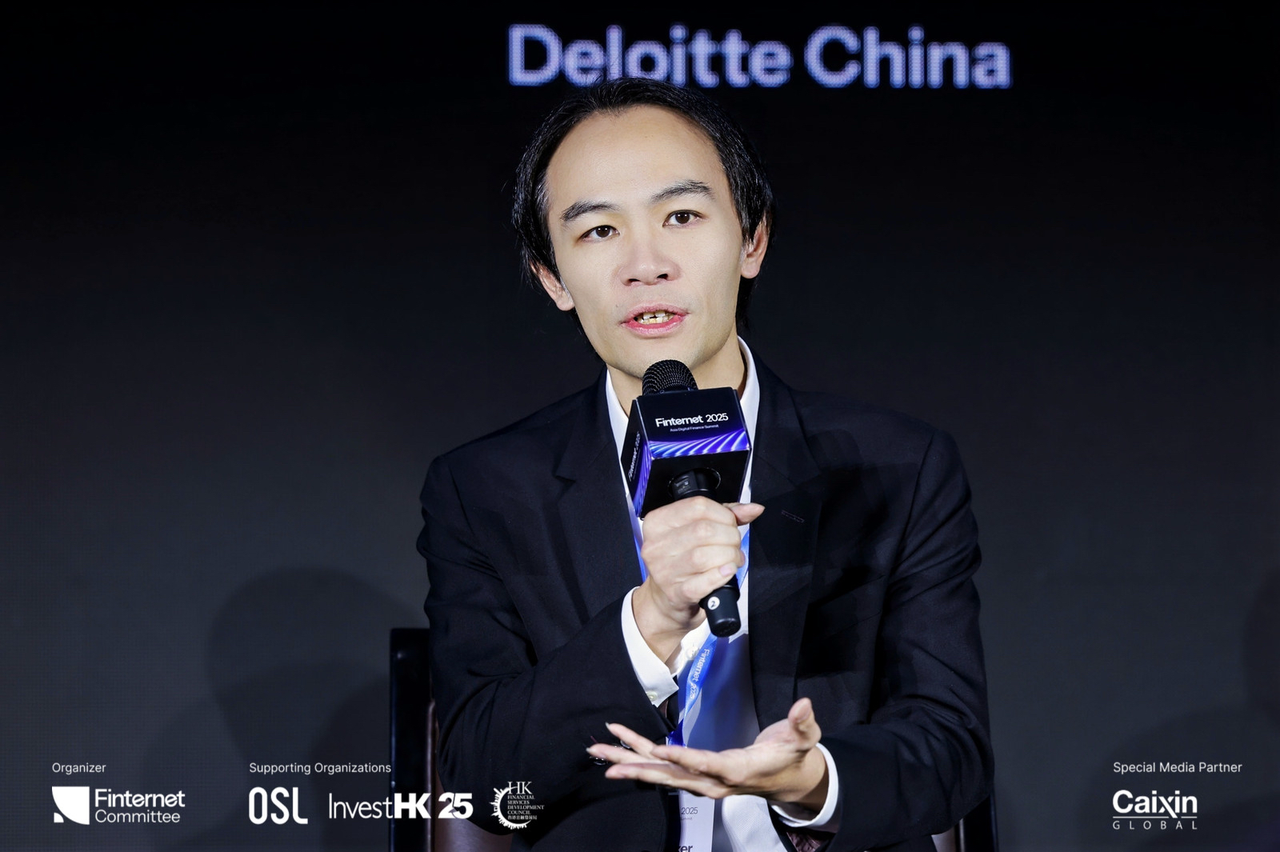
For licensed platforms, this is a natural opening: to act as the reconciliation hub between the on-chain ledger and the off-chain legal and financial records.
From a Finternet perspective, the roles are clear: Stablecoins are the "blood" of the system, enabling efficiency. RWA provides the "bones"—the structural assets that give the system substance and trust.
VIII. The 11 October Liquidity Event: A Real-World Stress Test for “Anchor” and “Tide”
The panel "Gray Rhino or Systematic Failure" was unmistakably a session of high emotional resonance. The historic liquidation event was placed under the microscope as a live stress test of the market's resilience.
Moderated by Colin Wu (Wu Blockchain), the conversation featured senior leaders including OSL Group CEO Kevin Cui, Patrick Pan (China Renaissance), Livio Weng (Sinohope), and Amy Zhang (Fireblocks).
An emerging consensus surfaced:
It Was a “Gray Rhino”: The combination of high leverage, redemption pressure, and correlated collateral was a familiar risk configuration. Its timing, however—as regulators and institutions were accelerating their entry—gave the event new symbolic significance.
Risk Models Are Still “Local,” Not Systemic: Many risk models are built on "local" assumptions (one platform, one product). In reality, the market is a dense network where stress propagates non-linearly. Risk management must evolve from calculating liquidations to identifying structural points of fragility.
Transparency and Regulation Are Shock Absorbers: In the absence of consistent disclosure, sentiment is easily hijacked. If core liquidity resides on licensed, auditable platforms, future shocks can be dampened rather than amplified.
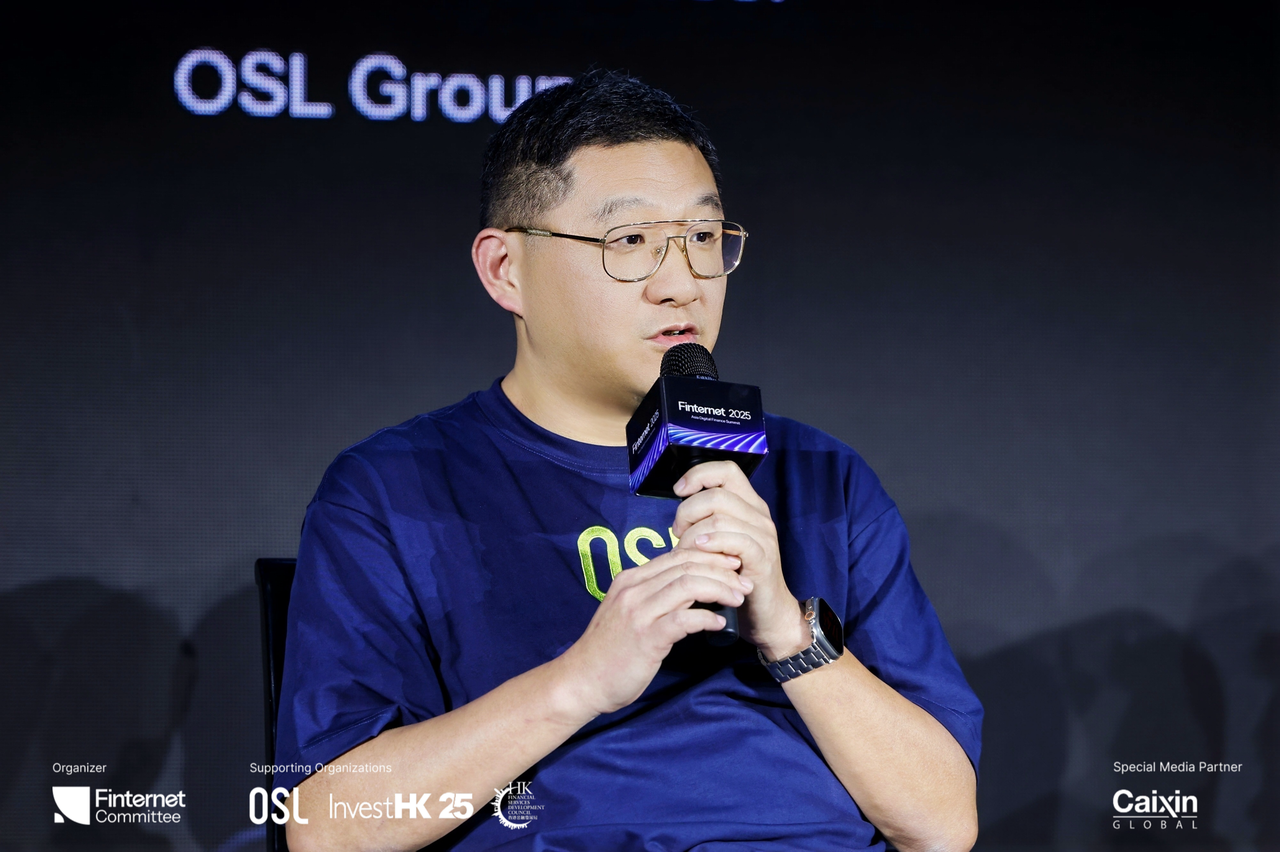
From the vantage point of a licensed institution, this panel felt like a mirror. For Kevin Cui and OSL Group, the discussion underscored two imperatives:
First, continuous investment in risk infrastructure and stress testing is central to the very value of being licensed.
Second, the market is beginning to re-price the value of "compliance and resilience." When some platforms prove unable to withstand extreme conditions, those that remain standing—demonstrably licensed and resilient—are not just "safer"; they become more valuable to regulators, counterparties, and institutional capital.
In that sense, the October 11th event was a test of where the true anchors of Finternet are being laid, and which parts of the market are prepared to ride the tide without snapping when the water turns rough.
IX. Compliance as Anchor, Riding the Tide:
Taking the full day’s discussions together, we can now give “compliance as the anchor” a more concrete meaning. For regulated institutions like OSL, this is not a slogan; it is a specific action agenda.
1. On the Compliance Side: From “Meeting Requirements” to “Co-Creating Rules”
First, secure the anchor by operating under robust regimes like Hong Kong’s VATP licence. Then, proactively participate in consultations, feeding front-line risk data back into the rulemaking process. Finally, work with law firms and accounting firms to develop standardized solutions for institutional clients—precisely the "accounting dilemma" gap highlighted by SC Ventures.
2. On the Market Side: Moving with the Tide, Not by It
In the stablecoin and payments space, the ambition must be to act as a regulated clearing node and enterprise solution provider, not merely a source of liquidity. In RWA, the role is to be the reconciliation hub between on-chain ledgers and off-chain legal records. In wealth management, it is to leverage licensing and risk expertise to help traditional institutions move from pilot projects to strategic, portfolio-level allocation.
3. On the Research Side: Turning “Highlights” into Frameworks
Key soundbites, like Eric Yip’s "steady and fast" approach or Alex Manson's "accounting dilemma," should become starting points for our research agenda. One track should codify "what can be done and how" under evolving rules. The other should analyze digital assets from an institutional allocator's perspective, fully accounting for compliance and reporting costs—exactly the trade-offs institutions are wrestling with.
In this sense, “compliance as the anchor” is a working commitment to build the legal, technical, and intellectual infrastructure that allows Finternet to carry real capital and real risk—without losing its balance when the waves inevitably rise.
When the Tide Comes In: Where We Choose to Drop Anchor
Finternet 2025 was not a "crypto niche" conference. It was a forum where regulators, technologists, and financial leaders were seriously pricing and designing a new financial internet.
Regulators are drawing the lines. Asset managers are insisting that rights be made unambiguous. Risk practitioners are testing the system's true resilience.
In this interwoven map, no single constituency will remain at the center. What endures is the choice of where to place the anchor.
Only by rooting ourselves in compliance and resilience do we earn the right to speak seriously about how far we can travel with the tide.
Compliance and Risk Disclaimer
Report Status
This research report is prepared by the Research Institute of OSL Group (the “Group”) and is intended solely for the reference of internal personnel of the Group and institutions that maintain a specific cooperative relationship with the Group. No part of this report may be reproduced, distributed, or transmitted in any form or by any means to any external third party without the prior written consent of the Group.
Not Investment Advice
All information, views and analysis contained in this report are based on publicly available data and the judgement of the Group’s analysts. They do not constitute any form of investment advice or offer. This report does not take into account the specific investment objectives, financial situation or particular needs of any recipient. Recipients should not regard any part of this report as advice on legal, financial, accounting, regulatory, tax or investment matters.
Information Accuracy and Completeness
While the Group has made reasonable efforts to verify the information contained in this report, it does not make any express or implied representation or warranty as to its completeness, timeliness or accuracy. Any action taken on the basis of the contents of this report is undertaken entirely at the user’s own risk. The performance or development of any protocols, tokens or entities referred to in this report may change materially due to market, technological, regulatory or other factors.
Limitation of Opinions
The opinions and projections expressed in this report are based on market conditions and the analysts’ understanding as of the date of writing and are subject to change without notice. This report is intended to provide industry observations and strategic perspectives only. It does not represent the Group’s final trading strategies, risk limits, or liquidation decisions.
Conflict of Interest Disclosure
The Group, its affiliates or its employees may hold positions in, or conduct business with, the assets or entities discussed in this report. The Group has implemented reasonable measures to safeguard the independence and objectivity of its research and analysis.
Forward-Looking Statement Risk
This report may contain forward-looking statements, which involve known and unknown risks, uncertainties and other factors. Such factors may cause actual results, performance or achievements to differ materially from those expressed or implied in any forward-looking statements. Past performance is not indicative of, and does not guarantee, future results.
General Disclaimer
The Group and its directors, employees and agents accept no responsibility or liability whatsoever for any direct or indirect loss, damage or expense arising out of or in connection with the use of this report or reliance upon any information contained herein, however arising.
About OSL
OSL Group (HKEX: 863) is Asia's leading stablecoin trading and payment infrastructure that strives to provide compliant and efficient digital financial infrastructure services globally, empowering enterprises, financial institutions and individuals to seamlessly exchange, pay, trade, and settle between fiat and digital currencies. Grounded in the core values of Open, Secure, and Licensed, it is committed to building a more efficient ecosystem that connects global markets and enables instant, seamless and compliant value movement worldwide.
For media inquiries, please contact: [email protected]