January Re-Engagement Begins — BTC Holds Above 90k as Flows Improve, Leverage Returns Selectively

The first full trading week of the year often establishes the market's structural tone for the months ahead. Jan 5–11, 2026, is proving to be such a week. With holiday-related distortions fading, institutional desks have reopened, positioning is being rebuilt, and early-January risk appetite is beginning to interact with real capital flows.
Several regime signals are converging simultaneously. Bitcoin has reclaimed and held above the $90,000 level, following Venezuela-related geopolitical headlines. U.S. spot ETF flows have turned decisively positive, breaking the late-December outflow pattern. At the same time, derivatives activity is re-accelerating as leverage cautiously returns. Counterbalancing these constructive signals, system liquidity remains controlled: stablecoin supply is flat and concentrated, keeping market breadth selective rather than expansive.
The key question for the week is therefore not whether price can move—it already has—but whether improving flows and positioning can translate into durable follow-through, or whether the market remains defined by rotation and volatility as liquidity normalizes.
Key Market Review: From Year-Turn Reset to January Re-Engagement
Market Breadth

Source: Bitcoin and Ethereum ETF flows on Farside Investors via DeFiLlama (latest available data reflects late-December reporting, January 2, 2025.)
As markets transition out of year-end positioning, price action is increasingly driven by active participation rather than holiday-thin liquidity. This shift was immediately tested over the weekend by Venezuela-related geopolitical developments. Crypto, as a continuous market, repriced rapidly, with Bitcoin pushing back above $90,000.
Importantly, the move appears driven by macro hedging and positioning adjustment, rather than a broad risk-on inflow impulse. That distinction matters. The price response coincided with the first constructive ETF prints of the year, creating a short-term alignment between headline-driven price action and improving institutional flows. The result is a market that can extend, but remains vulnerable to sharp intraday moves if confirmation lags.
Liquidity Conditions — Stablecoins Flat, Capital Remains Disciplined

Source: Stablecoin flows and market cap via DeFiLlama
At the system level, liquidity conditions remain stable but tightly managed. Aggregate stablecoin market capitalization is broadly unchanged, holding just below US$308 billion. This indicates that capital is not leaving the crypto ecosystem, but neither is it expanding aggressively.
Stablecoins remain the primary transmission mechanism for incremental risk-taking. In prior risk-on phases, broad issuance and dispersion across chains enabled sustained participation across spot, derivatives, and DeFi. The current configuration instead reflects capital recycling and rotation, not fresh balance-sheet deployment.
Liquidity distribution reinforces this conclusion. USDT continues to dominate supply, while secondary stablecoins and long-tail issuance show little acceleration. This concentration is consistent with a settlement- and cash-management posture, where capital is positioned for flexibility rather than actively deployed into higher beta.
In practical terms, this environment supports resilience in BTC and ETH, while limiting the durability of broad altcoin rallies. Without a clear inflection in stablecoin issuance and dispersion, price advances are more likely to be driven by positioning and leverage, rather than sustained liquidity expansion.
ETF & Institutional Flows — Re-Engagement Begins, Conviction Still Building
Asset | Latest ETF Flow (Dec 26) | AUM | What Changed This Week (Liquidity + Positioning) |
|---|---|---|---|
Bitcoin (BTC) | +US$471.3M | ~US$92.67B | First clear "January re-engagement" print. Supports BTC's hold above $90k, but durability depends on follow-through. |
Ethereum (ETH) | +US$174.5M | ~US$13.11B | Confirms institutions are adding beta, not just hiding in BTC. Needs consistency. |
Solana (SOL) | N/A (on-chain proxy) | — | More sensitive to stablecoin distribution and derivatives positioning than ETFs. |
The most recent fully reported U.S. spot ETF data (as of Jan 2) shows a clear rebound in inflows across both Bitcoin and Ethereum. This marks a meaningful shift from late December, when flows were persistently negative, and signals the beginning of January re-engagement.
However, the character of these flows remains measured. Institutions are re-entering through regulated ETF channels as liquidity normalizes, but exposure is being rebuilt selectively and tactically, rather than aggressively. As a result, ETF flows are acting as a stabilizer rather than a momentum accelerator.
These inflows help explain Bitcoin’s ability to hold above $90,000, but have not yet reached the consistency required to drive broad, self-reinforcing upside. Confirmation will depend on whether positive flows persist across multiple sessions as January progresses.
Global Stablecoins — Liquidity Is Available, but Still Concentrated
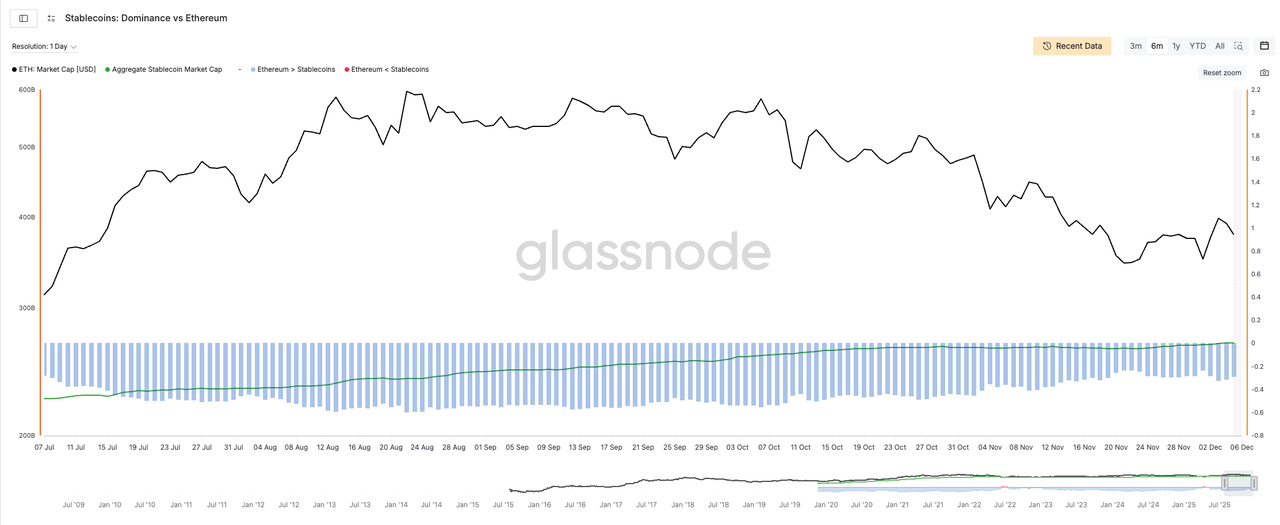
Source: Glassnode (ETH Stablecoin Dominance)
Glassnode data confirms that stablecoin liquidity remains available but largely parked. Dominance continues to skew toward Ethereum, reinforcing its role as the system’s primary settlement and liquidity rail as institutional activity resumes.
While stablecoin balances remain elevated, there is no clear acceleration in issuance or dispersion across chains. Liquidity is being retained in core venues rather than pushed outward into secondary ecosystems. This configuration supports stability in major assets, but constrains the breadth and durability of risk-on participation.
Until stablecoin growth begins to expand meaningfully beyond core rails, market advances are likely to remain driven by flows, positioning, and leverage, rather than fresh system-wide liquidity.
Market Structure — Why Bitcoin Can Hold Above 90k, Yet Remain Volatile
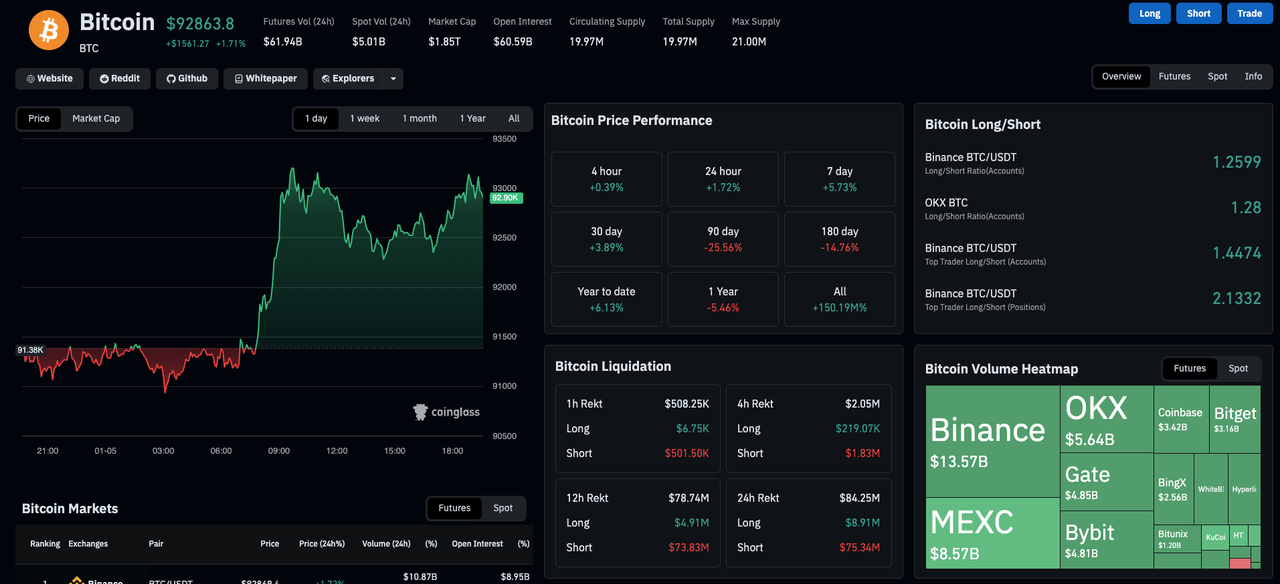
Source: Coinglass
Bitcoin's ability to hold above $90,000 underscores crypto’s role as a high-velocity macro barometer, capable of repricing geopolitical and risk narratives faster than traditional markets. However, the speed of the move should not be mistaken for confirmation of a new trend regime.
The price response appears primarily driven by positioning adjustments and short-term hedging, rather than broad inflows of new capital. In an environment where liquidity depth is still rebuilding, relatively modest imbalances can generate outsized price reactions.
As a result, the current structure remains directionally constructive but tactically fragile. ETF flows provide a supportive base, but without broader liquidity expansion, prices remain sensitive to derivatives positioning, funding dynamics, and macro headlines. Volatility should therefore be viewed as a feature of the regime, not a contradiction of the underlying trend.
DeFi & On-Chain — Rotation Dominates as Capital Reallocates Within the System (Jan 5 to Jan 11)
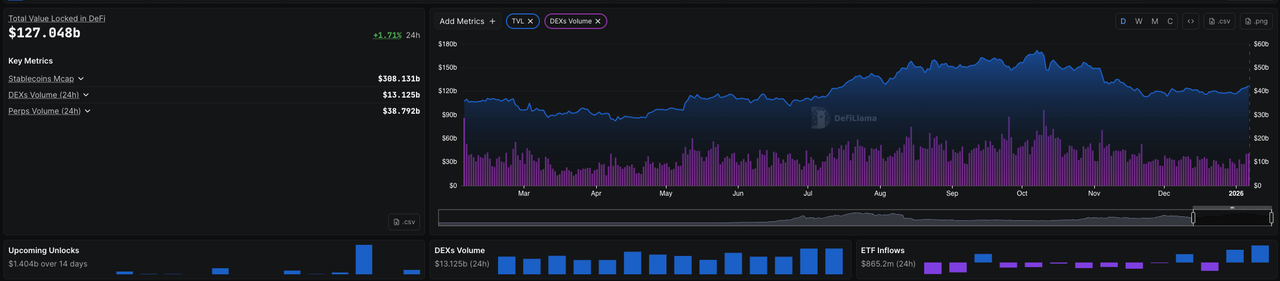
Source: TVL and DEX on DeFillama
On-chain data reinforces the view that the market is operating in a rotation-driven regime. Aggregate DeFi activity remains resilient, but the composition of that activity points to capital recycling and tactical risk expression, not fresh inflows.
On Ethereum, DEX volumes have stabilized modestly, while perpetual volumes have declined sharply, indicating that leverage is being reduced on the deepest liquidity rail even as price levels remain firm. Ethereum continues to function as the preferred venue for settlement, balance-sheet management, and low-volatility execution.
By contrast, Solana is absorbing a disproportionate share of active trading and short-term risk appetite. Despite a smaller TVL base, DEX and perpetual volumes have accelerated meaningfully, even as stablecoin balances decline. This suggests existing liquidity is being recycled more aggressively, rather than supplemented by new inflows.
The divergence highlights a bifurcated structure: Ethereum as the liquidity rail, where capital consolidates, and Solana as the risk-expression rail, where traders deploy leverage and rotate positions. The absence of synchronized growth in TVL and stablecoin balances across chains confirms that this is not a fresh inflow regime, but one defined by internal rotation.
Derivatives & Positioning — Leverage Is Returning, but Liquidity Constraints Persist
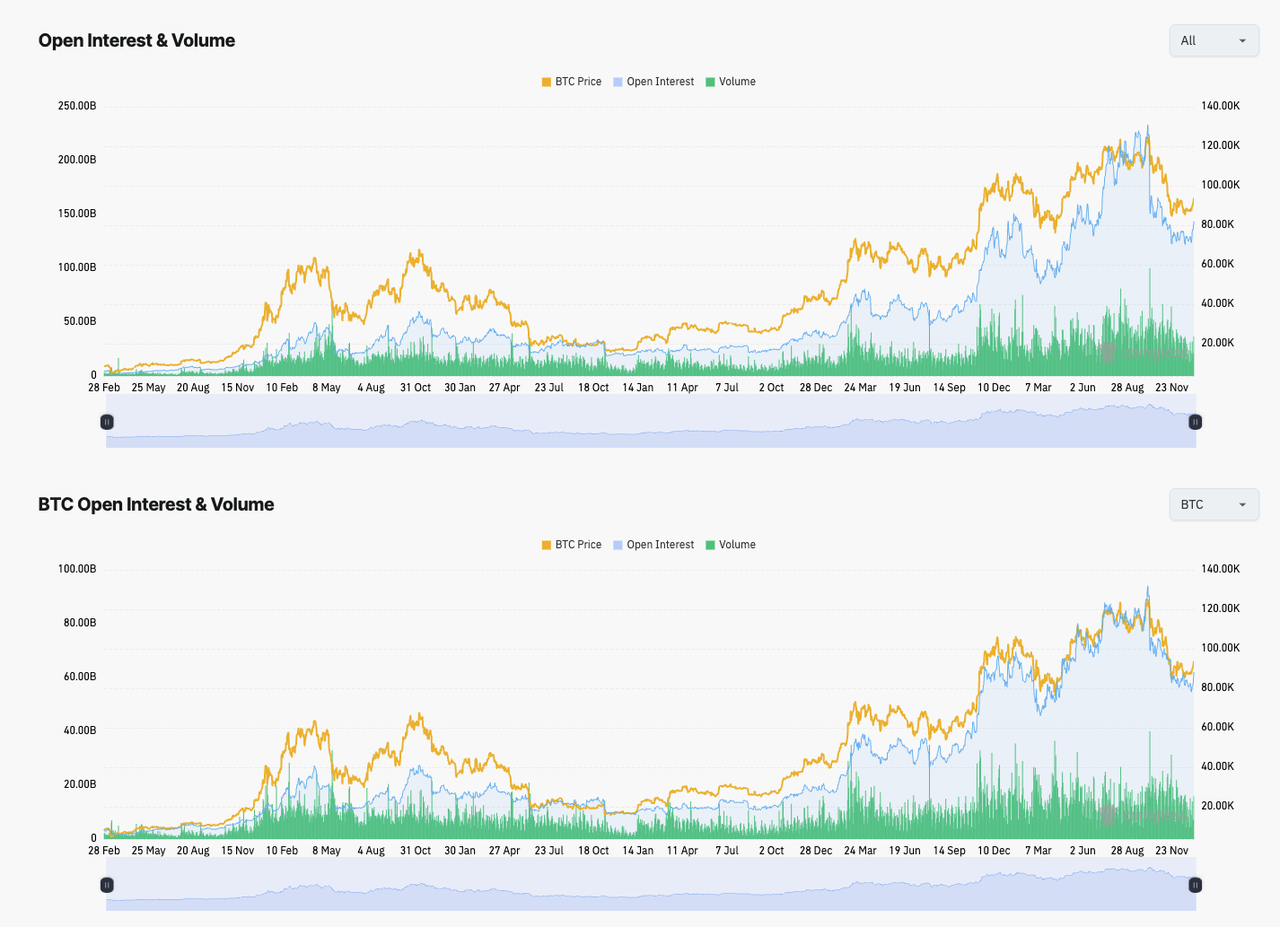
Source: Coinglass Open Interest & Volume
Derivatives markets show clear signs of re-engagement as desks reopen and January positioning is rebuilt. Aggregate open interest across major venues has risen to approximately US$143.2 billion, representing a 31.45% increase over the past 24 hours. This confirms that leverage is returning to the system after the year-end reset.
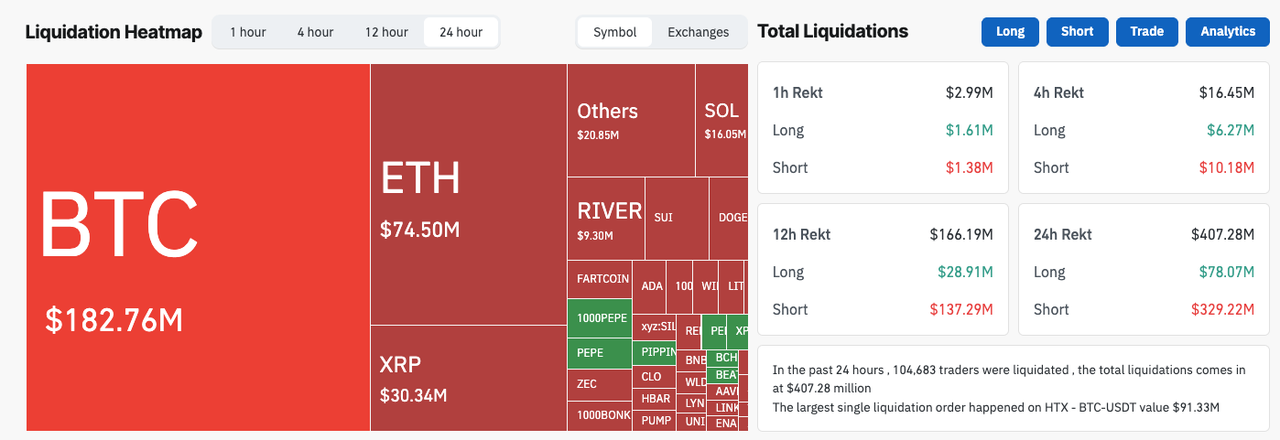
Source: Coinglass LiquidationData
However, this re-leveraging has not occurred in a vacuum. Over the same period, 24-hour liquidations reached roughly US$407.27 million, highlighting the continued fragility of price action when positioning builds faster than underlying liquidity depth.
The implication is straightforward: while risk appetite is re-emerging, it remains tactically expressed rather than structurally supported. In an environment where stablecoin supply is flat and concentrated, increases in open interest tend to amplify short-term volatility rather than reinforce trends. This makes the market particularly sensitive to macro headlines and data releases, where rapid position adjustments can trigger liquidation cascades even in the absence of a broader shift in fundamentals.
As such, leverage should be viewed as reactive rather than confident—supportive of short-term moves, but prone to sharp reversals if liquidity fails to keep pace.
Funding & Positioning — Risk Appetite Exists, But Expression Is Controlled
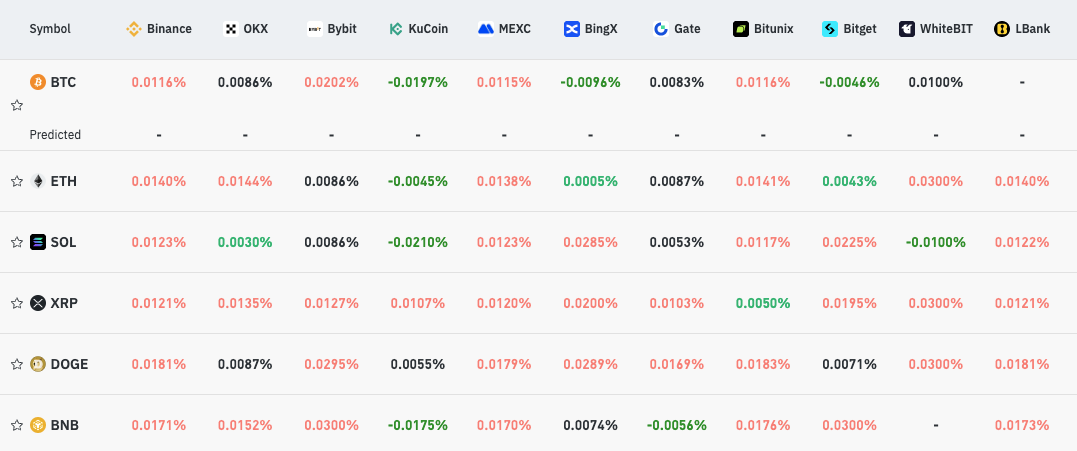
Source: https://www.coinglass.com/AccumulatedFundingRate (The data is based on the last 7 days' funding rate taken snapshot on January 6, 2025)
Asset | Funding Character | Interpretation |
|---|---|---|
BTC | Mildly positive, dispersed | Balanced positioning with two-sided hedging; BTC remains a liquidity anchor rather than a crowded long. |
ETH | Consistently positive, tight | Cleanest long structure; preferred beta exposure with relatively strong consensus. |
SOL | Elevated, fragmented | Risk-on positioning without uniform conviction; higher volatility and liquidation sensitivity. |
XRP | Uniformly positive | Crowded longs limit follow-through; prone to range-bound or mean-reverting moves. |
In a market where ETF flows are improving but stablecoin liquidity remains flat, this funding structure implies:
Selective upside, led by BTC and ETH
Higher volatility risk in SOL, XRP, and DOGE
Crowded funding could also mean a fragile follow-through, especially around macro events or headline risk
Unless funding dispersion narrows and spot liquidity deepens, rallies are likely to be tactical rather than trend-defining.
Outlook for the Week (Jan 5 – Jan 11): Flows First, Breadth Second
The balance of evidence points to a market that is constructive, but not yet self-sustaining. BTC and ETH remain supported by improving ETF flows and January re-engagement, but broader participation continues to lag.
Bitcoin's hold above $90,000 reflects improving institutional flow dynamics and its role as the system’s primary liquidity anchor. Sustained upside, however, will require multiple consecutive days of ETF inflows, not isolated prints. Flat stablecoin supply reinforces a rotation-led environment, where capital shifts within the ecosystem rather than expanding the overall risk envelope.
With leverage rising into a still-constrained liquidity backdrop, volatility remains elevated. Key signals to monitor this week include the persistence of ETF inflows, changes in stablecoin distribution, and the relationship between open interest growth and spot market depth. Together, these will determine whether the market transitions toward a more durable trend—or remains defined by rotation and tactical risk-taking.
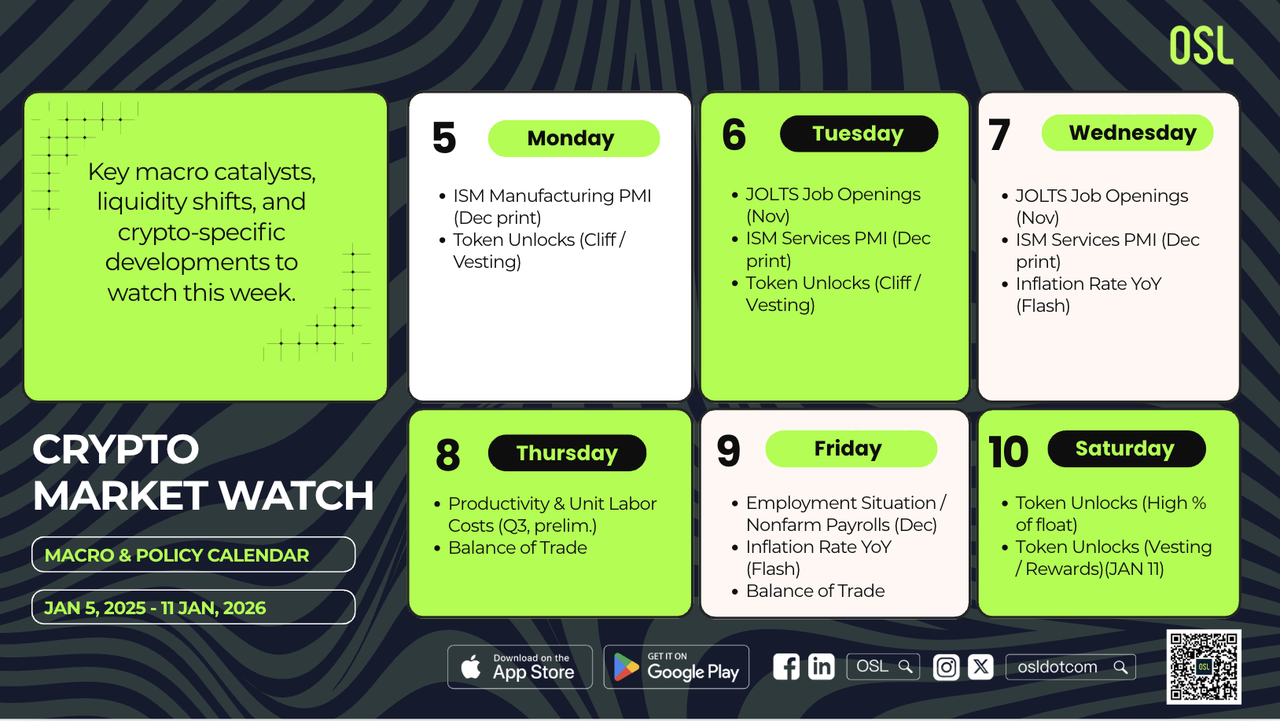
Crypto Market Watch: Key Events & Liquidity Drivers (Jan 5–Jan 11, 2026)
Event Category | Region Focus | Why It Matters (Liquidity / Risk) | Date |
|---|---|---|---|
ISM Manufacturing PMI (Dec print) | U.S. | Early-week macro tone setter; can reprice rates and the USD, influencing crypto beta and positioning. | Jan 5 |
JOLTS Job Openings (Nov) | U.S. | Labor-demand signal that can shift Fed rate-cut expectations, affecting risk appetite and volatility. | Jan 7 |
ISM Services PMI (Dec print) | U.S. | Services inflation narrative (“sticky vs easing”) impacts rates, USD liquidity, and market breadth. | Jan 7 |
Productivity & Unit Labor Costs (Q3, prelim.) | U.S. | Unit labor cost trends can reprice front-end rates, especially as leverage and positioning rebuild. | Jan 8 |
Employment Situation / Nonfarm Payrolls (Dec) | U.S. | Primary volatility catalyst of the week; drive rates, USD strength, and risk appetite (key for BTC/ETH follow-through). | Jan 9 |
Inflation Rate YoY (Flash) | Europe, China | Early inflation signals can influence global rates expectations and cross-asset risk sentiment. | Jan 7 (EU) Jan 9 (CN) |
Balance of Trade | Australia, Germany | Trade data can impact FX and regional liquidity conditions, with spillover effects on global risk assets. | Jan 8 (AU) Jan 9 (DE) |
Crypto-Specific Catalysts to Watch (Jan 5–Jan 11, 2026)
Catalyst Type | Example Event | Why It Matters (Microstructure / Supply) | Date |
|---|---|---|---|
Token Unlocks (Cliff / Vesting) | Ethena (ENA) unlock (~$42M, ~2.1%of circulating supply) | Adds incremental supply into a week where leverage is rebuilding; can widen basis and amplify intraday moves. | Jan 5 |
Token Unlocks (Cliff / Vesting) | Hyperliquid (HYPE) unlock (~$330M, ~5.3% of circulating supply; allocations: core contributors) | Largest unlock by value this week → potential localized volatility and cross-perp basis dislocations. | Jan 6 |
Token Unlocks (High % of float) | Linea (LINEA) unlock (~$10.08M, ~8% of circulating supply; allocations: airdrop/consortium) | High % unlocks can create sharper price dislocations even if absolute value is smaller—especially in thinner weekend liquidity. | Jan 10 |
Token Unlocks (Vesting / Rewards) | Aptos (APT) next unlock scheduled | Adds predictable supply; matters most if it coincides with macro volatility or crowded positioning. | Jan 11 |
More topics
More topics


Latest
Why India's $620B Bond Pilot Changed Nothing Legal
SEBI and the RBI's Demat 2.0 pilot issues corporate bonds as digital tokens and settles them with the wholesale digital rupee, preserving existing legal terms while digitizing the infrastructure beneath a $620...
Why India's $620B Bond Pilot Changed Nothing Legal
Why S&P Global Leads Kaiko: Not Hype, But 24/7 Market Infrastructure
S&P Global led a $110 million extension of Kaiko's Series B to build data infrastructure for round-the-clock tokenized markets.
Why S&P Global Leads Kaiko: Not Hype, But 24/7 Market Infrastructure
When One Firm Holds 5% of Ethereum: Infrastructure Stress Test
Bitmine's accumulation of more than 5 million staked ETH raises questions about whether custody, audit, and validator infrastructure can support single-asset concentration at public-company scale.
When One Firm Holds 5% of Ethereum: Infrastructure Stress Test
Best Enterprise Stablecoin Payment Providers: A 2026 Evaluation Framework
Compare enterprise stablecoin payment providers by use case, legal entity, workflow, controls, integration, reconciliation, support, and contract terms.
Best Enterprise Stablecoin Payment Providers: A 2026 Evaluation Framework
How to Reconcile a USDGO Payment: An Illustrative Finance-Close Example
See how Finance can trace a USDGO payment from an approved obligation through payment records, recipient confirmation, reconciliation, and accounting close.
How to Reconcile a USDGO Payment: An Illustrative Finance-Close Example
A USDGO Reserve Review in Practice: Findings, Limits and Follow-up Questions
Review what the July 2026 USDGO reserve attestation establishes, what it does not prove, and which issuer, redemption, and liquidity questions remain.
A USDGO Reserve Review in Practice: Findings, Limits and Follow-up Questions
Recommended for you
More topics
More topics
