Bitcoin Crash Revelations: From Exchanges to Cold Wallets, Safeguarding Your Crypto Assets

For participants in the cryptocurrency market, roller-coaster price volatility is both the norm and a test of psychological fortitude. When red candlestick charts dominate the screen, panic often overshadows rational thinking. However, as mature learners, we should look beyond the surface to see the essence. Surviving the Shakeout: Security Lessons from Historic Bitcoin Crashes is not just about the rise and fall of asset values, but a profound educational lesson on asset ownership and secure storage.
A Look Back at Historic Crashes: Why Market Shocks Are the Ultimate Test for Asset Security
Looking back at the history of crypto, major market corrections are often accompanied by a "stress test." Much like engineers conducting extreme load tests on a bridge, every violent market swing tests the stability of the entire ecosystem.
According to historical data analysis—from the 2022 institutional collapses to the Q4 2025 "Leverage Flush"—it is rarely the price drop itself that triggers panic, but the ensuing "crisis of trust." During the extreme volatility of late 2025, even in a highly institutionalized market, several secondary platforms still faced withdrawal delays and liquidity crunches. This reminds us of a simple truth: "Only when the tide goes out do you discover who's been swimming naked." A market shock is the ultimate time to evaluate your security setup, forcing us to answer the fundamental question: Are your assets truly secure when the world starts selling?
Do You Really Own Your Coins? Unveiling the Potential Risks and Black Swan Events of Centralized Exchanges
In the world of Web3, there's a widely circulated mantra: 'Not your keys, not your coins'.
Simply put, when you store your crypto assets on a centralized exchange, it's like depositing money in a bank. On the blockchain's ledger, these assets actually belong to the platform; what you own is merely a 'balance number' in the platform's database. Unlike traditional banks, the regulatory framework in the crypto space is still evolving. If a platform suffers a hack, internal mismanagement, or an extreme bank run, the numbers in your account could become meaningless in an instant.
Imagine you've deposited gold bars in someone else's safe. You have a receipt, but if the owner of the safe disappears or the safe is broken into, your receipt becomes just a worthless piece of paper. This is why we need to understand 'custodial risk' and always be prepared for potential 'black swan events.'
Cultivating Self-Custody Awareness: A Complete Analysis of Hot and Cold Wallet Security Tiers
To truly control your assets, you need to cultivate a 'self-custody' mindset. This involves two core concepts: Hot Wallets and Cold Wallets.
Hot Wallet: Think of this as the wallet you carry with you. It's always connected to the internet (like browser extension wallets or mobile app wallets), making it very convenient for interactions and transfers. However, because it's constantly online, it faces risks of being attacked by hackers through phishing or malware.
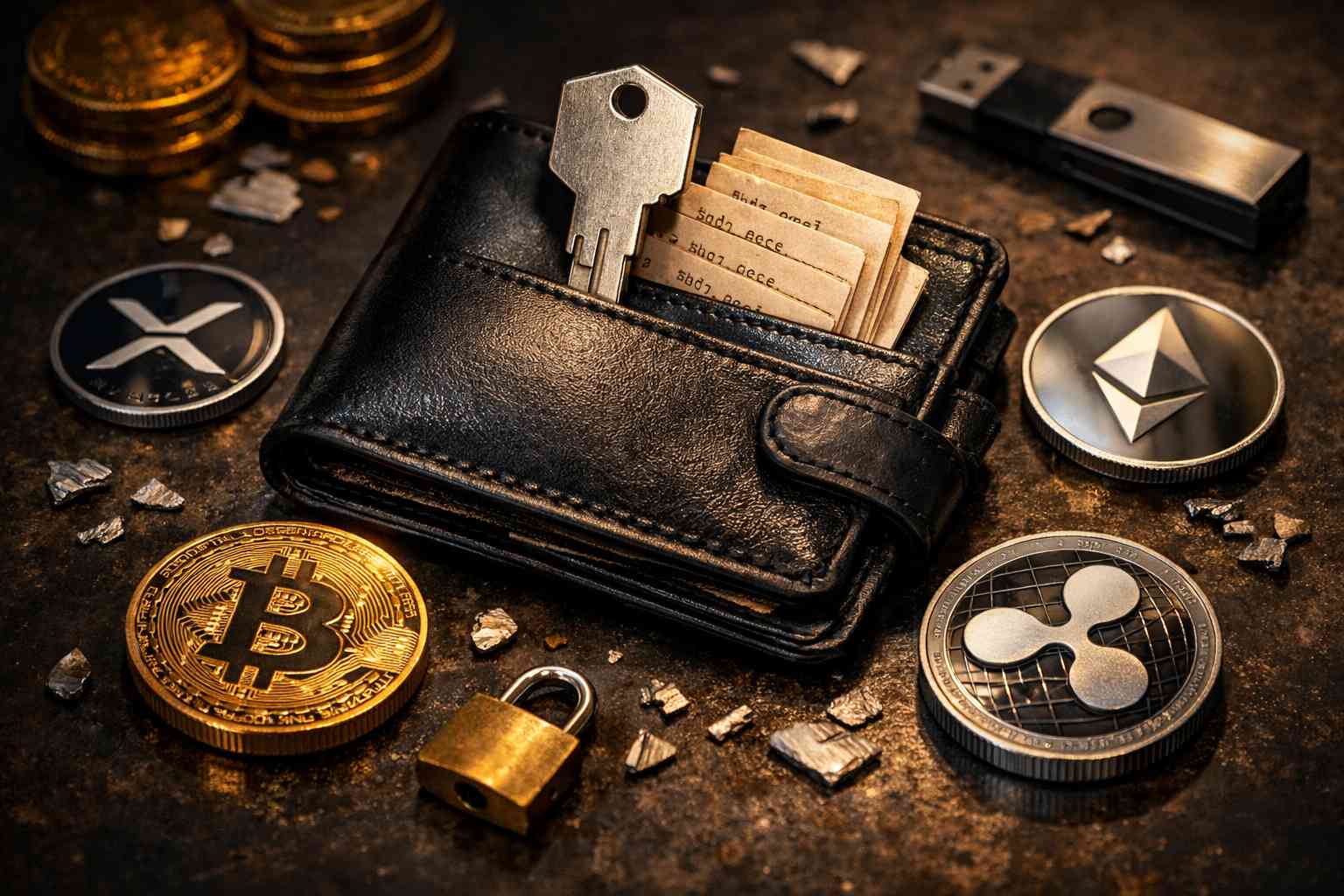
Cold Wallet: This is like a built-in safe in your home, or even a buried treasure chest. It usually refers to hardware wallets, which are offline most of the time and only connect briefly when a transaction needs to be signed. Since the private key (the sole credential for controlling your assets) never touches the internet, its security is extremely high.
According to public data from organizations such as Chainalysis and Ledger in their 2024–2025 annual reports, there has been a significant surge in global hardware wallet sales due to an increase in phishing attacks and software wallet breaches. More and more users are choosing to store their valuable assets offline in cold wallets to address the escalating security risks. This practice has become the mainstream standard in the industry.
Retreating from Exchanges: A Practical Guide to Safely Transferring Assets to a Hardware Cold Wallet
When you decide to withdraw your assets to a cold wallet, it's not just an operation; it's a reclamation of your asset sovereignty. Here is a general procedure for safe operation:
Prepare Your Environment: Ensure your computer or mobile phone is free of malware and operate in a private network environment (avoid public Wi-Fi).
Get the Address: Generate a receiving address on your hardware wallet device. Here's the crucial part: Meticulously verify that the address displayed on the device's screen exactly matches the one shown on your computer screen to prevent clipboard-hijacking malware from altering the address.
Test Transaction: This is a step that beginners most easily overlook. Always send a very small amount as a test first. Only after you confirm that the cold wallet has successfully received this small amount should you proceed with the larger transfer.
On-Chain Confirmation: Learn to use a blockchain explorer to check the transaction status, rather than relying solely on notifications from the platform. This allows you to visually confirm that the assets are truly in your address.
Avoiding Fatal Mistakes in Asset Storage: Seed Phrase Management, Private Key Preservation, and Anti-Phishing Strategies
In the world of self-custody, you are your own bank, which also means that if you make a mistake, no one can help you recover your assets. The biggest risk lies in the management of your Seed Phrase.
A seed phrase, typically consisting of 12 to 24 English words, is the only key to recovering your wallet. You need to avoid the following fatal mistakes:
Never Take Screenshots: Do not save your seed phrase by taking a photo or screenshot, as your photo album might be synced to the cloud or accessed by other apps.
Never Store It Online: Do not store your seed phrase in cloud drives, email, or messaging app favorites.
Physical Backup: The safest method is to write it down on paper with a pen (or even use a fireproof and waterproof metal seed phrase plate) and store it in a physically secure location.
Furthermore, anti-phishing is another mandatory lesson. Many malicious websites impersonate the official sites of well-known wallets to trick you into entering your seed phrase. Remember this golden rule: A legitimate hardware wallet or its customer support will never ask you to enter your seed phrase on a webpage.
The Survival Guide for Bull and Bear Markets: Building a Long-Term, Robust Crypto Asset Defense System
Security is not a one-time setup; it's an ongoing habit. To survive long-term in the turbulent crypto ocean, you need to build a multi-layered defense system.
This includes diversifying your asset storage—don't put all your eggs in one basket. You can keep small amounts for daily trading in a hot wallet, store your core long-term holdings in a cold wallet, and even use multi-signature technology for added security.
Ultimately, the lesson from Surviving the Shakeout: Security Lessons from Historic Bitcoin Crashes is to understand that the value of an asset depends not only on its market price but also on your ability to protect it over the long term. By learning the technical principles, mastering cold storage skills, and maintaining a constant respect for risk, you can achieve true peace of mind in this wave of technological revolution. It is recommended that beginners prioritize reputable and compliant educational platforms or books to build a solid foundation of knowledge when choosing their learning path.
Start your safe cryptocurrency journey now
OSL | Secure Ramps. Trusted Rails !
More topics
More topics


Latest
Why India's $620B Bond Pilot Changed Nothing Legal
SEBI and the RBI's Demat 2.0 pilot issues corporate bonds as digital tokens and settles them with the wholesale digital rupee, preserving existing legal terms while digitizing the infrastructure beneath a $620...
Why India's $620B Bond Pilot Changed Nothing Legal
Why S&P Global Leads Kaiko: Not Hype, But 24/7 Market Infrastructure
S&P Global led a $110 million extension of Kaiko's Series B to build data infrastructure for round-the-clock tokenized markets.
Why S&P Global Leads Kaiko: Not Hype, But 24/7 Market Infrastructure
When One Firm Holds 5% of Ethereum: Infrastructure Stress Test
Bitmine's accumulation of more than 5 million staked ETH raises questions about whether custody, audit, and validator infrastructure can support single-asset concentration at public-company scale.
When One Firm Holds 5% of Ethereum: Infrastructure Stress Test
Best Enterprise Stablecoin Payment Providers: A 2026 Evaluation Framework
Compare enterprise stablecoin payment providers by use case, legal entity, workflow, controls, integration, reconciliation, support, and contract terms.
Best Enterprise Stablecoin Payment Providers: A 2026 Evaluation Framework
How to Reconcile a USDGO Payment: An Illustrative Finance-Close Example
See how Finance can trace a USDGO payment from an approved obligation through payment records, recipient confirmation, reconciliation, and accounting close.
How to Reconcile a USDGO Payment: An Illustrative Finance-Close Example
A USDGO Reserve Review in Practice: Findings, Limits and Follow-up Questions
Review what the July 2026 USDGO reserve attestation establishes, what it does not prove, and which issuer, redemption, and liquidity questions remain.
A USDGO Reserve Review in Practice: Findings, Limits and Follow-up Questions
Recommended for you
More topics
More topics
